Russian Missile and Drone Strikes Hit Kyiv as Talks Framework Re-emerges
The overnight attack on Ukraine’s capital underscores the economic pressure on urban infrastructure, logistics and diplomacy.
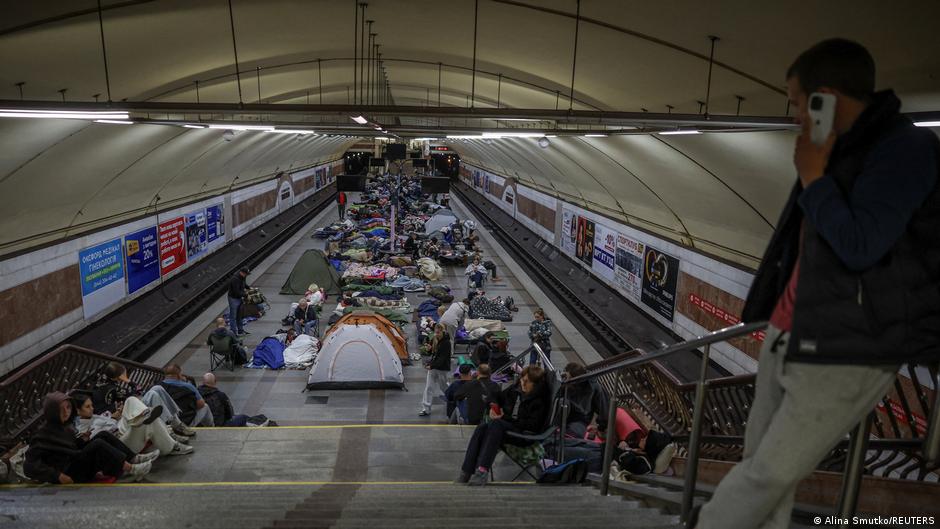
Russian forces struck Kyiv overnight on September 8 with drones and ballistic missiles, according to the Kyiv City Military Administration, in an attack that damaged residential buildings, sparked fires across several districts and left at least six people injured, based on preliminary information cited by Mayor Vitali Klitschko.
The assault came at a politically sensitive moment. Special representatives of U.S. President Donald Trump, Steve Witkoff and Jared Kushner, had left Kyiv during the night of September 7. After meeting them, Ukrainian President Volodymyr Zelensky said Ukraine was ready for three-way negotiations in a Ukraine-U.S.-Russia format. Moscow also did not rule out a return to such a format, although Kremlin spokesman Dmitry Peskov said it was premature to discuss a venue or timing.
For Kyiv, the immediate picture was one of fragmented but economically consequential damage. In the Solomianskyi district, debris fell on a five-storey residential building, while another three-storey residential building was damaged elsewhere. A fire also broke out in a warehouse facility. Klitschko said medical teams had been dispatched to Solomianskyi district, where preliminary reports indicated six people were injured.
In Darnytskyi district, falling debris damaged a car. Fires broke out in non-residential zones in Podilskyi and Darnytskyi districts, with garages and vehicles burning, according to city officials. In Holosiivskyi district, Klitschko reported a fire on the grounds of an educational institution. He also said preliminary information indicated that people were trapped in a residential building.
Urban damage with wider economic costs
The material damage described by Kyiv authorities may appear localized: a residential block, a warehouse, garages, cars, a school site. Yet in wartime urban economies, such targets and debris impacts can accumulate into broader structural costs. Housing damage displaces residents, strains municipal repair budgets and forces households to absorb losses that often extend beyond the visible destruction. Fires in warehouses and garages affect inventories, vehicles and small-scale commercial activity, while attacks on educational premises disrupt public services and impose additional security costs on the city.
The Russian strike also illustrates a familiar wartime pattern: military pressure on a capital city creates economic pressure beyond the battlefield. Kyiv is not only Ukraine’s political center but also a hub for administration, transport, services, education and logistics. Damage to residential and non-residential zones can interrupt commuting, emergency services, supply distribution and local business operations. Even when infrastructure is not destroyed outright, repeated air alerts and debris incidents reduce productivity, increase insurance and repair burdens, and redirect public funds from investment toward resilience and reconstruction.
The timing is also significant because the latest Kyiv strike followed drone attacks late on September 7 against the Boryspil and Fastiv districts of the Kyiv region, according to Ukraine’s State Emergency Service. In Boryspil district, fires broke out at industrial enterprises. At one site, the fire destroyed seven trucks. The emergency service also said a building belonging to one logistics complex was attacked twice, with rescuers arriving quickly and extinguishing the fires.
At one industrial site in Boryspil district, the fire destroyed seven trucks, according to Ukraine’s emergency service.
Such details matter for economic analysis because trucks and logistics complexes are connective tissue in a wartime economy. They move food, industrial inputs, consumer goods, humanitarian supplies and military-adjacent materials. Repeated attacks on logistics assets increase replacement costs, delay deliveries and push firms to invest in redundancy rather than expansion. The double attack on a logistics complex, as reported by Ukrainian emergency officials, also signals the vulnerability of facilities that support regional trade and distribution.
Diplomacy under fire
The overlap between renewed discussion of three-way negotiations and Russian strikes on Kyiv will sharpen debate over whether military escalation is being used to shape diplomatic conditions. Zelensky’s statement of readiness for talks in a Ukraine-U.S.-Russia format places Kyiv publicly in favor of a channel that includes Washington and Moscow. Peskov’s response, saying Moscow did not exclude the possibility of resuming the format but that venue and timing were premature, leaves the door open without committing to process or concessions.
Historically, wars with active negotiation channels often produce this kind of dual track: public diplomacy proceeds while attacks continue. The economic consequences can be severe because uncertainty is prolonged. Businesses and households cannot plan around diplomacy alone if missile and drone strikes continue to impose immediate risk. Investors, insurers and reconstruction planners must price both possibilities at once: a potential negotiating framework and continuing damage to urban and industrial assets.
For Ukraine’s economy, the direct financial cost of the September 8 Kyiv strike will depend on final assessments of damaged buildings, vehicles, warehouses and public facilities. But the structural burden is already clearer. Each attack reinforces the need for air defense, emergency response capacity, backup logistics, hardened infrastructure and rapid repair systems. These are necessary expenditures, yet they compete with longer-term growth needs such as housing, education, transport modernization and private-sector capital formation.
The attack therefore sits at the intersection of security, diplomacy and economic resilience. Kyiv’s emergency services and city authorities are managing immediate fire, rescue and medical consequences. National leaders are weighing diplomatic formats involving the United States and Russia. Firms in the Kyiv region face renewed evidence that logistics and industrial sites remain exposed. Households confront the recurring risk that debris from missiles and drones can turn residential districts into damage zones overnight.
In macroeconomic terms, the strike is another reminder that the war’s costs are not confined to budget lines for defense or reconstruction. They are embedded in disrupted education, damaged housing, burned vehicles, interrupted logistics, emergency mobilization and the uncertainty that suppresses normal economic decision-making. Even when fires are extinguished quickly, the economic aftereffects can persist across supply chains, municipal finance and household balance sheets.