Octobank Launches E9PAY Money Transfer Service for HUMO Cards from South Korea
Octobank initiates cross-border transfers from South Korea to Uzbekistan via E9PAY to HUMO cardholders, marking a significant step in regional fintech integration.
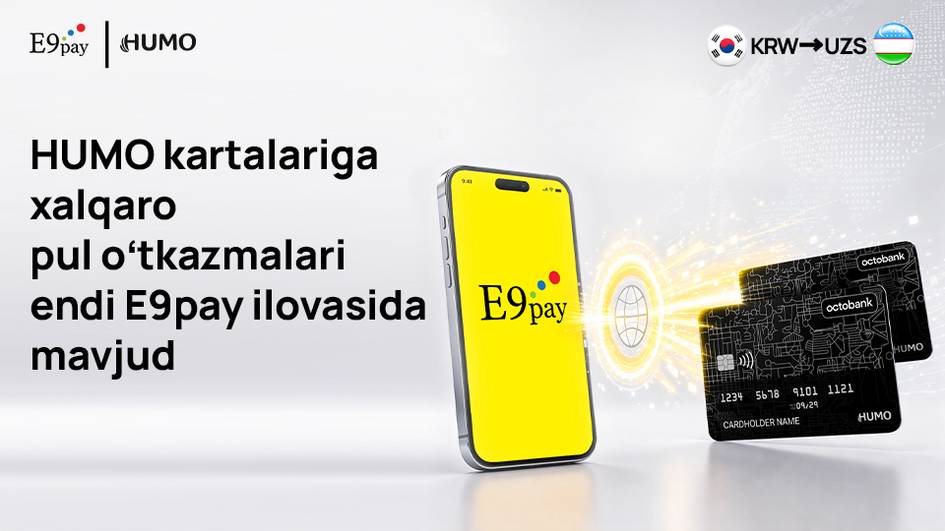
In a strategic move reflecting the growing integration of regional financial technologies, Octobank has launched a new money transfer service through E9PAY, enabling direct remittances from South Korea to Uzbekistan's HUMO cardholders.
Contextualizing the Cross-Border Fintech Collaboration
Octobank's recent initiative to facilitate international money transfers to HUMO cards using E9PAY from South Korea stands as a noteworthy development in the evolving landscape of Central Asian financial services. This service aims to streamline remittance flows, a critical economic lifeline for many Uzbek families with relatives working abroad, particularly in South Korea, a key destination for Uzbek migrant labor.
The HUMO payment system, developed to reduce dependence on foreign international payment networks, has gained significant traction in Uzbekistan's domestic market. By enabling transfers directly to HUMO cards, Octobank is not only enhancing convenience but also reinforcing the sovereignty of Uzbekistan's financial infrastructure.
"This service exemplifies a growing trend towards regional financial autonomy and digital integration, reducing reliance on traditional, often costly, remittance channels."
South Korea has emerged as a major labor market for Uzbek migrant workers, whose remittances contribute substantially to Uzbekistan's GDP. Traditional remittance methods typically involve intermediaries and incur high fees, diluting the economic benefit to recipients. The introduction of E9PAY-enabled transfers directly to HUMO cards offers a more efficient, transparent, and cost-effective alternative.
Structural Economic Implications
This development aligns with Uzbekistan’s broader economic reforms targeting enhanced financial inclusion and modernization. By channeling remittances through digital platforms tied to domestic payment systems, the country can improve the formalization of inbound capital flows, bolster data transparency, and reduce the shadow economy's footprint.
Moreover, this integration facilitates greater regional cooperation in fintech, signaling potential for expanded cross-border financial services among Central Asian nations and their key economic partners. It reflects a strategic effort to create a payment ecosystem balancing international compatibility with national economic security.
Historically, remittances have played a pivotal role in supporting household consumption and investment in Uzbekistan. The adoption of platforms like E9PAY for transfers not only expedites these financial flows but also introduces additional layers of security and regulatory oversight, which are vital for maintaining the stability of emerging financial markets.
Looking forward, the success of such services could catalyze further innovations in digital banking and payment systems in Uzbekistan, contributing to sustainable economic growth and integration into global financial networks.