US Approves $373.6 Million Sale of JDAM-ER Kits to Ukraine to Enhance Bomb Accuracy and Range
The US State Department has authorized the potential sale of advanced JDAM-ER kits to Ukraine, aiming to improve the precision and reach of air-dropped munitions amid ongoing conflict.
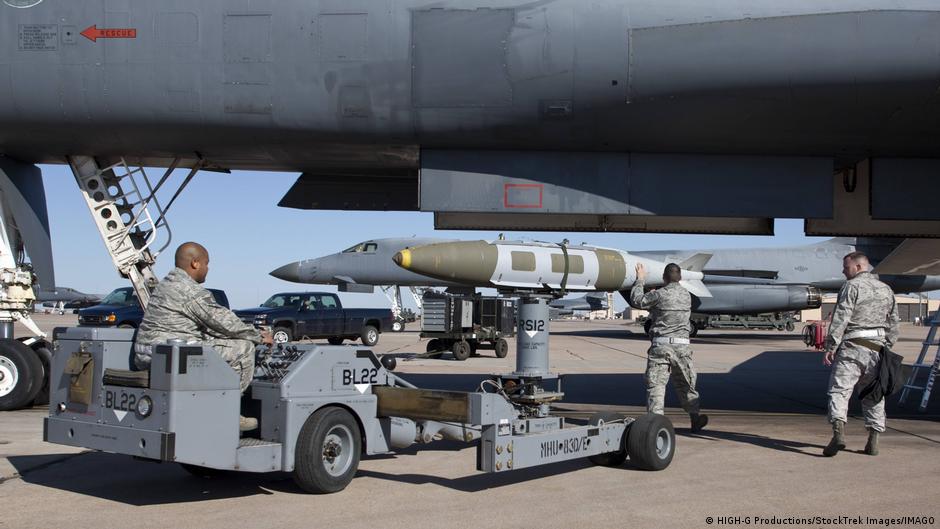
The US State Department has approved the possible sale of Joint Direct Attack Munitions - Extended Range (JDAM-ER) kits to Ukraine, valued at $373.6 million. These aerodynamic tail kits attach to conventional bombs, significantly enhancing their range by 70-80 kilometers and improving precision strikes.
Kyiv has formally requested 1,532 JDAM-ER kits alongside maintenance equipment, spare parts, software, repair services, and logistical support. Boeing will serve as the principal contractor responsible for delivering these advanced weapon components.
Strategic Context and Economic Implications
While the State Department’s approval marks a crucial step in arms provision, it does not guarantee immediate delivery. The process requires final contract agreements and production timelines before the systems can be transferred to Ukraine. This measured procedure reflects the complex logistical and economic dimensions underpinning high-tech arms sales.
Initial shipments of JDAM-ER kits to Ukraine occurred in 2023 as part of a $1.85 billion aid package sanctioned during the first year of Russia’s large-scale invasion. However, challenges have emerged: reports indicate some kits malfunctioned in spring 2023, potentially due to improperly installed fuzes. Moreover, Russian electronic warfare (EW) capabilities have frequently disrupted GPS signals that guide these bombs, undermining their operational effectiveness.
"Electronic warfare interference and technical malfunctions have underscored the vulnerabilities of precision-guided munitions in contested airspaces."
The US decision to continue supplying such sophisticated munitions highlights a strategic pivot toward equipping Ukraine with longer-range, more precise weaponry. Economically, this injects substantial contract value into the US defense industrial base, particularly benefiting firms like Boeing, while sustaining the military-industrial complex amid protracted conflict.
Historically, wartime arms transfers have served dual purposes: bolstering allied combat capabilities and stimulating domestic defense sectors. The JDAM-ER deal exemplifies this duality, reinforcing Ukraine’s defense posture while fostering economic activity through production, maintenance, and innovation associated with precision-guided weapons.
Looking forward, the economic sustainability of such military aid hinges on managing the technological challenges posed by adversary countermeasures and maintaining efficient supply chains. The integration of advanced weaponry into Ukraine’s arsenal not only alters battlefield dynamics but also reflects broader structural trends in global defense economics, where high-tech arms sales have become pivotal instruments of foreign policy and economic strategy.