Putin Backs Using Medically Unfit Volunteers for Rear-Area Drone Defense
The proposal underscores Russia’s widening manpower pressures as the Kremlin denies any need for a new mobilization drive.
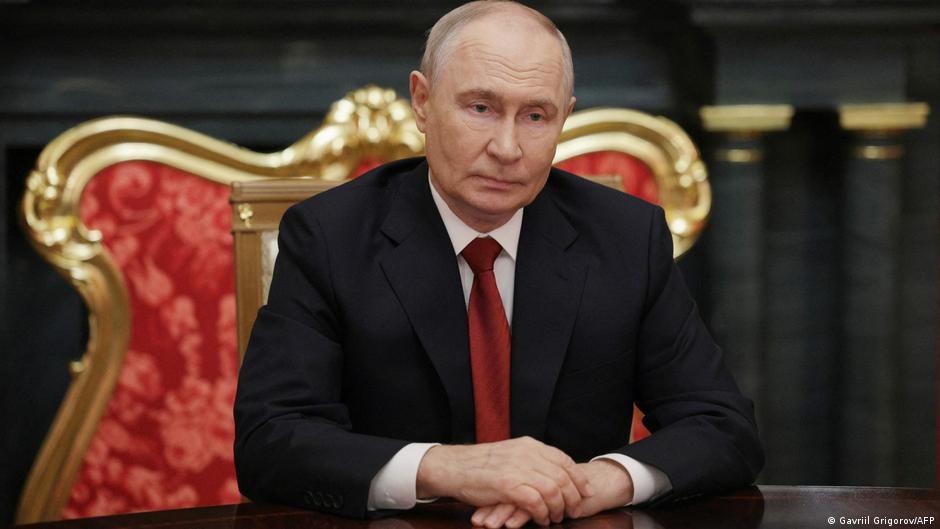
Russian President Vladimir Putin has endorsed a proposal to involve volunteers formally deemed completely unfit for military service in rear-area defense against drones, a move that points to the widening institutional strain created by the war against Ukraine.
The idea was advanced by pro-Kremlin war correspondent Yevgeny Poddubny during a meeting of the leadership of the United Russia party. According to media reports cited in the source account, Poddubny said the request came from fighters who had received the strictest medical disqualification category after combat wounds and who, in his words, were still capable of performing tasks in regional units, including helping repel Ukrainian drone attacks away from the front line.
Putin supported the proposal at the same meeting. The initiative would apply to citizens assigned health category “D,” meaning “absolutely unfit for military service.” In Russia’s system, that category is not a minor limitation. It is assigned in cases of severe chronic illness or disability, including active tuberculosis, HIV infection, cancer, schizophrenia, missing limbs, blindness or deafness. People in this category are removed from the military register, and their personal files are sent to the archive. Under current Russian law, they cannot sign contracts with the Defense Ministry.
The proposal’s economic significance lies less in the formal legal detail than in what it suggests about the state’s search for additional human resources outside conventional mobilization channels.
Manpower Without Mobilization
The Kremlin’s public line remains that a new wave of mobilization is unnecessary. Speaking at the plenary session of the Eastern Economic Forum in Vladivostok on September 3, Putin again addressed rumors of renewed mobilization, saying there was “no scenario that would require mobilization.” He described such speculation as an “information attack” by the enemy ahead of State Duma elections, aimed at influencing the result.
That statement followed another denial after the Shanghai Cooperation Organization summit in Bishkek, where Putin dismissed such concerns with an even sharper phrase, calling them “dog nonsense.” The political purpose of those remarks is clear: the Kremlin wants to reassure households, regional elites and employers that the state is not preparing another abrupt extraction of working-age men from the civilian economy.
Yet the legal and practical backdrop complicates that reassurance. The 2022 decree on partial mobilization has not been formally canceled and remains in force. Russians have continued to report summonses, military training notices and intensified recruitment for the war against Ukraine. In July, pro-war Z channels claimed that forced conscription to the front could affect 1.2 million Russians and could be accompanied by informal arrangements with neighboring countries that would prevent draft-age men from leaving for adjacent states.
Those claims remain part of a broader information environment rather than a confirmed official policy. Still, they matter economically because expectations shape behavior. Rumors of large-scale recruitment can influence labor mobility, savings decisions, emigration planning and employer retention strategies even before any formal order is issued. In an economy already operating under sanctions, labor shortages and heavy military spending, uncertainty over manpower policy is itself a cost.
A Structural Labor Constraint
The reported proposal to use category “D” volunteers for drone defense reflects a structural problem: Russia is trying to sustain a long war while avoiding the political shock of openly repeated mobilization. That produces pressure to widen the pool of available personnel through contract recruitment, regional quotas, auxiliary roles and legal improvisation.
The numbers cited in the source account illustrate the scale of the challenge. In August, according to the Institute for the Study of War, total Russian troop losses exceeded 40,000 for the second consecutive month. Separately, the Financial Times, citing sources, reported that the Kremlin and Russia’s Defense Ministry had instructed Russian regions to recruit 409,000 contract servicemen by the end of 2026 for participation in the war. To meet that target, the authorities are increasing pressure on local officials.
For regional administrations, such targets function like unfunded mandates with political risk attached. Governors and municipal officials must help deliver recruits while preserving basic economic stability in their territories. Recruitment competes with civilian labor demand, especially in sectors already affected by demographic decline and wartime distortions. Signing bonuses and benefits can pull workers away from local firms, while casualties and disability increase long-term fiscal and social burdens.
Historically, states engaged in prolonged wars often move from selective recruitment toward broader and more administratively creative forms of manpower extraction. The distinction between combatants, auxiliaries, volunteers and support personnel can narrow over time, especially when new technologies expand the geography of war. Drone warfare is central to that shift. Attacks deep behind the front line turn logistical sites, energy infrastructure, airfields and regional facilities into security zones requiring trained or semi-trained personnel.
That dynamic helps explain why rear-area drone defense has become a politically useful category. It can be presented as defensive, local and voluntary, rather than as front-line mobilization. It also allows the state to tap people excluded from ordinary military contracting while arguing that they are not being sent to the most dangerous positions. But the legal contradiction remains stark: category “D” exists precisely to mark people as fully outside military service.
Economic Consequences Beyond the Front
The broader economic consequences extend beyond the immediate question of who guards rear facilities. If Russia normalizes the use of medically disqualified citizens in military-related functions, it may signal a further militarization of the civilian labor pool. That can blur boundaries between public employment, regional security work and military service, making local economies more dependent on war-related assignments.
There are also productivity costs. People with severe illness or disability may require accommodations, medical support and administrative oversight. Even if some wounded veterans want to serve in rear-area roles, scaling such a system would not be frictionless. It could shift burdens onto regional budgets, hospitals and social agencies already managing wartime casualties and chronic health needs.
The political economy is equally important. The Kremlin’s repeated denials of mobilization suggest awareness that another formal call-up could carry domestic risks. But pressure to meet recruitment targets has not disappeared. Instead, it appears to be dispersed across regions, contract campaigns and proposals that redefine who can contribute to military tasks.
In that sense, the discussion over category “D” volunteers is not merely a personnel rule. It is a window into how a state at war searches for labor when the most direct instrument, mass mobilization, remains politically costly. The resulting system may avoid a single dramatic announcement, but it can still deepen the war’s reach into households, workplaces, regional administrations and the medical classification system itself.