Putin Sees Opening for Peace as Zelensky Awaits U.S. Envoys
Fresh talk of diplomacy has revived expectations of a negotiating channel, even as military risks and political distrust continue to weigh on any path to ending the war.
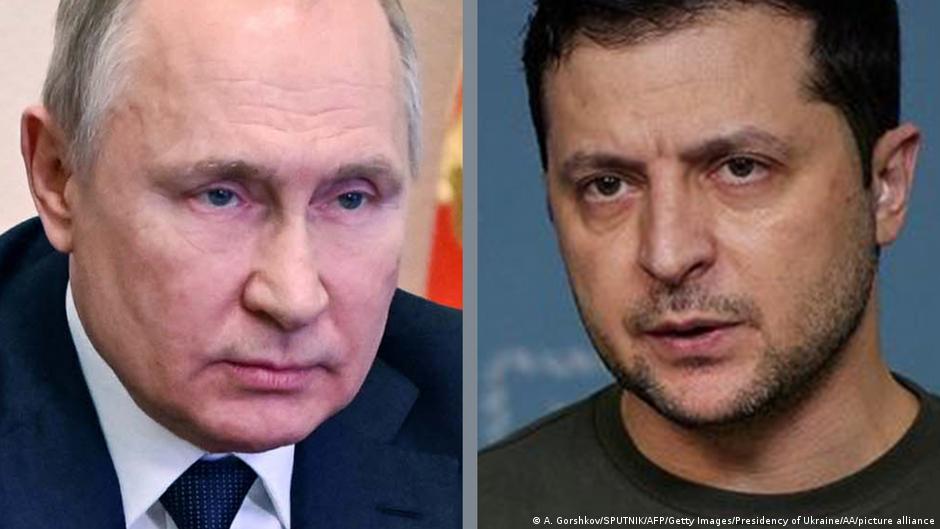
Russian President Vladimir Putin said he believes there are chances to achieve peace in Ukraine through diplomacy, while insisting that any agreement to end the war must be reached directly between Russia and Ukraine, with other countries playing a supporting role. Putin made the remarks on Thursday, September 3, on the sidelines of the Eastern Economic Forum.
Putin framed the prospect of diplomacy as real but conditional. He said Russia and Ukraine themselves must be the principal parties to any settlement, while outside powers can assist the process. In his formulation, international mediation may facilitate talks, but it cannot substitute for a bilateral political decision by the warring sides.
“Russia and Ukraine must first of all come to an agreement between themselves. And all other countries are ready to support and help. This is the right approach. But we are grateful to everyone who is trying to contribute to resolving this issue. Are there chances? In my view, yes, there are.”
At the same time, Putin said contacts between Moscow and Kyiv have been maintained through the intelligence services, though he did not say how much that channel could contribute to peace. He also pointed to what he described as Ukrainian attacks on transport vessels in the Black Sea and statements by Kyiv about the unsafe nature of Russian airspace. According to Putin, such factors complicate the possibility of holding bilateral peace talks.
Later the same day, Ukrainian President Volodymyr Zelensky also spoke about the prospect of renewed negotiations with Russia. He said U.S. representatives would soon visit both Kyiv and Moscow and that a possible peace agreement would be discussed during those meetings. Zelensky said there are preliminary dates and that the U.S. side has already confirmed meetings in both capitals.
Zelensky added that Ukraine is in constant contact with the American team. Several days earlier, he reported a phone conversation with U.S. President Donald Trump’s special envoys, Steven Witkoff and Jared Kushner, during which he told the American representatives that Russia’s battlefield gains were “insignificant.”
Diplomacy returns, but under severe constraints
The renewed discussion of negotiations has re-entered the political agenda shortly after the unannounced visit of CIA Director John Ratcliffe to Moscow in late August. According to Axios, a Trump administration representative proposed, among other ideas, a trilateral meeting of the U.S., Russian and Ukrainian presidents to discuss ending the war through diplomacy.
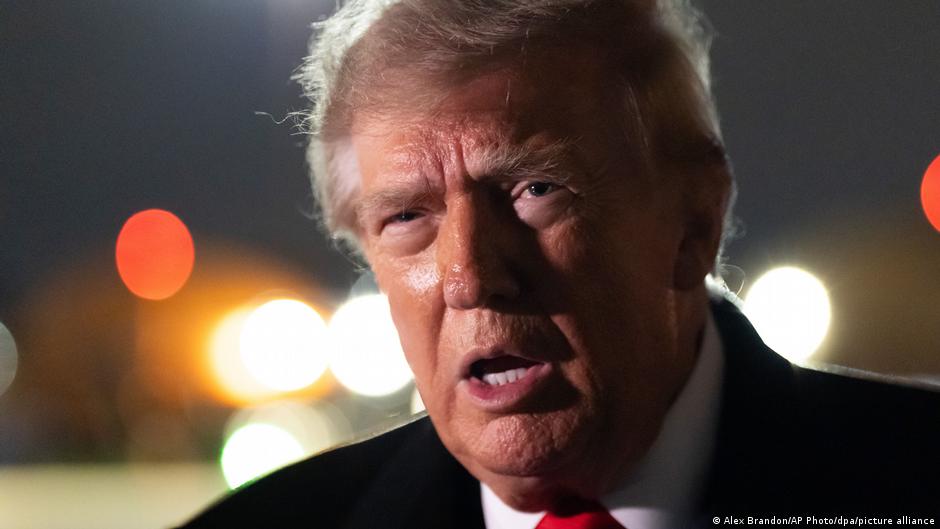
Trump later rejected the idea of holding such a three-way summit in the immediate future. Speaking to reporters, he said Putin would agree to such a meeting if Trump wanted it and that Washington could organize a summit “immediately.” But Trump also said he wanted such a meeting only when the parties were ready to conclude a peace agreement.
Trump further said that “Putin and Zelensky should stop this stupid war,” again assigning blame for the continuing fighting to both Moscow and Kyiv. In Trump’s telling, a major obstacle to peace is the personal hostility between Zelensky and Putin. He argued that this animosity has made the conflict more difficult than he expected, despite his previous promise to end the war “within a day.” Trump also said the conflict had proved harder than “eight wars” that he claims to have stopped in less than two years in office.
For markets and policymakers, the significance of the latest statements lies less in any immediate breakthrough than in the reopening of a negotiating narrative. Wars of attrition often generate periodic diplomatic episodes that can influence expectations before they alter realities on the ground. Even limited talk of talks can affect energy pricing assumptions, insurance costs, transport risk assessments, sovereign borrowing expectations and the strategic calculations of governments and firms exposed to Eastern Europe and the Black Sea.
The Black Sea remains central to that economic picture. Putin’s reference to attacks on transport vessels underscores how maritime security and the war economy remain intertwined. Any deterioration in shipping confidence can raise freight and insurance costs, complicate trade flows and increase uncertainty for commodity markets. That does not require a formal blockade to matter economically; elevated perceived risk alone can reprice logistics and investment decisions across the region.
There is also a broader structural issue. Peace negotiations, if they advance, would not simply concern ceasefire terms. They would shape assumptions about sanctions durability, reconstruction financing, defense spending, refugee movements and the long-run allocation of capital between security and civilian investment. In that sense, diplomacy is not just a political process but a macroeconomic variable. The mere possibility of a settlement can begin to influence business planning, yet the absence of trusted enforcement mechanisms keeps that influence tentative.
Historical experience suggests that diplomatic openings during active conflicts often emerge before the combatants have aligned incentives to compromise. Back-channel contacts, intelligence channels and outside shuttle diplomacy can lower the transaction cost of talking, but they do not eliminate the core problem: each side must believe that concessions today are preferable to battlefield uncertainty tomorrow. Putin’s emphasis on direct agreement and Zelensky’s stress on U.S. engagement show the two pillars of the current moment: bilateral necessity and external leverage.
That combination may prove durable as a framework even if no quick settlement follows. For Washington, simultaneous meetings in Kyiv and Moscow would signal an attempt to test bargaining space without committing to a premature summit. For Russia and Ukraine, maintaining contact while continuing to contest the military balance reflects a familiar wartime pattern in which diplomacy and escalation proceed in parallel rather than in sequence.
What emerges from the latest exchanges is not a clear road map to peace, but a narrower and more realistic point: diplomacy is again being discussed as an active instrument rather than a distant abstraction. Whether that leads to substantive progress will depend on political timing, military calculations and the credibility of any proposed guarantees. Until those elements converge, the economic consequences of the war will remain defined by uncertainty, and the return of negotiation talk will function more as a market signal than a settlement in itself.