Putin’s Nuclear Warnings at Valdai Expose the War’s Economic Risk Premium
The Russian president’s latest remarks linked battlefield escalation, Western policy and nuclear deterrence to a widening economic shock for Europe.
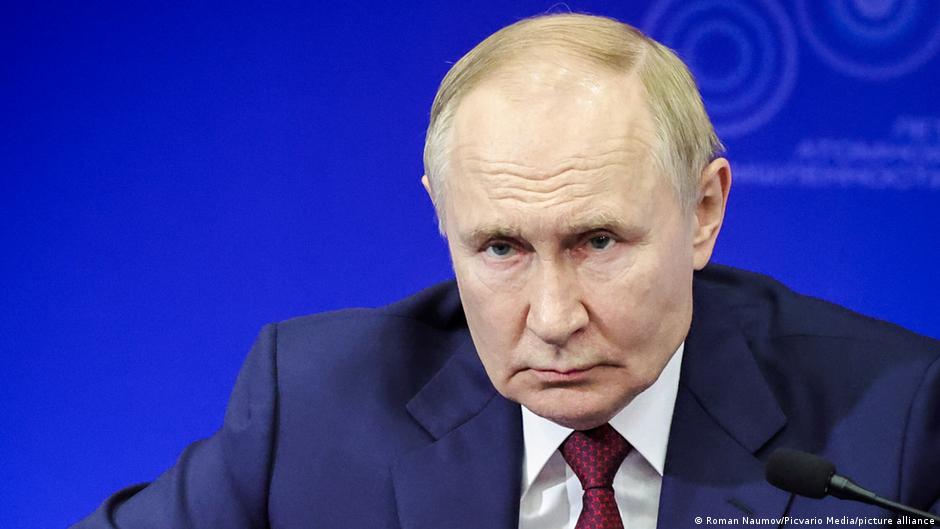
Russian President Vladimir Putin used the Valdai Discussion Club session on Thursday evening, October 1, to cast the situation in Europe and the wider world as “very dangerous,” again accusing Western countries of aggression against Moscow and warning of scenarios that could have “fatal consequences” for the world.
The setting itself underscored the economics of insecurity. This year’s Valdai meeting was moved from Sochi to the Moscow region, where Russia has concentrated more air-defense capabilities. The British newspaper Financial Times, citing four sources, reported that the relocation was prompted by security concerns amid intensified Ukrainian attacks; two of those sources said the move was made at the insistence of Putin’s security service.
For markets and governments, such signals matter because they turn geopolitical uncertainty into a recurring cost. Air defense, military logistics, energy security, insurance, defense procurement and emergency planning all become structural budget items rather than temporary wartime exceptions. Putin’s remarks did not announce a new economic policy, but they reinforced the risk environment in which European states, Russia and Ukraine are now operating.
Nuclear rhetoric as economic pressure
Putin said that several countries possess weapons “capable of destroying all living things” and, answering his own question about whether he was confident such weapons would never be used, said he was not. He compared nuclear weapons to a gun hanging on a theater stage, which, according to the rules of the genre, must eventually fire. “The laws of the struggle for survival apply not only in living nature, but also in social communities,” he said, while adding that the task was to ensure that “this gun” does not fire.
“If we want to live — and everyone wants to live — let us live peacefully,” Putin said, warning that further escalation could leave “no school textbooks and no one to study from them.”
The economic significance of such language lies in the way deterrence rhetoric affects long-term investment decisions. Nuclear threats, even when framed as warnings rather than operational plans, raise the perceived ceiling of conflict. That can influence capital flows, sovereign borrowing costs, infrastructure priorities and corporate exposure to regions seen as vulnerable to escalation. In Europe, the war has already reshaped energy policy, defense spending and industrial planning. Putin’s renewed references to nuclear catastrophe add another layer to the risk premium.
There is also a historical parallel. During the Cold War, nuclear deterrence did not eliminate economic exchange, but it forced states to build institutions, stockpiles and redundant systems around the possibility of catastrophic failure. Putin’s invocation of Soviet officer Stanislav Petrov, who in 1983 chose not to order a nuclear strike despite protocol, placed the current conflict inside that older logic of human judgment and machine error. Putin argued that artificial intelligence might have acted differently, and he called for a new convention on the conduct of hostilities in light of the rapid development of AI technologies.
That point is not merely philosophical. The deployment of AI into military decision-making raises questions about crisis stability, procurement standards and liability. If governments begin building defense systems around automated threat assessment, they will also have to fund new oversight mechanisms, verification regimes and cyber-resilience programs. The cost of deterrence may therefore expand beyond missiles and soldiers into software, data centers and command systems.
The war narrative and territorial claims
Addressing Russia’s war in Ukraine, now in its fifth year, Putin again claimed that Russia “did not start the war” and argued that Moscow’s invasion of Ukrainian territory was a response to actions by NATO and Ukraine. “The truth is that it was not we who wanted and began to fight, but they began to fight us,” he asserted. According to his version, the West for years encouraged “aggressive nationalism and Russophobia” in Ukraine in order to turn it into a “tool” against Russia; “radicals in Kyiv” were pushed toward a “state coup”; and NATO was allegedly preparing to place bases on Russia’s “historic territories.”
Those claims remain central to the Kremlin’s justification of the war, but they also serve an economic function. By presenting the conflict as defensive and existential, Moscow frames high military spending, sanctions resilience and mobilization of industrial capacity as necessities rather than choices. The longer that narrative holds, the more the Russian economy is likely to be organized around military priorities, with consequences for labor allocation, technology imports, fiscal policy and private investment.
Putin also commented on the course of fighting, saying Russian forces had allegedly captured 3.5 times more territory in the past month than in the previous one. He claimed Russia now controls 89% of Donetsk region. According to the Institute for the Study of War, Russia currently controls 81% of Donbas.
Several days earlier, Kyiv said that during three seasons of the “Vivaldi” counteroffensive operation, Ukraine’s armed forces had retaken 176 square kilometers of Ukrainian territory. At Valdai, Putin again expressed confidence that Russia would seize all of those territories and said Ukraine had no reason to hold on to them.
For Ukraine, territorial changes affect not only military posture but also economic viability: mining areas, industrial corridors, transport routes, power infrastructure and agricultural land all shape the country’s fiscal future. For Russia, occupation carries its own balance sheet, including reconstruction costs, administration, security and sanctions exposure. The gap between political claims and battlefield control therefore feeds directly into competing economic strategies.
Europe’s industrial vulnerability
Asked about the possibility of strikes on military enterprises in Europe, Putin said Russia would “not necessarily” do so, but would “monitor threats.” He said Moscow regards Western countries’ participation in strikes on Russian territory as a direct threat.
That warning touches a sensitive point for Europe’s wartime economy. As European governments increase arms production and support Ukraine, defense plants, logistics hubs and supply chains become politically salient assets. Even absent direct attacks, the possibility of wider escalation can raise security costs for manufacturers, complicate insurance coverage and encourage governments to protect strategic industries more aggressively.
The deeper structural consequence is that Europe’s economy is moving further from the low-defense, high-trade model that dominated the post-Cold War period. Energy diversification, rearmament, border security and industrial policy are no longer separate files. They are converging into a new fiscal and strategic framework shaped by the war in Ukraine and by Moscow’s repeated insistence that the conflict is part of a broader confrontation with the West.
Putin’s Valdai speech offered no exit from that cycle. Instead, it combined nuclear references, territorial confidence, accusations against NATO and warnings to Europe’s military industry into a single message: escalation remains on the table, and deterrence will continue to define economic planning. For businesses and governments, the result is not only political alarm but a durable revaluation of risk across the European economy.