South Korea-Ukraine Prisoner Dispute Exposes Wider Economic Stakes
Seoul’s threat of further measures over Kyiv’s disclosure of North Korean prisoners adds strain to a strategically important wartime partnership.
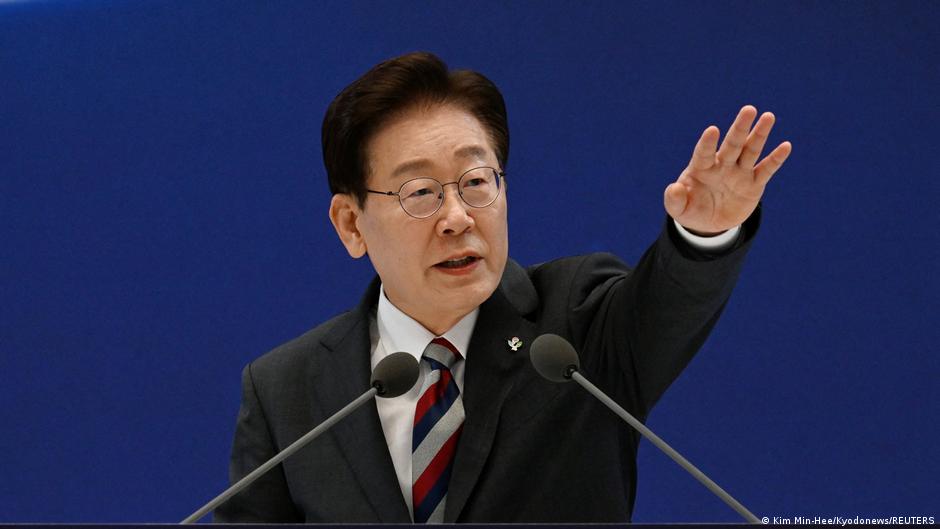
South Korea’s president, Lee Jae Myung, has warned Ukraine that Seoul will take “further measures” if Kyiv refuses to publicly acknowledge what South Korea says was a confidentiality agreement covering the transfer of two captured North Korean soldiers, and if it fails to apologize for disclosing the information. Lee did not specify what those measures would be, but his statement has turned a sensitive wartime intelligence and humanitarian issue into a broader test of trust between two governments whose cooperation has growing economic and strategic significance.
Writing on X overnight on Friday, October 2, Lee said South Korea could not ignore a matter involving national honor. He accused Kyiv of making Seoul appear to be a liar by denying the existence of an agreement that South Korean officials say should have kept the transfer confidential.
“If the acknowledgment of facts and a public apology continue to be rejected, we will take further measures. This is a matter of the honor of the Korean people and state that we cannot ignore,” Lee wrote.
The dispute began after Ukrainian President Volodymyr Zelensky said at the United Nations General Assembly in late September that Kyiv had transferred two North Korean prisoners of war to South Korea. Seoul sharply criticized Ukraine after the disclosure, arguing that making the information public could endanger the prisoners’ relatives in North Korea and negatively affect relations between Seoul and Pyongyang. South Korea’s first vice foreign minister, Park Yoon-joo, said Kyiv’s denial of any agreement undermined mutual trust and demanded official explanations and an apology.
Dmytro Lytvyn, an adviser to the Ukrainian president on communications, said there had been no agreement between Kyiv and Seoul that information about the prisoners’ fate could not be disclosed. South Korea’s presidential administration expressed “deep regret” over those remarks.
A Diplomatic Dispute With Economic Consequences
For Econpress readers, the central issue is not only the immediate diplomatic clash but the potential economic consequences of a deterioration in South Korea-Ukraine relations. South Korea has so far supplied Ukraine mainly with non-lethal military equipment, including demining gear. Yet several Western countries have recently urged Seoul to provide lethal weapons as well, according to Reuters. That debate matters because South Korea is one of the world’s most important defense manufacturers and a major industrial exporter with advanced capacity in artillery, armored vehicles, electronics, shipbuilding and logistics systems.
Any cooling of ties would therefore carry implications beyond protocol. Ukraine’s long war has created heavy demand for military equipment, reconstruction technology, power infrastructure, transport systems and mine clearance tools. South Korean companies are positioned in many of those sectors. A diplomatic rupture, or even a prolonged chill, could slow the evolution of a partnership that might otherwise extend from battlefield support to postwar rebuilding, industrial cooperation and infrastructure finance.
Ukraine’s foreign minister, Andrii Sybiha, sought to reduce the temperature in remarks to reporters in Kyiv hours before Lee’s post was published. He said Ukraine was interested in settling the dispute with South Korea as quickly as possible and continuing cooperation with Seoul. “I would not want to call this an incident. Let us say it is a diplomatic misunderstanding,” he was quoted as saying by RBC-Ukraine.
Sybiha said he had personally been in daily contact in recent days with his South Korean counterpart. “I very much want this situation to be resolved in the near future, and we are working on it. For us, South Korea is an important country. And I very much hope for momentum, continuation and concrete results that we are indeed achieving with them,” the Ukrainian minister said.
Historical Parallels and the North Korea Factor
The controversy also reflects the structural difficulty of linking the war in Ukraine with security dynamics on the Korean peninsula. During the Cold War, conflicts in one region often had consequences in another because alliances, intelligence networks and arms flows connected formally separate theaters. The present dispute shows a similar pattern: North Korean involvement in Russia’s war against Ukraine has pulled Seoul into a conflict it has tried to support cautiously, while avoiding unnecessary escalation with Pyongyang.
Lee has previously argued that public disclosure of the prisoner transfer could put the captives’ families in North Korea at risk and complicate relations between Seoul and Pyongyang. In South Korean domestic politics, Seoul’s handling of the confrontation with Ukraine “could prove problematic,” given the current administration’s cautious approach toward its nuclear-armed northern neighbor, Shin Yul, a professor of political science at Myongji University, told AFP.
That domestic constraint is economically relevant. South Korea’s export-led economy is highly sensitive to security risk on the peninsula. Any perception that Seoul is being drawn more directly into the Ukraine war, or that its policy toward North Korea is becoming less predictable, may complicate diplomatic calculations around defense exports, sanctions enforcement and supply-chain resilience. The government must balance alliance pressure from Western partners with the economic and security costs of provoking Pyongyang.
On September 28, South Korea’s Yonhap news agency reported that the foreign ministry had summoned Ukraine’s ambassador over Kyiv’s disclosure of information about the North Korean prisoners. On September 30, AFP reported, citing South Korean lawmaker Youn Kun-young, that both prisoners had arrived in South Korea in mid-September. After interrogation and a security review, Seoul’s authorities are expected to decide whether to grant them protection and begin the resettlement process.
The prisoner issue comes against the backdrop of Ukraine’s claims about the scale of North Korean military involvement on Russia’s side. Last week, Zelensky wrote on social media that, according to his information, about 8,000 North Korean troops are currently in Russia and another 10,000 are preparing to be sent there and then onward to the war against Ukraine.
For Ukraine, maintaining South Korean cooperation matters because the war is increasingly shaped by production capacity as much as battlefield tactics. For South Korea, the dispute tests how far it can support Ukraine while preserving its own deterrence posture and managing risks to civilians connected to North Korea. The immediate demand from Seoul is an acknowledgment and apology. The deeper question is whether a confidentiality dispute can derail a relationship whose strategic and economic value has only grown as the war has widened into a contest of industrial endurance.