Russian Strikes Hit Ukrainian Cities as Power Curbs Signal Wider Economic Strain
Attacks on Kyiv, Odesa, Sumy and energy facilities point to renewed pressure on Ukraine’s urban economy and power system.
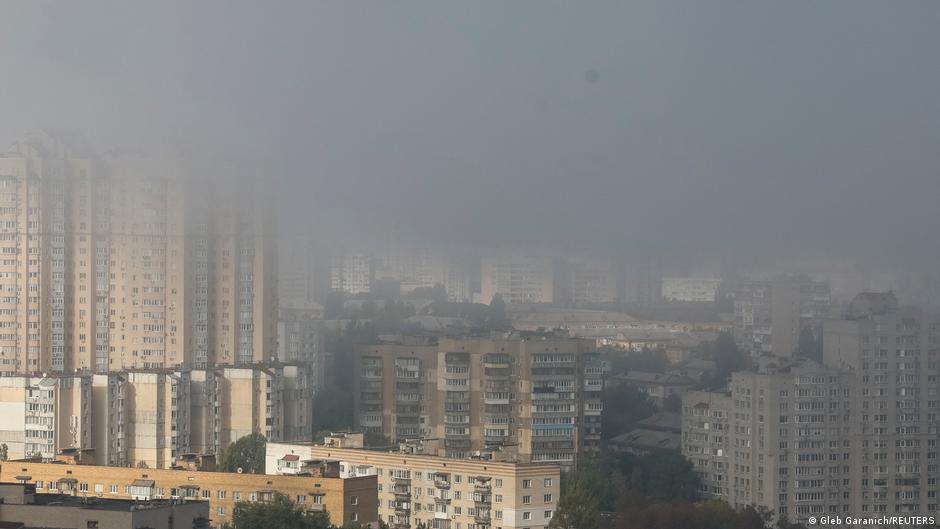
Russian forces carried out another wave of attacks on several Ukrainian regions on the evening of Wednesday, September 30, damaging warehouses, residential buildings, commercial property and energy infrastructure, according to local authorities, emergency services and media reports. The immediate toll included at least six people wounded in Sumy and one woman injured in the Boryspil district of Kyiv region, while Ukraine’s electricity operator warned that power-consumption limits would be imposed in some regions on October 1.
The attacks again underscored a pattern that has become central to the economic dimension of the war: strikes on cities and infrastructure do not only create immediate physical damage, but also disrupt the networks through which households, firms, transport, schools and public services continue to function. For Ukraine, the operational question is not only how to repair individual sites, but how to preserve economic continuity under recurring pressure on urban assets and the power grid.
In Kyiv, Mayor Vitali Klitschko reported on Telegram that a drone hit warehouse premises in the Obolon district. In the Holosiivskyi district, debris from an unmanned aerial vehicle fell on open ground near a road, causing trees to catch fire. According to the UNIAN news agency, a Russian drone struck a multi-storey residential building in the Solomianskyi district of the capital. The main damage there was caused to a cafe on the ground floor. The blast wave and debris also damaged several other establishments, apartment windows and cars parked nearby.
In Odesa, a drone hit a business center, extending the geography of the evening attacks from the capital region to one of Ukraine’s most important southern urban and commercial hubs. The reported impact on a business center is economically significant even without disclosed figures for losses: such sites concentrate offices, service firms and administrative functions, and damage can interrupt activity beyond the physical footprint of the strike.
Urban Damage and the Cost of Disruption
The evening attacks also caused damage across five districts of Kyiv region, according to Timur Tkachenko, head of the Kyiv Regional Military Administration, writing on Telegram. He said a woman was injured in the Boryspil district as a result of the enemy attack. Several residential buildings and cars were also damaged in the Bucha, Obukhiv, Fastiv and Bila Tserkva districts. In Bila Tserkva, the building of an educational institution was also damaged, Tkachenko said.
“As a result of the enemy attack in the Boryspil district, a woman was injured,” Tkachenko wrote.
The spread of damage across multiple districts matters for the structure of recovery. When strikes affect a single industrial plant or a single substation, repairs can often be organized around a defined asset. When damage is distributed among homes, cafes, cars, schools, warehouses and business premises, costs are dispersed across households, local budgets, insurers where coverage exists, and firms already operating under wartime constraints. That distribution makes the economic burden harder to capture in one number, but it can be substantial over time.
Sumy was also hit. Russian forces used guided aerial bombs against the city, the Main Directorate of the State Emergency Service in Sumy region reported on Facebook. Preliminary data indicated that six people were injured. Private homes and apartment buildings were damaged, and the roof of one of the buildings caught fire.
For cities near active military pressure, such attacks compound the economic fragility of housing stock and local services. Damage to residential buildings carries direct repair costs, but it can also temporarily displace families, reduce consumer activity, and place additional demands on municipal emergency services. In an economy already affected by mobilization, migration, security risks and external financing needs, these localized shocks accumulate.
Power Limits Add a Systemic Layer
The most economically consequential element of the evening may be the energy warning that followed. Ukraine’s national energy company Ukrenergo said on Facebook that, because of Russian attacks on energy facilities, measures limiting electricity consumption would be introduced. The company said that due to a difficult situation in the energy system, forced consumption restrictions would be applied in some Ukrainian regions on Thursday, October 1.
For industry and business, power limitation schedules were set to apply from 8:00 a.m. to 9:00 p.m., Ukrenergo said. Hourly outage schedules for all categories of consumers were to apply from 8:00 a.m. to 11:00 a.m. and from 4:00 p.m. to 9:00 p.m. In Kyiv and three other Ukrainian regions, local authorities applied emergency electricity shutdown schedules already on September 30.
Power restrictions are not merely a utility-management issue. They are a macroeconomic constraint transmitted through factories, logistics centers, retail outlets, food storage, medical services, schools and digital infrastructure. Scheduled limits can be managed more efficiently than sudden blackouts, but they still reduce productive hours, raise operating costs and force firms to rely on generators, batteries or altered shifts. Small businesses are often less able than large industrial operators to absorb those costs.
The historical parallel is clear: in modern wars, energy infrastructure becomes an economic pressure point because electricity links the battlefield to civilian production. Ukraine has previously had to adapt to waves of attacks on its power system by repairing damaged facilities, redistributing supply, and using consumption schedules to stabilize the grid. The latest restrictions suggest that energy resilience remains one of the central economic fronts.
The reported damage in Kyiv, Odesa, Sumy and the wider Kyiv region therefore has two layers. The first is visible: damaged buildings, burned roofs, broken windows, hit warehouses, affected cafes, business premises and cars. The second is systemic: the forced management of electricity demand after attacks on energy facilities. Together, they show how the war’s economic consequences extend beyond headline destruction, pressing on the routines that allow businesses to open, households to plan, and public services to operate.
No comprehensive damage estimate was provided in the reports cited by local authorities, emergency services and media. But the structure of the incident points to a broader economic reality for Ukraine as October begins: resilience depends not only on air defense and emergency response, but also on the capacity of local economies and the national energy system to keep absorbing shocks without losing functional continuity.