Lithuania Moves to Curb Russian and Belarusian Property Purchases Near Strategic Sites
The proposed restrictions extend Lithuania’s sanctions architecture into real estate, tying ownership rules to counterintelligence and national security policy.
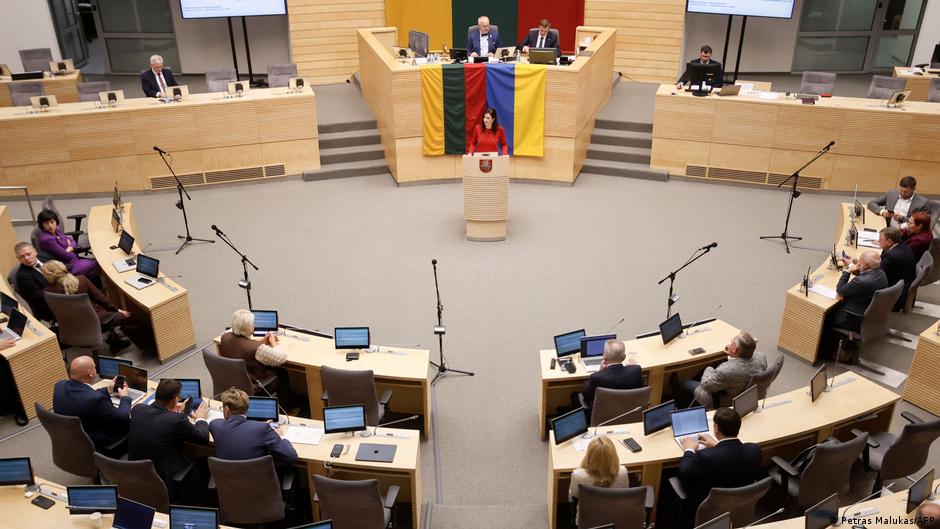
Lithuania’s government has approved a draft law that would bar citizens of Russia and Belarus, including those holding valid residence permits, from buying real estate near facilities deemed strategically important. The measure, reported by Lithuanian National Radio and Television on Wednesday, September 30, is framed by Vilnius as part of a broader effort to counter espionage and hybrid operations.
The proposed ban would not apply when property rights are acquired through inheritance. If approved by Lithuania’s parliament, the Seimas, the amendments would take effect on January 1, 2027. Similar restrictions are already in force in Latvia and Finland, while Estonia is still planning to introduce a comparable prohibition.
Although the immediate policy instrument is a property rule, the economic significance is broader. Lithuania is treating access to land and buildings around sensitive infrastructure not merely as a market transaction, but as a security exposure. That reflects a wider shift across Europe’s eastern flank since Russia’s full-scale war against Ukraine: asset ownership, residency rights, cash movements and cross-border mobility are increasingly being folded into national security regimes.
Real Estate as a Security Boundary
According to the draft, the prohibition is intended to “significantly reduce” intelligence activity and “hybrid operations” in Lithuania. The document cites risks such as monitoring military exercises or tracking the movement of troops. In economic terms, the state is drawing a sharper distinction between ordinary private property rights and ownership in locations where proximity itself may create strategic value.
“The ban should significantly reduce intelligence activity and hybrid operations,” the draft states, including activities such as observing military exercises or monitoring troop movements.
The numbers indicate why the policy could have more than symbolic effect. Data from Lithuania’s Central Register for May showed that 5,104 Russian citizens and 2,781 Belarusian citizens with temporary or indefinite residence permits had acquired real estate in Lithuania, including near strategically important sites. The source does not specify how many properties would be affected by the new rule, but the figures show that the targeted group is not marginal.
For the property market, the impact will likely be highly uneven. A nationwide ban on all purchases would have direct consequences for demand across many categories of housing and commercial real estate. Lithuania’s proposed restriction is narrower: it is tied to areas near strategic sites. That design suggests a deliberate attempt to reduce security exposure while avoiding a blanket disruption of the broader market. Still, for specific municipalities or districts located near military, energy, transport or other sensitive infrastructure, the measure could alter the pool of eligible buyers and complicate transactions involving Russian or Belarusian nationals.
A Regional Pattern of Economic Containment
Lithuania’s move fits a regional pattern. Latvia and Finland already have analogous restrictions, and Estonia is considering a similar ban. In June, Latvia’s parliament approved restrictions on issuing residence permits to citizens of Russia and Belarus. The Baltic and Nordic approaches differ in detail, but they share a common premise: legal residence and participation in local property markets do not automatically remove geopolitical risk.
The logic resembles older wartime and Cold War controls on ownership near ports, railways, military installations and communications networks. What is new is the contemporary vocabulary of “hybrid operations,” which links classic espionage concerns with economic presence, information gathering and legal footholds inside open markets. The result is a policy environment in which property law becomes part of deterrence.
Lithuania has already built a wider sanctions framework around Russian and Belarusian citizens. In late April, the Seimas voted 95 to six to extend until December 31, 2027, the law on sanctions against citizens of Russia and Belarus. The law was originally adopted on May 3, 2023. Under it, Lithuania suspended the acceptance of applications from Russian and Belarusian citizens for Schengen and national visas. Russian citizens are also prohibited from acquiring real estate in Lithuania, importing cash Ukrainian hryvnias and obtaining electronic resident status.
The rules also affect mobility. Temporary residence permits for Russian citizens are annulled if authorities establish that they visited Russia or Belarus more than once during the previous three calendar months, unless the trip was caused by objective reasons or was connected with work in international transport. This provision shows how Lithuania is using administrative status as an enforcement channel: residence rights become conditional on behavior that the state considers compatible with its security interests.
Security Policy With Market Consequences
The economic consequences of such measures extend beyond the direct volume of transactions. They can affect legal due diligence, bank compliance, notarial procedures and investor perception. Buyers, sellers and intermediaries may face additional checks when property is located near designated strategic objects. Over time, that may segment the real estate market into ordinary zones and higher-scrutiny zones, with different transaction costs and risk assessments.
There is also a signaling effect. Lithuania is communicating that market access is conditional during a period of heightened confrontation with Russia and Belarus. For allied governments and defense partners, that may strengthen confidence in Lithuania’s management of sensitive infrastructure. For affected individuals, including residents who have built lives in Lithuania, the policy narrows the economic rights attached to residency.
The proposed property restrictions coincide with other security debates in Lithuania. On September 22, members of the Seimas supported a proposal to remove the constitutional ban on storing weapons of mass destruction, including nuclear weapons, on Lithuanian territory. According to LRT, 99 lawmakers supported the decision, 13 opposed it and five abstained. The amendment must still be approved through several rounds of voting, with the first scheduled for October 6 and the final vote set for January 12, 2027.
At the same time, Lithuanian President Gitanas Nauseda said on X that American troops due to replace previously departed U.S. forces under a rotation were already on their way to Lithuania. He wrote that he had just received confirmation that a new contingent of U.S. military personnel was heading to the country and thanked U.S. President Donald Trump for the decision.
Taken together, these developments point to a structural reordering of Lithuania’s security economy. Property rights, residence permits, military rotations and constitutional defense provisions are being addressed through overlapping policy channels. The draft real estate ban is therefore not an isolated administrative measure. It is part of a broader attempt to align Lithuania’s internal economic rules with the security pressures of its geopolitical position.