‘Returning the Names’ Memorial Events Held in 101 Cities Worldwide
The global commemoration highlights how historical memory, civic institutions and state policy shape long-term social and economic resilience.
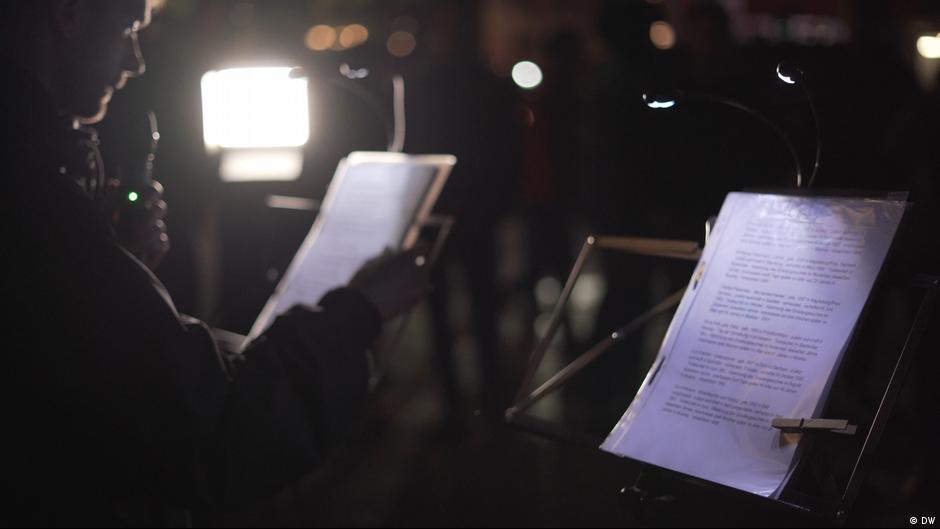
The annual “Returning the Names” campaign commemorating victims of Stalinist repression was held across several countries on Thursday, October 29, ahead of the Day of Remembrance of Victims of Political Repression. The campaign’s website listed 101 cities where events took place this year, either on October 29 or earlier.
The geographic reach underscores how a remembrance initiative established in Moscow has evolved into a transnational civic network. Germany accounted for 15 participating cities, including Berlin, Munich, Hamburg, Cologne, Bonn, Düsseldorf, Bremen and Bielefeld. In Paris, the Memorial France association organized a ceremony at a monument to Parisians killed in the First World War on Boulevard de Ménilmontant.
Although primarily a memorial project, “Returning the Names” also speaks to questions central to institutional economics. Political repression does not end with the immediate loss of life or liberty. It can weaken trust, discourage independent association, disrupt the transmission of skills and property, and leave societies with persistent uncertainty about the security of rights. Public commemoration can therefore be understood as part of the institutional process through which societies document past state violence and establish norms intended to prevent its recurrence.
Private remembrance returns inside Russia
Russian authorities have declined to authorize the campaign since 2020, initially citing measures to combat the coronavirus. Pressure on independent historical-memory initiatives intensified after the liquidation of the international Memorial society in 2021. The campaign nevertheless continued abroad, while people inside Russia sought other ways to commemorate those who died.
“The campaign did not disappear: it continued in other countries, while people in Russia still find ways to honor the memory of the dead.”
This year, Russia saw what The Insider described as the first independent commemorations for victims of repression since Memorial was banned. Events took place in the Irkutsk region, Kirov and Veliky Novgorod. Similar gatherings were scheduled for October 30 in St. Petersburg, Kopeysk in the Chelyabinsk region and Tolyatti in the Samara region.
In Moscow, diplomats from Sweden, the Czech Republic, the Netherlands, Poland and other countries visited the Solovetsky Stone on Lubyanka Square. RusNews reported that no representative of the United States Embassy attended this year.
The shift from a centrally organized public gathering to smaller private or independent events illustrates a broader economic feature of civic institutions: when formal channels are restricted, activity often becomes decentralized. Such adaptation may preserve participation, but it also raises coordination costs, limits visibility and makes long-term organization more difficult. International expansion can partly offset those constraints by sustaining networks, archives and public attention outside the country where the historical events occurred.
From a Moscow ceremony to a global network
The international Memorial society first organized “Returning the Names” in 2007. On October 29 of that year, participants gathered at the Solovetsky Stone in Moscow and read aloud the names of people executed or otherwise repressed by the Soviet state. The format was deliberately individual: the recitation of names restored personal identities to people often represented in history as aggregate statistics.
Since then, the reading of names has taken place both in person and remotely, accompanied by online broadcasts. Digital participation has expanded the campaign’s potential reach and lowered geographic barriers, although it cannot fully replace the symbolic weight of gathering at physical memorial sites. According to the campaign’s website, events were held in 150 cities in 2025, compared with the 101 cities listed for the current year.
The decline in the number of participating cities does not by itself establish a lasting trend, but it offers a reminder that civic networks depend on organizational capacity, legal conditions and volunteer resources. Unlike commercial institutions, remembrance projects rarely generate revenue sufficient to sustain themselves. Their continuity rests on associations, local organizers and the ability to maintain public space for collective action.
Historical parallels suggest that the economic consequences of repression extend beyond confiscated assets, lost labor and interrupted careers. Systems built around fear can distort incentives for generations: households avoid risk, professionals become reluctant to challenge authority, and informal relationships substitute for predictable institutions. Economies may continue to produce and grow under such conditions, but innovation and investment become harder when individuals cannot rely on stable rules or speak openly about institutional failures.
“Returning the Names” addresses that legacy through a simple act of public accounting. Its ceremonies neither quantify the full economic cost of Stalinist repression nor resolve contemporary disputes over historical policy. They do, however, preserve information and individual testimony—forms of social capital that influence how institutions are evaluated. The campaign’s presence in 101 cities, alongside the emergence of private commemorations in Russia, shows that historical memory continues to operate across borders even when its organizational foundations face pressure at home.