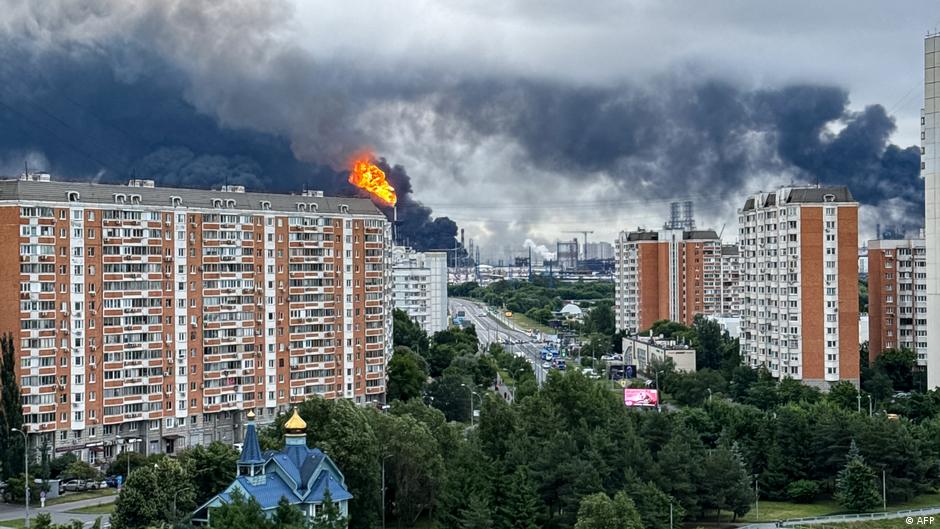
Russian Strikes Deepen Ukraine’s Human and Economic Costs
Attacks across Ukrainian cities killed civilians and damaged transport, commercial and industrial assets, compounding wartime economic pressures.
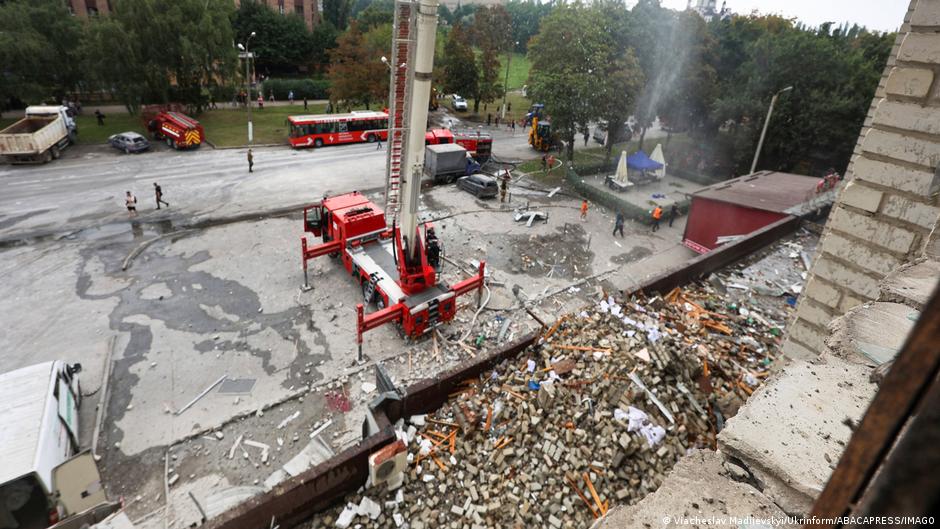
Russian strikes across Ukraine on October 29 killed civilians, injured dozens and damaged infrastructure ranging from railway facilities and warehouses to shops, vehicles and industrial premises. Beyond the immediate human toll, the attacks illustrate how repeated damage to transport links, workplaces and urban property can steadily weaken an economy already operating under the pressures of war.
In central Chernihiv, two 15-year-old girls were killed by a Banderol, or S8000, munition, described as a compact hybrid of a cruise missile and a jet-powered attack drone. At least 25 people were injured, including four children: a 10-month-old girl, a 10-year-old girl, and boys aged 16 and 17, according to regional military administration head Viacheslav Chaus.
“Two children — a brother and sister — are in serious condition. Eight people in total are currently in hospitals. The others received medical assistance at the scene or are being treated as outpatients,” Chaus wrote.
Ukraine’s State Emergency Service said the strike hit an ordinary street, damaging homes, shops and cars, and described the location as having no military significance. Chernihiv declared October 30 a day of mourning.
Transport and urban assets under pressure
In Dnipro, a drone strike on the railway station killed at least 14 people and injured another 14. Railway hubs are central not only to passenger movement but also to the broader circulation of labor, goods and essential supplies. Damage or disruption at such facilities can impose costs beyond physical repairs, including delays, rerouting and heightened security requirements.
Kremenchuk also suffered substantial casualties. Three residents were killed and another 25 people were injured in a Russian attack, according to Ukraine’s emergency service. In Zaporizhzhia, two men aged 41 and 66 were injured and received medical care. Emergency officials reported that four passenger cars and an open area caught fire, while a warehouse building, four cars and four buses were damaged.
These losses demonstrate the cumulative economic effect of attacks dispersed across multiple cities. A damaged bus reduces local transport capacity; destroyed cars complicate household mobility; a damaged warehouse interrupts inventories and distribution. Even when individual incidents do not disable an entire sector, repeated losses can raise insurance, logistics, replacement and operating costs throughout the economy.
Later on October 29, a Russian missile struck Kharkiv’s Slobidskyi district, the State Emergency Service said. Fires broke out in an industrial building and on adjacent territory, covering a combined area of 400 square meters. At another location, remnants of various materials burned across 80 square meters. Two trucks were also damaged. Officials did not specify why the explosion caused the fire or what had been stored in the industrial building.
Kharkiv Mayor Ihor Terekhov said the strike was carried out with a Banderol munition. Damage to production premises and freight vehicles is particularly consequential in an industrial city: it can interrupt output directly while also affecting suppliers, workers and customers linked to the damaged facility.
Cumulative damage and wartime resilience
Kyiv was targeted with a ballistic missile on the evening of October 29, according to Mayor Vitali Klitschko. Warehouse buildings were hit in the Darnytskyi district, causing a fire. In the Dniprovskyi district, missile debris burned in the courtyard of a residential complex. Klitschko said blast waves broke windows in one residential building, while windows and cars were damaged at another address. A shop near the residential complex was partially destroyed.
Kyiv’s city military administration reported that one person was killed in the attack. Earlier that day, President Volodymyr Zelensky said in his daily address that Ukrainian intelligence indicated Russia was preparing to attack the country again with ballistic missiles.
Historically, sustained attacks on urban and transport infrastructure have forced wartime economies to divert labor, materials and public funds from investment toward emergency response and reconstruction. The same mechanism is visible in Ukraine: firefighters, medical personnel and municipal services must address immediate destruction, while households and businesses absorb lost property, interrupted activity and uncertainty.
The structural consequences extend beyond a single day’s damage. Repeated attacks can influence where businesses operate, how much inventory they hold, which routes carriers use and whether displaced workers return. Repairs may restore individual buildings or vehicles, but uncertainty itself becomes an economic cost by discouraging long-term planning and requiring spare capacity across transport, energy and public services.
Russia’s Defense Ministry, meanwhile, said on Telegram on the evening of October 29 that Russian forces had used drones to strike Ukrainian port infrastructure and vessels employed in the interests of Ukraine’s armed forces. It also reported a strike on a temporary Ukrainian troop deployment point in the Kharkiv direction and said Russian forces had identified and destroyed enemy FPV-drone control points in the Dnipropetrovsk direction.
The competing accounts reflect the wider military context, but the reported civilian deaths and damage across Chernihiv, Dnipro, Kremenchuk, Zaporizhzhia, Kharkiv and Kyiv also reveal an economic pattern: dispersed attacks can generate nationwide costs by repeatedly hitting the networks, assets and communities on which recovery depends.