Right-Wing AfD Party Expels Politician for Hitler-Style Speech Amid Internal Turmoil
Alexander Eichwald's exclusion from the AfD underscores deeper ideological conflicts and historical sensitivities within Germany's right-wing movement.
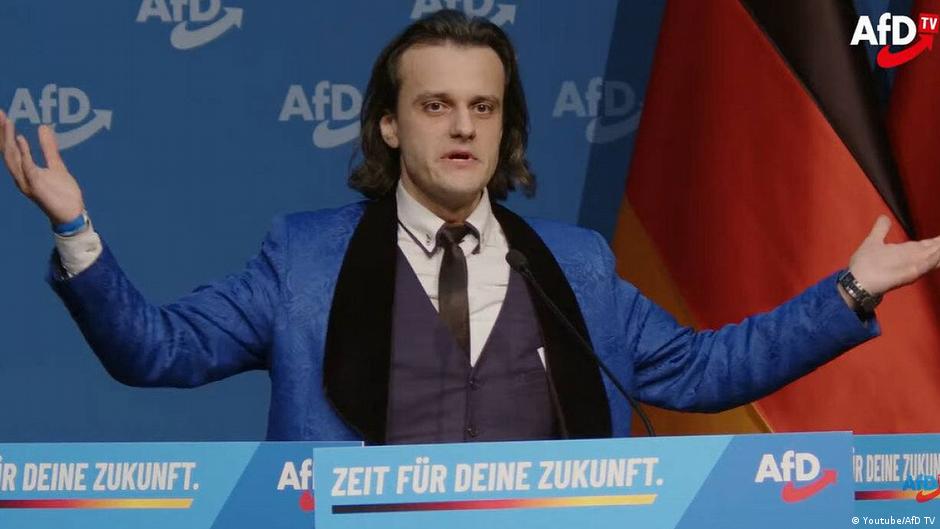
The Alternative for Germany (AfD), a right-wing populist party, has expelled 30-year-old Alexander Eichwald following controversy over his speech style, which closely resembled the oratory mannerisms of Adolf Hitler. The disciplinary court of the AfD cited Eichwald's conduct as severely damaging to the party's image.
Historical Echoes and Political Symbolism
Eichwald, a Russian-born German politician from the party's youth wing "Generation Germany," rose to prominent media attention after delivering a speech at the organization's congress in North Rhine-Westphalia in late November 2025. His exaggerated gestures, drawn-out words, and particularly the pronunciation of the letter "r" evoked the distinctive rhetoric of Hitler, triggering widespread public and internal party criticism.
He attributed his speech mannerism to his Russian upbringing, having moved from Rostov-on-Don to Germany at age nine, and having learned German initially through listening to the band Rammstein. While Eichwald normally speaks with a Russian accent, the specific Hitler-like pronunciation was not typical of his everyday speech.
"The AfD 'exposed itself' through its harsh reaction to my speech," Eichwald stated, describing his performance as a "planned action" to hold a mirror to society and reveal the presence of neo-Nazi elements within the AfD leadership.
Rejecting accusations of satire or parody, Eichwald claimed he enacted a persona to raise awareness about unsettling ideological undercurrents in his party. He controversially compared contemporary Germany to the Weimar Republic, the unstable democracy that preceded Hitler's rise to power.
Structural Struggles Within the AfD
The disciplinary tribunal's decision to exclude Eichwald is a window into the ongoing tensions within the AfD between its more moderate elements and factions sympathetic to extremist nationalist ideologies. Eichwald criticized AfD co-chair Alice Weidel for previously referring to Hitler and Stalin as "spiritual brothers," a remark he described as a personal affront and an attempt to downplay the atrocities committed against Slavic peoples during World War II.
Shortly before his expulsion, Eichwald uploaded a half-hour video on YouTube reiterating his controversial speech mannerisms and reaffirming his readiness to repeat the act. His refusal to accept the party's decision suggests that ideological fault lines within the AfD are far from resolved.
The Eichwald case highlights the AfD's ongoing struggle with extremism and the socio-political consequences this poses for Germany's democratic fabric. As the party seeks to balance nationalist appeal with broader electoral viability, episodes like this underscore the persistent risks of historical symbolism being weaponized in contemporary political discourse.