Russian Air Strikes on Zaporizhzhia and Sumy Cause Civilian Casualties and Infrastructure Damage
Russian forces launched precision air bomb attacks on Ukrainian cities Zaporizhzhia and Sumy, resulting in multiple deaths and extensive damage to civilian infrastructure.
On July 19, Russian military forces conducted targeted air strikes using precision-guided bombs on the Ukrainian cities of Zaporizhzhia and Sumy. These attacks resulted in civilian casualties and significant damage to residential buildings and critical infrastructure, underscoring the continuing humanitarian toll and economic disruption in conflict zones.
Impact on Civilian Populations and Infrastructure
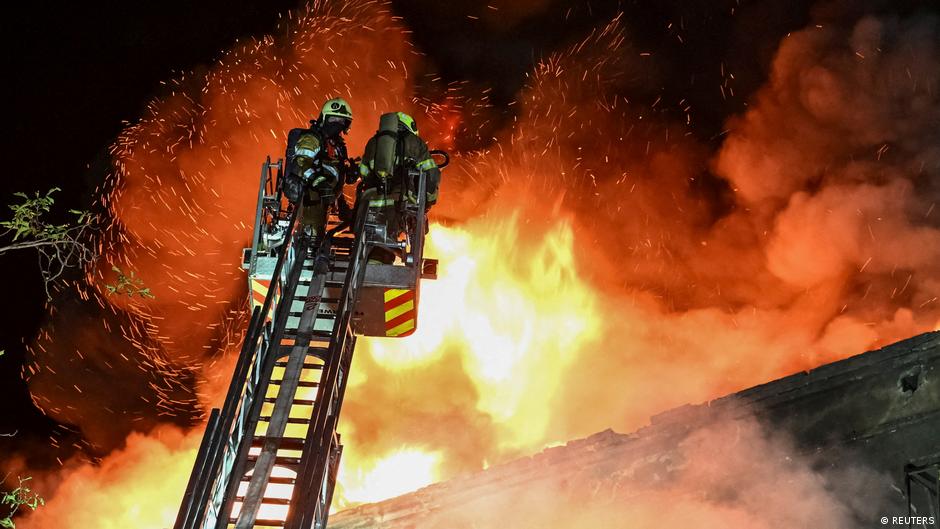
In Zaporizhzhia, the attack hit a residential area, completely destroying two floors of a five-story apartment building. Additionally, a nine-story building suffered damage to windows and balconies, while a logistics operator’s terminal caught fire. According to local officials, the strikes caused at least two civilian deaths and wounded over 40 people, including eight children. The use of precision-guided aerial bombs indicates a calculated targeting strategy that nonetheless resulted in substantial harm to non-military infrastructure.
Earlier the same day, Russian forces targeted Sumy with similar air bomb attacks, hitting civilian infrastructure in the Kovpakivskyi district. At least one person was killed and three injured. Damage was recorded in both residential areas and industrial zones, reflecting a broader impact on the urban economy and living conditions.
"Preliminary data indicates seven precision-guided bombs were used. Damage spans residential and industrial sectors," stated the head of Sumy Regional Military Administration.
The targeting of civilian infrastructure in both cities highlights the precarious situation for local economies and communities. Residential buildings’ destruction displaces families and disrupts social structures, while damage to industrial and logistical facilities impedes economic activities vital for regional recovery and stability.
Economic and Structural Consequences
The strategic choice to strike urban civilian targets has deep economic implications. Zaporizhzhia, being a significant industrial and logistical hub in southeastern Ukraine, plays a crucial role in regional supply chains and employment. Damage to logistics terminals and residential complexes affects not only immediate economic output but also long-term human capital and labor availability. The destruction of homes forces population displacement, leading to labor market disruptions and increased social welfare burdens.
Similarly, Sumy’s industrial zones form part of an interconnected economic network sustaining local and regional economies. Damage to industrial assets undermines production capacity and interrupts supply chains. The broader economic environment in conflict-affected regions is characterized by uncertainty, increased costs of reconstruction, and challenges to attracting investment.
Historical parallels can be drawn to urban warfare and sustained bombardment in previous conflicts, where civilian infrastructure damages led to prolonged economic downturns and complex post-conflict recovery processes. The repeated targeting of civilian areas risks entrenching poverty, disrupting education and healthcare access, and necessitating extensive reconstruction expenditures.
In conclusion, the July 19 air strikes on Zaporizhzhia and Sumy exemplify the intersection of military objectives with profound socioeconomic costs. Understanding the structural economic consequences is critical to formulating effective humanitarian responses and planning for post-conflict reconstruction and regional economic stabilization.