Russia’s Attacks on Black Sea Merchant Ships Escalate Economic and Humanitarian Risks, Ukraine Seeks UN Security Council Action
Ukraine condemns Russia’s targeted assaults on commercial shipping in the Black Sea as deliberate economic and humanitarian terror, urging urgent UN Security Council intervention.
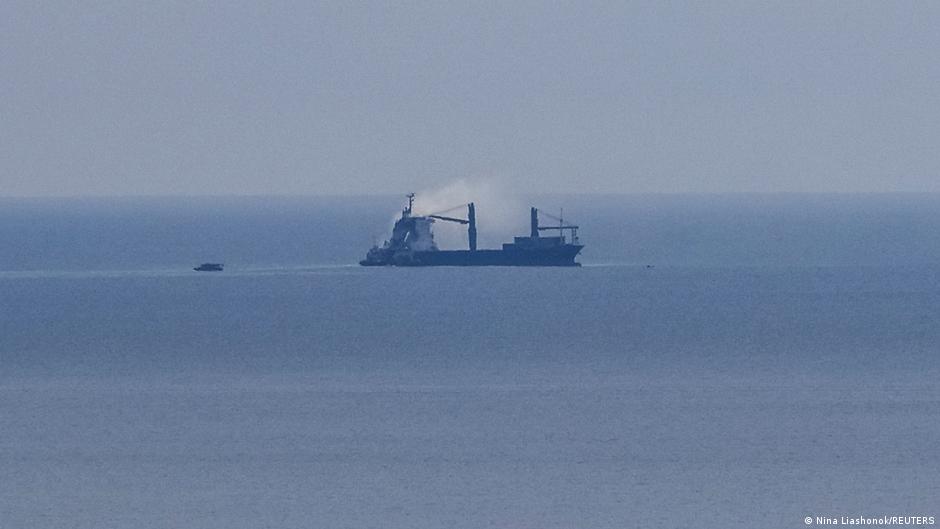
Recent attacks by Russia on commercial vessels operating in the Black Sea have intensified concerns about the stability of global supply chains, particularly in food exports. Ukraine has officially requested an emergency meeting of the United Nations Security Council to address what it describes as "economic and humanitarian terror" carried out by Russia through its targeting of civilian maritime routes.
Strategic and Economic Implications of Black Sea Maritime Attacks
Ukraine’s Foreign Minister, Andriy Sybiha, emphasized in his public statements that Russia’s actions are not random but a calculated attempt to jeopardize vital trade corridors. By disrupting the flow of goods via the Black Sea, which is a significant artery for Ukrainian exports, Russia threatens to destabilize global food markets, potentially triggering price spikes and shortages across multiple continents including Africa, Asia, the Middle East, and Latin America.
“If this terror continues, millions of families worldwide could face rising food prices and hunger,” Sybiha warned.
The maritime corridor through the Black Sea is crucial for Ukraine’s economy, as it facilitates the export of agricultural products and other commodities. Despite recent attacks, Ukrainian authorities report that ports such as Chornomorsk remain operational, sustaining the “Ukrainian maritime corridor” which supports international contracts and trade flows.
However, on 22 July, no vessels reportedly passed through this corridor, evidencing the chilling effect of the maritime insecurity created by these attacks.
Russia, for its part, accuses Ukraine of using civilian ships to transport weapons under the guise of commercial cargo, complicating the security assessment of these maritime routes. Meanwhile, Ukraine asserts that its unmanned aerial systems have targeted Russia’s so-called “shadow fleet” in both the Azov and Black Seas, hitting over 190 vessels between 6 and 22 July.
Diplomatic and Security Coordination Amid Heightened Maritime Risks
In response to the escalating situation, Sybiha engaged with key European partners to coordinate a strategic approach. His conversations with German Foreign Minister Johann Wadephul and Estonian Foreign Minister Margus Tsahkna focused on restoring freedom of navigation, enhancing Black Sea security, and eliciting a decisive international response.
The dialogue also extended to strengthening Ukraine’s air defense capabilities and deepening bilateral cooperation in defense industries, reflecting a broader effort to reinforce Ukraine’s resilience amid ongoing hostilities.
These diplomatic efforts underline the intersection of military conflict and global economic stability, highlighting how localized security challenges in the Black Sea have far-reaching consequences for international trade and food security.
Historical Context and Broader Economic Consequences
Historically, maritime chokepoints such as the Black Sea have played pivotal roles in the economic fortunes of nations and regions. Disruptions here echo past instances where conflicts imperiled trade routes, such as during the World Wars or the Suez Canal crises, leading to cascading effects on global markets.
In the current scenario, the attacks risk exacerbating already strained global supply chains amid a fragile post-pandemic recovery and ongoing geopolitical tensions. The threat to Ukraine’s export capacity not only undermines its economy but also imperils global efforts to alleviate food insecurity.
The situation also underscores the strategic vulnerability of maritime trade in contested regions and the importance of international governance mechanisms like the UN Security Council in addressing such crises. Ukraine’s appeal for a Security Council session reflects a push for multilateral engagement to uphold international maritime law and secure critical trade corridors.
As the Black Sea remains a flashpoint of geopolitical contestation, the unfolding events will likely have enduring economic repercussions, necessitating vigilant monitoring and coordinated international policy responses.