Swiss Voters Reject Limits on Sanctions in Test of Neutrality Doctrine
The referendum result preserves Bern’s room to align with EU sanctions while exposing the economic trade-offs embedded in Swiss neutrality.
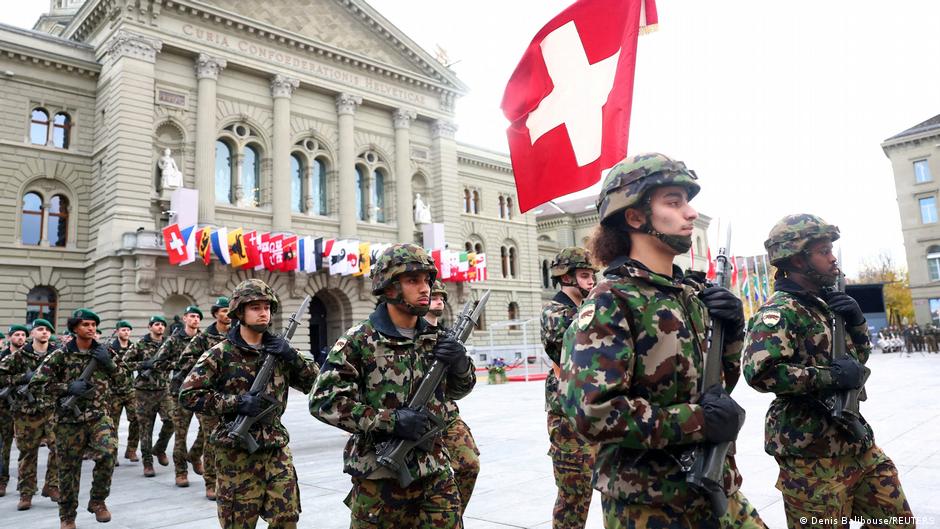
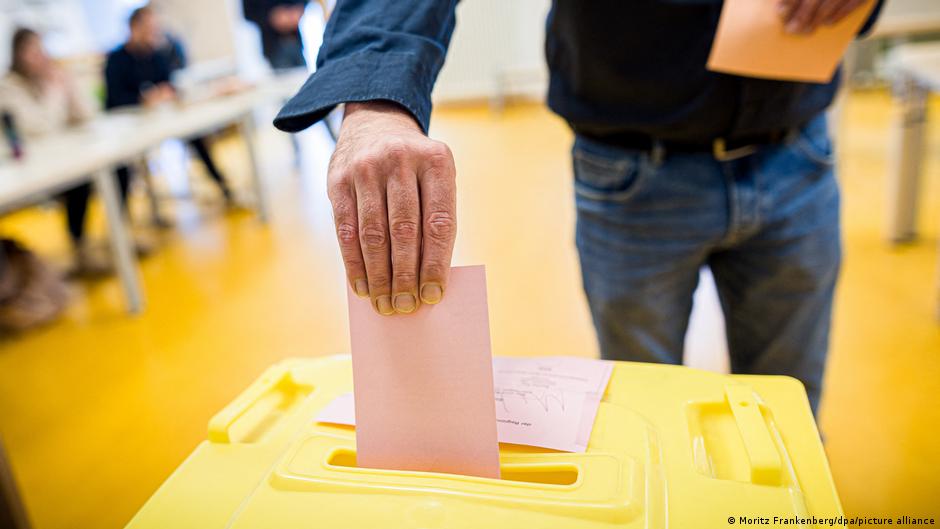
Swiss voters have rejected a proposal that would have sharply narrowed the government’s ability to impose sanctions on countries at war, preserving a flexible interpretation of neutrality that has become increasingly important since Russia’s war in Ukraine. According to official results published on the government website on Sunday, September 27, 70.15 percent of voters opposed the initiative.
The measure, titled “Preserving Swiss Neutrality,” was advanced by Pro Schweiz, an organization close to the right-conservative Swiss People’s Party. Its supporters argued that, although neutrality is anchored in Switzerland’s Constitution, the government had weakened the principle of non-intervention by joining European Union sanctions against Russia over the war in Ukraine.
The rejected proposal sought to write into the Constitution a principle of “permanent and armed” neutrality. It also aimed to prevent Switzerland from joining or cooperating with military alliances, including NATO, except in cases where Switzerland itself came under attack. Most consequentially for economic policy, the initiative would have imposed a broad restriction on sanctions: the government would have been allowed to introduce economic sanctions only after approval by the United Nations Security Council.
Neutrality as an Economic Institution
For Switzerland, neutrality has never been only a diplomatic posture. It has functioned as an economic institution, supporting the country’s role as a financial center, a host for international organizations and a trusted intermediary in periods of geopolitical conflict. The referendum therefore touched a deeper question than whether Bern should follow Brussels on Russia-related sanctions. It asked how much discretion the Swiss state should retain when global commerce, capital flows and legal obligations collide with war.
The proposal’s defeat indicates that voters were unwilling to convert neutrality into a rigid veto over sanctions policy. In practical terms, that preserves Switzerland’s ability to respond alongside key European partners when sanctions are used as instruments of economic pressure. It also avoids a framework in which Swiss action would depend almost entirely on the Security Council, where geopolitical divisions can block collective decisions.
That distinction matters for firms and financial institutions. A Switzerland unable to move in parallel with major sanctions regimes could face reputational risks, legal complexity and pressure from trading partners. Conversely, sanctions alignment can impose costs on businesses with exposure to sanctioned markets, counterparties or assets. The referendum result does not remove those costs, but it keeps the decision-making process in the hands of elected authorities rather than binding it to an external approval mechanism.
Foreign Minister Ignazio Cassis argued during televised debates that Swiss neutrality has always been applied with a degree of “flexibility.”
Cassis also warned against equating neutrality with “indifference.” In his view, Switzerland should not close its eyes to violations of international law in the name of protecting its own interests or preserving peace. That argument became the central counterweight to the initiative’s stricter reading of non-intervention: neutrality, in this interpretation, is compatible with economic measures when international law is at stake.
Political Lines and Market Signals
With the exception of the Swiss People’s Party, all major political forces opposed the initiative. That broad alignment is significant. Switzerland’s referendum system often exposes fractures between popular sovereignty and elite consensus, but in this case voters sided decisively with the mainstream parties. The 70.15 percent rejection suggests that the public was not prepared to restrict the government’s foreign economic policy tools, even under the historically powerful banner of neutrality.
The outcome also sends a signal to external partners. Switzerland is not a member of the European Union, yet its economy is tightly connected to the European market through trade, finance, regulation and geography. Since the war in Ukraine, that interdependence has made sanctions policy a test of how far Swiss neutrality can diverge from European positions without creating strategic or commercial strain. By rejecting the initiative, voters left intact a policy model in which Switzerland can remain formally neutral while still joining economic measures adopted by close partners.
Historically, Swiss neutrality has endured because it has adapted to changing circumstances. The modern global economy makes a purely detached posture harder to sustain. Financial systems are interconnected, supply chains cross borders, and sanctions increasingly operate through banks, insurers, commodity traders and technology restrictions rather than through classic trade embargoes alone. A constitutional rule limiting sanctions to those approved by the UN Security Council would have reduced Bern’s flexibility in precisely the area where speed and coordination often matter most.
The referendum also highlights a broader trend in advanced economies: security policy and economic policy are becoming harder to separate. Measures once treated as diplomatic instruments now affect bank compliance departments, export controls, agricultural markets, energy flows and corporate risk models. For Switzerland, whose prosperity depends heavily on credibility, legal predictability and international access, the economic consequences of neutrality are no longer abstract.
A Second Vote on Food Security
Swiss voters also rejected a separate food security initiative by more than 70 percent. Its supporters proposed raising the share of domestically produced food to at least 70 percent of consumption, increasing production of plant-based foods, reducing the use of plant protection products and fertilizers, and strengthening protection for drinking water, soil fertility and biodiversity.
Although distinct from the neutrality vote, the food security proposal raised a related economic question: how much self-sufficiency should be mandated by the state in response to global uncertainty. The initiative’s rejection suggests that voters were cautious about binding targets that could reshape agricultural production, consumption patterns and environmental regulation. Like the sanctions proposal, it would have written a more prescriptive framework into policy, limiting future flexibility.
Taken together, the two results point to a consistent preference among Swiss voters for adaptability over constitutional rigidity. On neutrality, they declined to turn non-intervention into a sweeping prohibition on sanctions. On food security, they declined to impose a domestic production threshold and a wider set of agricultural requirements. In both cases, the electorate resisted structural constraints that would have reduced the government’s room to respond to shifting economic and geopolitical conditions.
For Switzerland’s economy, the sanctions vote is the more internationally visible outcome. It leaves Bern able to balance neutrality with participation in sanctions regimes, especially when violations of international law are at issue. That balance remains politically contested, but the referendum result gives the current approach a strong democratic endorsement.