Greens Hold Key Lower Saxony Cities as AfD Falls Short in Runoffs
Municipal runoff results in Lower Saxony underscored the limits of far-right gains while strengthening Green leadership in major urban economies.
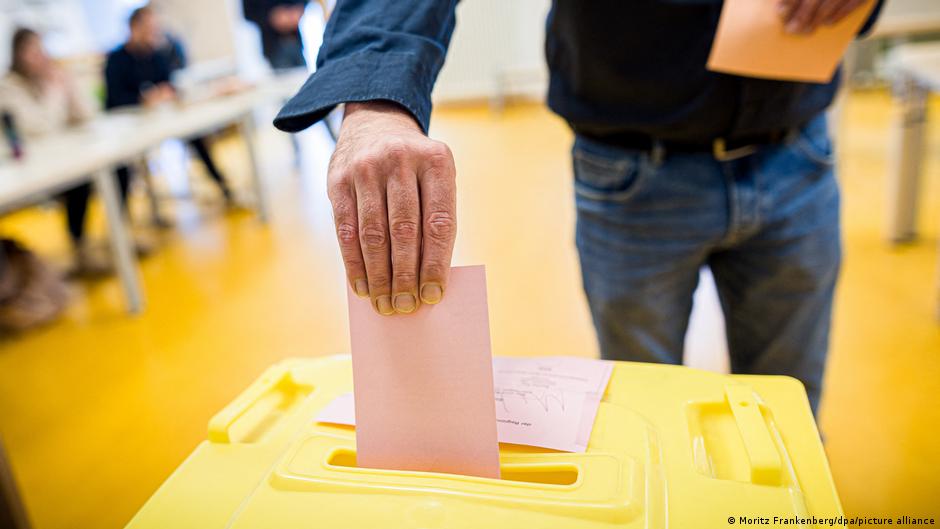
The far-right Alternative for Germany failed to win any of the three mayoral and municipal leadership contests it contested in the second round of local elections in Lower Saxony, a result that tempers the party’s earlier gains and highlights the continued resilience of Germany’s established municipal coalitions.
The runoff elections were held on Sunday, September 27, across 123 municipalities, where residents voted for mayors and heads of other territorial authorities. While the first round had shown the AfD in third place statewide, the second round demonstrated a familiar pattern in German local politics: once contests narrow to head-to-head races, broad anti-AfD majorities can still coalesce around conservative, center-left, Green, or independent candidates.
The clearest result came in Salzgitter, a city of about 100,000 residents with an industrial base that makes local administration closely tied to questions of infrastructure, labor markets, and municipal finance. Frank Klingebiel of the Christian Democratic Union, who has served as lord mayor since 2006, won 74.72% of the vote. AfD candidate Patricia Mair received 25.3%.
In Munster, an independent candidate, Anna Adamczak, won with 80.5% against AfD candidate Christoph Weynand, who received 19.5%. In Bockenem, independent candidate Jens Luer won 69.6%, while AfD candidate Felix Mull received 30.4%.
Across the three contests in which AfD candidates sought executive posts, voters chose CDU or independent candidates by wide margins.
Urban Economies Remain Anchored in Mainstream Governance
The most politically significant outcome came in Hanover, Lower Saxony’s administrative capital and largest city, where Belit Onay of Alliance 90/The Greens retained the mayoralty. Onay, who has held the post since 2019, defeated Axel von der Ohe of the Social Democratic Party in the second round.
For a city such as Hanover, the result is more than a partisan marker. Regional capitals in Germany function as administrative, transport, services, and knowledge-economy centers. Their mayors shape investment priorities, housing policy, climate adaptation, public procurement, and business conditions. A Green victory in Hanover therefore points to the continued electoral viability of climate-oriented urban governance, even as inflation, energy costs, and industrial transition remain politically sensitive across Germany.
The Greens also made gains elsewhere in Lower Saxony’s urban hierarchy. In Oldenburg, the state’s third-largest city, Green candidate Jascha Rohr was elected as the new city leader, defeating Ulf Prange of the SPD. Prange had run for the Social Democrats in place of Juergen Krogmann, who had served as lord mayor since November 2014. In Goettingen, the fifth-largest city in the state, Green candidate Onyeka Oshionwu won against Ehsan Kangarani of the CDU in the second round.
These victories suggest that the Greens remain competitive in university cities, administrative centers, and urban economies where public transport, housing, energy modernization, and skilled-labor retention are central policy concerns. Historically, such cities have often been laboratories for policy shifts that later move into state and federal debates. The electoral durability of Green candidates in these settings may therefore matter beyond city hall.
CDU and SPD Preserve Important Local Bastions
The results were not a uniform Green wave. In Braunschweig, Lower Saxony’s second-largest city, SPD incumbent Thorsten Kornblum retained the office of lord mayor. Kornblum, who has led the city since November 2021, defeated Maximilian Pohler of the CDU in the runoff. Braunschweig’s result preserves a Social Democratic foothold in one of the state’s most important urban centers.
In Osnabrueck, the region’s fourth-largest city, CDU incumbent Katharina Poetter retained her post after defeating Volker Bajus of the Greens. Poetter has also led the city since November 2021. Together with Klingebiel’s strong result in Salzgitter, her victory shows that the CDU continues to hold substantial local strength, particularly where incumbency, administrative experience, and centrist positioning carry weight.
The main round of Lower Saxony’s municipal elections took place on September 13. According to data available on September 14, the CDU received the largest share of votes statewide, with 27.2% backing the party led nationally by Chancellor Friedrich Merz. The SPD followed with 24.6%, while the AfD placed third with 15.9%. The Greens received 14.1%, and the Left Party received 6%.
Turnout, according to the election commission’s September 14 data, was 64.6%. That was 7.6 percentage points higher than in the 2021 state election. Higher participation is economically relevant because local governments in Germany administer core public services and influence the investment climate through planning, transport, education facilities, and regulatory execution. A broader electorate can change the perceived mandate for spending priorities and long-term urban development.
The AfD’s Structural Ceiling
The AfD’s third-place showing in the first round indicated that the party remains a significant force in Lower Saxony’s local political landscape. Yet the runoff defeats underline a structural limitation: protest-party strength does not automatically translate into executive control when voters face a direct choice over administrative leadership.
This pattern has historical parallels in Germany’s postwar municipal politics. Parties can use local elections to build visibility, recruit officials, and normalize their presence, but winning executive offices requires broader trust in managerial competence and constitutional reliability. In Lower Saxony, that hurdle remained high for the AfD.
The institutional backdrop also mattered. Four AfD candidates were denied admission to the elections because of doubts about their commitment to the constitutional order of the Federal Republic of Germany. The AfD’s state organization is under observation by the domestic intelligence authority as a right-wing extremist grouping. The party is challenging that decision in court.
For businesses and investors watching Germany’s regional politics, the immediate signal is continuity in Lower Saxony’s major cities, combined with a fragmented but still mainstream municipal order. The CDU topped the statewide municipal vote, the SPD held important offices, and the Greens consolidated leadership in several urban centers. The AfD, despite a substantial first-round share, failed to convert its support into the executive posts it sought.
The longer-term economic question is whether rising turnout and sharper ideological competition will make local governance more responsive or more polarized. Municipalities sit at the front line of Germany’s industrial modernization, energy transition, demographic strain, and housing pressures. The Lower Saxony results show that voters are still entrusting those levers largely to established parties and independents, even as the political market around them becomes more volatile.