Temporary Truce in Oleshky Opens Humanitarian Corridor Amid Economic Ruin
The ceasefire offers a narrow route for aid and evacuation in a mined, flood-damaged city whose economic links have been severed by war.
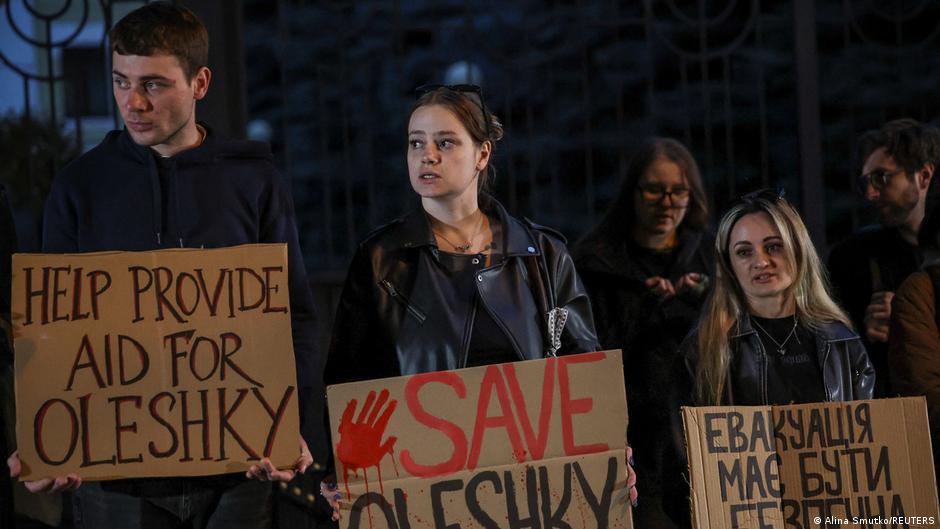
Ukraine and Russia have introduced a bilateral ceasefire around the Russian-occupied city of Oleshky in Ukraine’s Kherson region, creating a temporary window for humanitarian assistance and the evacuation of civilians trapped by months of blockade.
According to statements from the General Staff of the Armed Forces of Ukraine and Russia’s Defense Ministry, the ceasefire took effect at 03:00 Kyiv time on October 27, equivalent to 04:00 in Moscow. The Russian ministry said its forces had stopped firing on the Kherson front and established a period of silence in preparation for a humanitarian operation.
Ukraine’s General Staff said the arrangement applies only within a designated area and exclusively to humanitarian activity. Its stated purposes are to deliver assistance to residents still inside Oleshky and prepare for civilians to leave the occupied city freely. Ukrainian forces would do everything possible to help residents and implement the necessary security measures, it added.
A city cut off from its economic hinterland
Oleshky, known in Ukrainian as Oleshky and in Russian as Alyoshki, lies on the Russian-occupied eastern bank of the Dnipro River. Before Russia’s full-scale invasion, the small city had about 24,000 residents. Current estimates suggest only 1,700 to 2,000 people remain, including at least several dozen children.
The scale of that population loss illustrates more than a humanitarian emergency. It also reflects the dismantling of a local economy as workers, consumers and families have been displaced and ordinary transport links have become unusable. Kherson, the Ukrainian-controlled regional capital, is only nine kilometres away, yet mines around Oleshky have made departure in any direction potentially lethal. Geographic proximity has therefore ceased to provide meaningful access to markets, public services or supplies.
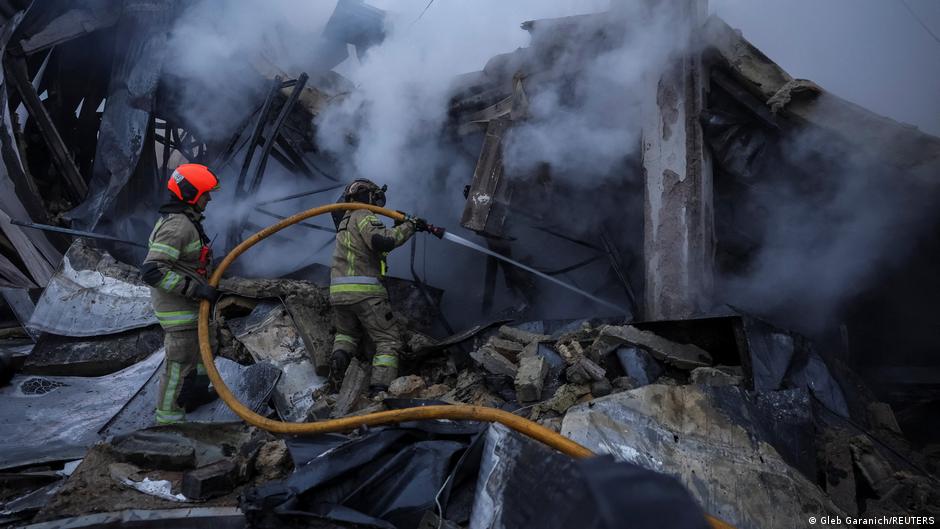
The city was almost entirely flooded after Russia destroyed the Kakhovka hydroelectric power plant in June 2023. The flooding compounded damage to infrastructure and restricted access to drinking water. In economic terms, the destruction imposed overlapping shocks: the loss of physical assets, higher costs for supplying basic goods and a sharp contraction in the population needed to sustain local commerce and municipal services.
Ukraine previously reported delivering food and medicine with heavy drones, while Moscow also said it had supplied the city. Such methods may keep some residents alive, but they cannot substitute for functioning roads, secure logistics and reliable water infrastructure. The temporary corridor is therefore important not only because it may move people and aid, but because it briefly reconnects a settlement whose conventional supply system has collapsed.
A tightly sequenced humanitarian operation
Ukrainian President Volodymyr Zelensky said in an interview with TSN.Tyzhden presenter Alla Mazur that the period of silence would begin on October 27 and the humanitarian mission would become operational on October 29. Under the agreement, Russia is expected to clear mines from roads, while Ukraine prepares to evacuate residents who have been unable to leave.
The White House announced the temporary truce on October 23, saying Moscow and Kyiv would stop firing to permit humanitarian deliveries and prepare the evacuation of civilians through a specially organized safe corridor. Zelensky said mediation by US first lady Melania Trump had enabled the agreement, and a White House release indicated that her team played a central role in negotiating it.
Melania Trump said Russian and Ukrainian civilian representatives would jointly visit residents at home to assess what assistance they require. Those choosing evacuation would receive support and transport to their preferred destination.
“I believe some will want to go to Russia and some to Ukraine,” the White House release quoted her as saying.
Representatives of an independent American media organization are expected to accompany the joint teams and document the visits, according to the first lady.
Zelensky nevertheless warned of a high risk that Russian forces could take steps to discredit the process. He said Moscow might try to persuade residents to take its side and use the evacuation to produce propaganda material. Ukraine’s priority, he stressed, is to save trapped residents and help them reach Ukrainian-controlled territory.
Short-term relief, long-term liabilities
Humanitarian ceasefires are necessarily narrow instruments: they can reduce immediate danger without resolving the military conditions that created it. In Oleshky, even successful evacuations would leave substantial long-term liabilities, including mine clearance, restoration of drinking-water access, reconstruction of damaged infrastructure and the eventual rebuilding of a severely depleted community.
Depopulation also changes the economics of recovery. Fixed reconstruction costs must be weighed against uncertainty over how many residents will return, while mines and damaged transport routes raise the cost of every repair project. The city’s experience shows how war can turn a short distance into an economic barrier: Oleshky is within sight of a regional centre, yet effectively separated from it by occupation, fire and contaminated land.
Pope Leo XIV had previously appealed to the Russian president for a ceasefire in the city. The new arrangement answers that call only temporarily. Its immediate test will be whether aid reaches residents and civilians can make a genuinely free and safe choice about leaving. Its broader significance lies in whether a closely monitored humanitarian mechanism can operate amid continuing war without becoming another arena for coercion or information warfare.