Russian Missile Strikes on Kyiv and Kharkiv Deepen Ukraine’s Economic Strain
The attacks killed at least three people and damaged homes and infrastructure, adding to the cumulative economic burden on Ukrainian cities.
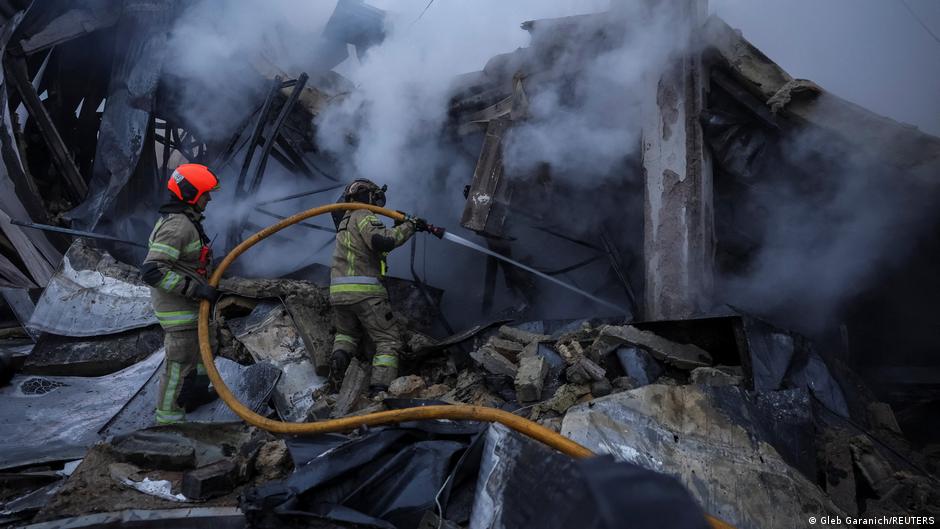
Russian forces launched a series of missile strikes on Kyiv on the evening of October 26, killing at least one person and injuring no fewer than 10, according to local authorities. Three of the wounded were reported to be in serious condition. Earlier attacks on Kharkiv killed two people and injured four others.
Ukraine’s Air Force said ballistic missiles targeting Kyiv were launched from Bryansk. At around 11 p.m. local time, Kyiv Mayor Vitali Klitschko reported the confirmed death and casualties on Telegram. Nine injured people were taken to hospital, including the three in serious condition.
The strikes affected two districts of the Ukrainian capital. In the Desnianskyi district, a missile hit an area near a metro station and close to a university dormitory. The Kyiv City Military Administration also reported damage to a residential building there and said, on the basis of preliminary information, that people could be trapped inside.
In the Dniprovskyi district, a strike hit a building within a non-residential development. Windows were blown out in two departments of a medical facility in the same district, although Klitschko said neither patients nor medical personnel were injured. Officials were still assessing the other consequences of the attacks.
The assault remained under way at the time of publication, including through the use of jet-powered drones. The continuing danger complicated both emergency operations and any immediate accounting of the full human and physical damage.
Urban damage creates costs beyond the initial impact
The direct economic consequences of an attack are visible in damaged apartment buildings, private homes, vehicles and public facilities. The broader burden, however, develops over a longer period. Emergency medical care, temporary accommodation, structural inspections and repairs all require labor, materials and public funding that could otherwise support routine services or investment.
Damage near a metro station carries particular economic significance because urban transport infrastructure connects residents with workplaces, schools, hospitals and commercial districts. Even when a station itself remains operational, an attack in its vicinity can interrupt mobility, increase perceived risk and force authorities to devote additional resources to security and inspections.
The impact on a medical facility illustrates another layer of vulnerability. Broken windows may appear limited compared with the destruction of an entire building, but hospitals and clinics depend on secure, continuously functioning premises. Repairs must often be completed quickly, while staff continue treating patients. In economic terms, this creates simultaneous pressure on infrastructure budgets and essential-service capacity.
Repeated urban attacks transform isolated physical losses into a persistent fiscal and logistical burden for municipal authorities.
Housing damage has similarly compounding effects. Municipal administrations must first support rescue work and determine whether residents remain trapped. They must then assess whether buildings are safe, relocate displaced households where necessary and organize reconstruction. Residents may face temporary loss of housing, transport or personal property, while local businesses can experience reduced customer traffic and operational disruption.
Kharkiv faces the same cumulative pressure
Several hours before the Kyiv strikes, Russian forces attacked Kharkiv. Mayor Ihor Terekhov said shelling in the city’s Novobavarskyi district had killed two people and wounded four. Apartment buildings, private houses and vehicles were damaged.
The effects in Kyiv and Kharkiv demonstrate how simultaneous pressure on multiple urban centers can stretch emergency and reconstruction resources. Each damaged home or vehicle represents a private loss, but the aggregate consequences extend to insurers where coverage exists, local authorities, utility providers, hospitals and humanitarian services. Repeated attacks can also make construction and maintenance more difficult by increasing uncertainty around schedules, financing and the durability of repaired assets.
Historically, sustained attacks on cities have imposed economic costs well beyond the replacement value of destroyed structures. They disrupt routines, redirect government expenditure and weaken confidence among households and businesses. In the present case, the immediate priority remains rescue and medical treatment, while the scale of additional damage is still being established.
The structural consequence is an expanding gap between urgent expenditure and long-term development needs. Money, equipment and personnel assigned to restore buildings or respond to new emergencies cannot simultaneously be used for modernization, housing expansion or other municipal projects. The longer such pressure persists, the more urban economic policy becomes centered on resilience, continuity of essential services and repeated repair rather than growth-oriented investment.
With attacks continuing at the time of publication, any final assessment remained provisional. The confirmed toll across the two cities stood at three dead and at least 14 injured, while authorities continued to clarify the consequences in Kyiv and respond to the possibility that people were trapped in the damaged residential building.