Lula Wins Brazil Runoff as Bolsonaro Seeks Vote Annulment
The disputed result exposes deep political divisions while extending uncertainty over Brazil’s economic and institutional direction.
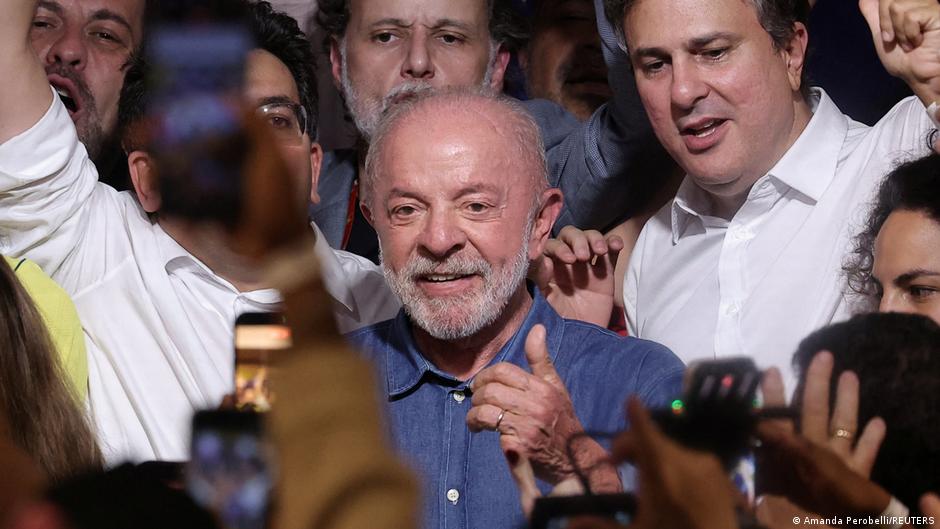
Brazilian President Luiz Inácio Lula da Silva has secured another term after winning a closely contested presidential runoff, while his opponent, Senator Flávio Bolsonaro, has refused to concede and called for the result to be annulled.
Official results from the vote held on Sunday, October 25, gave the 80-year-old center-left incumbent 51.8% of ballots. Bolsonaro, a right-wing populist and the son of former far-right president Jair Bolsonaro, received 48.2%. The narrow margin underscores the political polarization confronting Latin America’s largest economy.
The outcome also marked an unprecedented electoral reversal in Brazil: for the first time in the country’s history, a candidate who finished second in the opening round went on to win the presidency. Lula will now occupy the presidential office for a fourth, nonconsecutive term.
Celebrations began after the results were announced. Fireworks and vuvuzelas could be heard in Rio de Janeiro, according to AFP. In São Paulo, thousands of people dressed in red—the color associated with Lula’s Workers’ Party—took to the streets to celebrate his victory.
A contested vote prolongs political uncertainty
Bolsonaro rejected the result and demanded that the election be invalidated, citing the extension of voting hours, the Associated Press reported. The dispute centers on a decision made shortly before polling stations were scheduled to close.
Both Lula and Bolsonaro had previously requested longer opening hours because public transportation problems and adverse weather conditions were affecting some parts of Brazil. Supreme Court Justice Cristiano Zanin ultimately ordered voting to continue for another two hours. His ruling came only three minutes before the planned closure of polling stations.
The central economic question is no longer limited to who won the election, but whether the political system can resolve the challenge without weakening confidence in Brazil’s institutions.
The extension therefore responded to concerns raised by both campaigns, but Bolsonaro’s subsequent annulment demand transforms a procedural decision into a broader test of institutional legitimacy. With only 3.6 percentage points separating the candidates, any prolonged challenge could amplify uncertainty among households, companies and investors already navigating an unstable economic environment.
Election disputes can carry direct economic consequences even before a formal policy shift occurs. Uncertainty may delay corporate investment, complicate government planning and make consumers more cautious. In Brazil’s case, those risks are particularly relevant because the campaign unfolded amid corruption scandals, economic instability and allegations of interference by the United States.
Living costs shaped a difficult campaign
Lula’s reelection effort was complicated by public concern over the cost of living and rising crime. These pressures made the campaign not only a contest between political camps, but also a referendum on whether the incumbent could improve everyday economic security.
For many voters, inflation and household expenses are experienced more immediately than headline measures of national output. Concern about crime similarly affects economic behavior: it can influence where businesses invest, raise operating and insurance costs, and deepen regional inequality. The combination of economic insecurity and public-safety fears helps explain why the race remained close despite Lula’s advantages as an incumbent.
The result gives the president an electoral mandate, but the narrow victory limits the political room available for difficult reforms. A country divided almost evenly between competing political projects can make fiscal decisions, social-policy changes and institutional reforms harder to negotiate. Measures intended to reduce living costs may also collide with budgetary constraints, while efforts to reassure markets can disappoint voters seeking faster material improvements.
A fourth term with structural constraints
Lula’s return for a fourth nonconsecutive presidency creates an unusual combination of political continuity and historical change. His personal experience offers familiarity at the executive level, yet the conditions surrounding this victory differ from those of earlier mandates. The electorate is highly polarized, the legitimacy of the result has been challenged, and economic anxieties were central to the campaign.
The immediate institutional response will therefore matter for the longer-term economic outlook. A rapid, transparent resolution of Bolsonaro’s objections could reduce uncertainty and allow attention to move toward governing. A prolonged confrontation, by contrast, could absorb political capital and delay responses to the cost-of-living pressures that shaped the election.
Brazil’s structural challenge is to translate electoral legitimacy into workable economic policy while maintaining confidence in democratic institutions. Lula has won the vote, including a historic comeback from second place in the first round. His next test is whether a narrowly divided country can be governed effectively enough to address economic instability, household pressures and public concern about crime without deepening the divisions revealed by the runoff.