Trump Announces Historic Agreement for Full Disarmament of Hamas Amid Gaza Conflict
US President Donald Trump declares a landmark deal with Hamas to fully disarm the group, signaling a major shift in Gaza's political and security landscape.
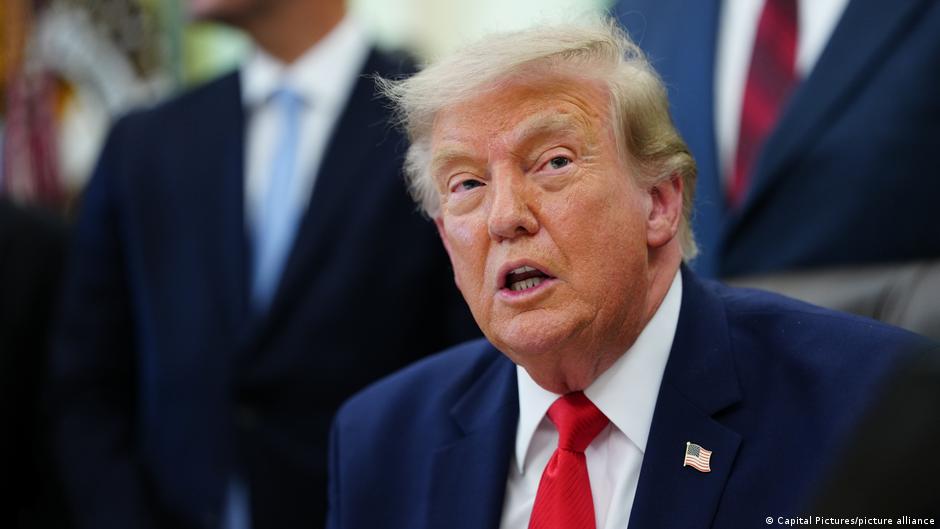
On July 20, 2023, US President Donald Trump declared the achievement of a "historic agreement" for the full disarmament of Hamas, the Palestinian Islamist group governing the Gaza Strip. This announcement marks a significant milestone in efforts to establish a new Palestinian government and advance peace and security in the volatile region.
Trump shared the news on his social media platform, Truth Social, highlighting the role of international mediators from Egypt, Qatar, and Turkey in facilitating the deal. According to the president, the disarmament process will be phased, aiming to dissolve all armed factions operating within Gaza.
Context and Implications of the Agreement
Hamas, designated as a terrorist organization by the United States and the European Union, has been at the center of violent confrontations with Israel for decades. The recent conflict erupted dramatically on October 7, 2023, when Hamas launched a large-scale attack on Israel, involving rocket barrages and incursions inside Israeli territory. This assault resulted in approximately 1,200 Israeli civilian and military casualties and the capture of around 250 hostages taken into Gaza.
"Today the Peace Council has reached a historic agreement for the full disarmament of Hamas and all other armed factions in the Gaza Strip. This is a monumental step towards lasting peace and security," Trump stated.
Israel responded to the October attacks by launching a military campaign against Gaza, which resulted in extensive casualties reportedly exceeding 71,000 Palestinians, according to Gaza's health ministry under Hamas control. However, the accuracy and composition of these figures, including the number of combatants versus civilians and deaths from other causes, remain contested.
The agreement between the US and Hamas is part of a broader plan involving a phased Israeli military withdrawal and the establishment of a technocratic Palestinian administration overseen by the US-led Peace Council. Negotiations on the second phase have been ongoing in Egypt for several weeks.
Notably, Israel has not officially commented on the recent announcement. Historically, Israel has insisted on the demilitarization of Hamas as a precondition for any de-escalation or political progress.
Structural Economic Consequences and Regional Stability
If implemented, this disarmament agreement could reshape Gaza’s economic and political infrastructure. The protracted conflict and blockade have devastated Gaza’s economy, limiting access to basic goods, employment, and reconstruction resources.
The dismantling of Hamas’s military wing may pave the way for increased international aid and investment, potentially stabilizing Gaza’s fragile economy. Nevertheless, the success of such efforts depends heavily on the political willingness of all parties, including Israel’s cooperation and the effective governance of any new Palestinian administrative bodies.
Moreover, the regional geopolitical dynamics involving Egypt, Qatar, and Turkey as mediators reflect the complex balance of interests shaping Middle Eastern security and economic policies. The disarmament deal may serve as a precedent for resolving entrenched conflicts through multilateral diplomacy, but the fragility of ceasefires and ceasefire agreements in this region calls for cautious optimism.
Observers note that the phased approach to disarmament and military withdrawal could help prevent a security vacuum that might otherwise lead to renewed violence or power struggles among factions within Gaza.
In conclusion, while the US announcement signals a hopeful development towards peace, the historical grievances, structural economic challenges, and geopolitical intricacies underscore the long and uncertain road ahead for Gaza and the broader Israeli-Palestinian conflict.