Zelensky Says Crimea Bridge Will Not Survive as Economic Costs Mount
Ukraine regards the damaged Kerch Strait crossing as a lawful military target and a critical link in Russia’s supply network.
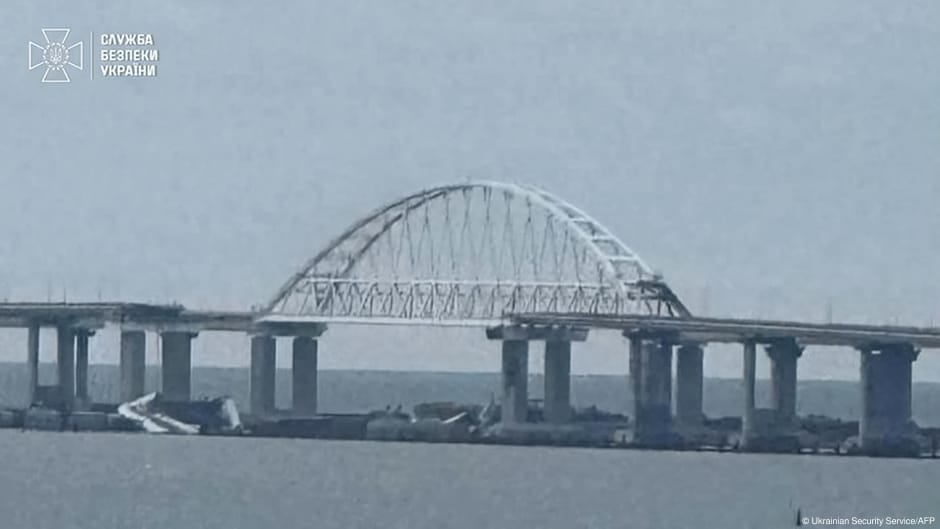
Ukrainian President Volodymyr Zelensky has said the Crimean Bridge will not remain standing, presenting the crossing as both a lawful military target and a strategic component of Russia’s effort to sustain its occupation of Crimea.
Speaking in an NBC News interview on Friday evening, November 20, Zelensky said Russian President Vladimir Putin “must understand that this bridge will not survive.” The bridge crosses the Kerch Strait and connects Russia with Crimea, the Ukrainian peninsula occupied by Russian forces since spring 2014 and subsequently annexed by Moscow without international recognition.
“This is our entirely legitimate target because they occupied Crimea — our Crimea,” Zelensky said.
The Ukrainian president linked the bridge directly to the sequence of events that began in 2014. Russia first occupied the peninsula, he said, then built the crossing and declared it part of Russian territory. Moscow also amended its constitution and domestic legislation in an attempt to formalize its claims over Ukrainian lands. Those steps, Zelensky argued, received no international support or recognition.
A transport asset with military and economic value
The bridge is more than a symbol of Moscow’s control over Crimea. According to Zelensky, Russia continues to use it to transfer “as many weapons as possible” to the peninsula. Daily reports from Ukraine’s armed forces say missiles and unmanned aerial vehicles are frequently launched from annexed Crimea.
That logistical function gives the crossing significance beyond the immediate battlefield. A bridge carrying road and rail traffic concentrates transport capacity in a single piece of infrastructure. Severe damage can therefore affect the movement of military equipment while also forcing authorities to reorganize civilian supply chains, allocate engineering resources and absorb uncertain reconstruction costs.
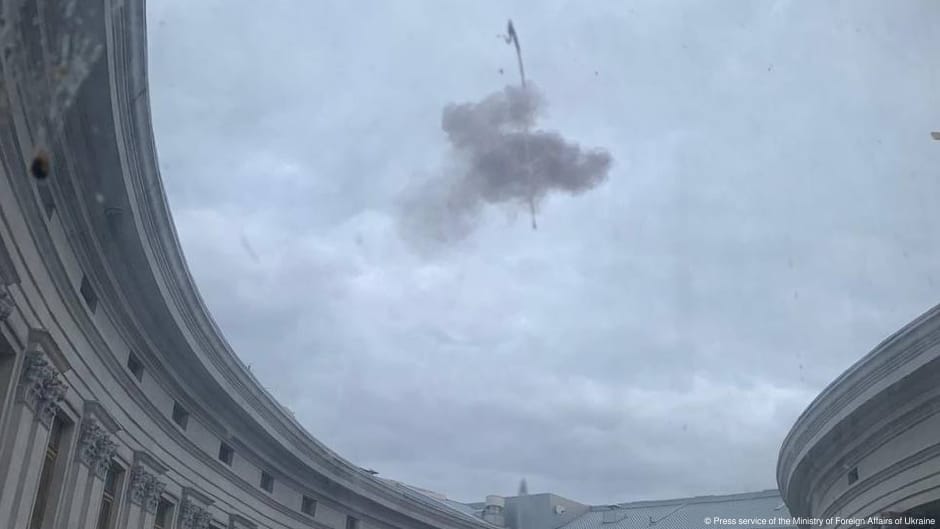
The latest attacks have affected both road and railway components. On the morning of November 16, the occupation authorities in Crimea reported a strike on the bridge and restricted traffic. A day later, reports said one arch and part of the roadway had collapsed into the sea following a repeated strike. During the night of November 19, the railway section was targeted and sustained heavy damage.
Russian Deputy Prime Minister Marat Khusnullin said on November 20 that Ukrainian strikes had damaged the main beam of an arched span as well as the arch itself. He said the potential reconstruction schedule remained unknown and could be determined only after engineers produced project solutions.
Repair estimates expose a widening planning gap
Russian officials had announced the resumption of train services across the bridge one day earlier. Khusnullin said at the time that the overall repair timetable could be assessed within a week. Some individual elements might return to service in one or two months, he said, while the remaining work would depend on further examination. Storm season was also complicating the assessment.
A Ukrainian bridge specialist offered a substantially longer estimate. Andriy Koretskyi, an associate professor in the bridges, tunnels and hydraulic structures department at Kyiv’s National Transport University, put the possible reconstruction period at between 1.5 and three years. Manufacturing an arch alone would take roughly a year, he said, before on-site assembly, transportation and installation.
Koretskyi also questioned whether Russia would be able to install another such arch without further disruption near Ukraine’s border. His assessment highlights a central economic problem surrounding repairs: the timetable depends not only on engineering capacity and weather but also on whether reconstruction work can proceed under continued threat of attack.
This uncertainty can magnify the bridge’s economic burden. Short-term restoration may reopen limited capacity without restoring the reliability required for long-range transport planning. At the same time, repeated damage may compel Russia to spend on temporary repairs, protective measures and replacement components before a permanent reconstruction plan is settled. The source provides no official cost estimate, but the divergence between Russian and Ukrainian timelines illustrates how difficult it is to price and schedule work on infrastructure exposed to continuing hostilities.
Crimea remains central to the wider conflict
Zelensky indicated that strikes against the bridge could continue. He said Russia must experience the effects of war and recognize that it cannot retain control of the Ukrainian peninsula. Ukraine had been forced to respond after Russia attacked several Ukrainian facilities, he said, explicitly identifying the bridge strike as part of that response.
“Whether by diplomatic or military means, we will not accept that the territories are occupied by Putin and the Russians,” Zelensky said.
The bridge consequently sits at the intersection of military strategy, territorial sovereignty and infrastructure economics. For Kyiv, attacking it challenges Russia’s ability to supply Crimea and rejects Moscow’s attempt to normalize the annexation through permanent transport links. For Russia, every disruption creates a test of how quickly damaged capacity can be restored and whether a costly fixed asset can remain operational when its legal status is internationally disputed and its physical security cannot be guaranteed.