Germany and Poland Turn Defense Pact Into an Industrial Strategy
Berlin and Warsaw aim to translate their June accord into military cooperation, resilient supply chains and greater European autonomy.
Germany and Poland are moving to give practical substance to the defense agreement they signed in June 2026, with a detailed action plan expected before bilateral government consultations scheduled for January 2027. The timetable suggests that Berlin and Warsaw want to shift quickly from political commitments to executable military and industrial projects.
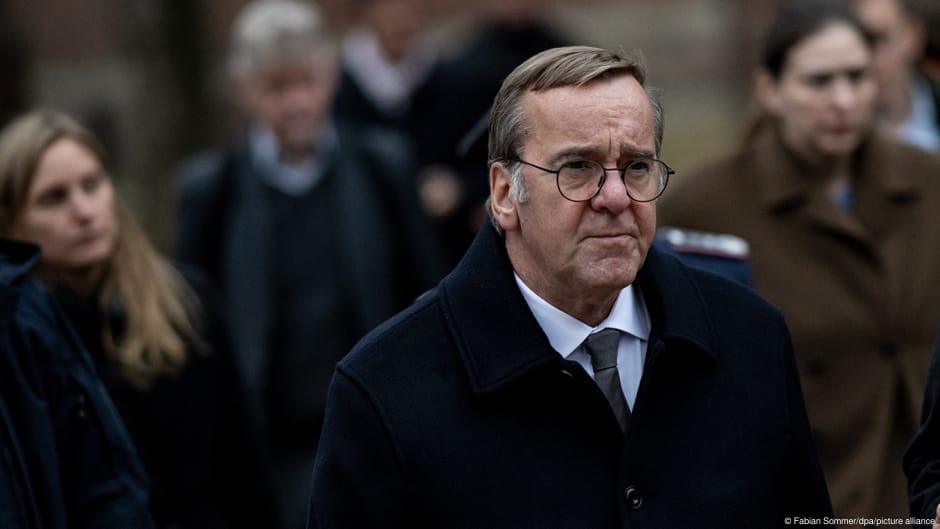
German Defense Minister Boris Pistorius announced the target after meeting his Polish counterpart, Władysław Kosiniak-Kamysz, in Warsaw on Thursday evening, Nov. 19. The plan is intended to be fully developed by the January consultations, allowing the two governments to begin implementing the accord’s next steps without delay.
“This will strengthen close cooperation between the armed forces and enable us to assume responsibility for Europe together,” Pistorius said.
The agreement is strategically significant because it links Europe’s largest economy with a major eastern-flank state that has made defense preparedness a central national priority. Their cooperation covers not only military coordination but also the productive capacity needed to sustain deterrence over time.
Defense industry moves to the center
Kosiniak-Kamysz said the two countries particularly intend to expand cooperation between their defense industries. Joint corporate initiatives are expected to make Europe less dependent on other continents, stabilize supply chains and ensure sufficient weapons production.
That industrial emphasis gives the pact a broader economic dimension. Modern defense policy depends on factories, skilled labor, energy, transport infrastructure, technology and reliable access to components. By promoting joint initiatives, Germany and Poland are treating military readiness as a long-term production and investment challenge rather than solely a matter of troop deployments.
The approach also reflects lessons exposed by recent disruptions to international supply chains. Greater European capacity could reduce vulnerability to distant suppliers, although deeper cooperation will require the two countries to coordinate procurement priorities, technical standards and production schedules. The January action plan will therefore be important in showing whether the political commitment can generate durable orders and investable industrial projects.
Exercises test Europe’s military logistics
Operational cooperation is already visible. Reuters reported that, as part of the Grand Eagle exercise, Germany’s Bundeswehr is moving more than 2,000 personnel through Poland, together with about 50 tracked vehicles and 650 wheeled vehicles. Such movements test the infrastructure and logistical systems needed to transfer substantial forces toward NATO’s eastern flank.
Germany is also supporting Poland’s air defenses by providing Patriot surface-to-air missile systems and Eurofighter combat aircraft. Since the summer, engineering units from both countries have jointly constructed defensive positions, according to Reuters.
These measures illustrate how the agreement combines several layers of security policy: troop mobility, air defense, fortification, industrial capacity, cybersecurity and advanced technology. The June accord was explicitly presented as a means of protecting NATO’s eastern flank and jointly confronting the threat from Russia.
On June 17, the two countries pledged to broaden cooperation and deepen military interaction. German Foreign Minister Johann Wadephul and Polish Foreign Minister Radosław Sikorski said at the German-Polish Forum in Berlin that, in light of the tragic history of the 20th century, their countries bore a special responsibility for the region and continent as NATO allies and European Union partners.
Defense ministers signed the new military agreement in Warsaw on the same day. Pistorius said Germany and Poland were thereby assuming responsibility for their future in Europe, while Kosiniak-Kamysz highlighted new opportunities in cybersecurity and advanced technologies.
Historical memory shapes the partnership
The economic and military agenda is inseparable from the difficult history of German-Polish relations. During the current meeting, and on an earlier visit to the memorial at the former Nazi concentration and extermination camp Auschwitz-Birkenau, Pistorius pointed to the growing popularity of extremist and nationalist movements in numerous European countries.
“We know that nationalism has never been a solution to problems, but has almost always become the cause of much more serious problems,” Pistorius said in Warsaw.
At Auschwitz on Nov. 19, Pistorius described Germany’s actions as the “greatest rupture of civilization in human history” and said the present generation carries a major responsibility to ensure that such events never happen again. On Nov. 20, he planned to visit other Warsaw memorial sites dedicated to the tragedies of the Second World War.
This historical framing gives the emerging partnership unusual political weight. Germany and Poland are not presenting closer defense ties as a departure from memory, but as a responsibility derived from it. Their shared membership in NATO and the EU now provides the institutional structure for cooperation that would have been inconceivable during much of the 20th century.
The central economic test will be whether the action plan converts this political symbolism and operational activity into sustained industrial coordination. If it does, the June pact could become more than a bilateral military arrangement: it could serve as a model for connecting eastern-flank security requirements with western European manufacturing capacity, while reinforcing supply resilience and Europe’s ability to produce critical defense equipment at scale.