Trump Plans Putin Call as WHO Seeks Clarity on Irkutsk Health Incident
Reports of a possible plague-linked death in Siberia have triggered quarantine measures, international scrutiny and questions over crisis transparency.
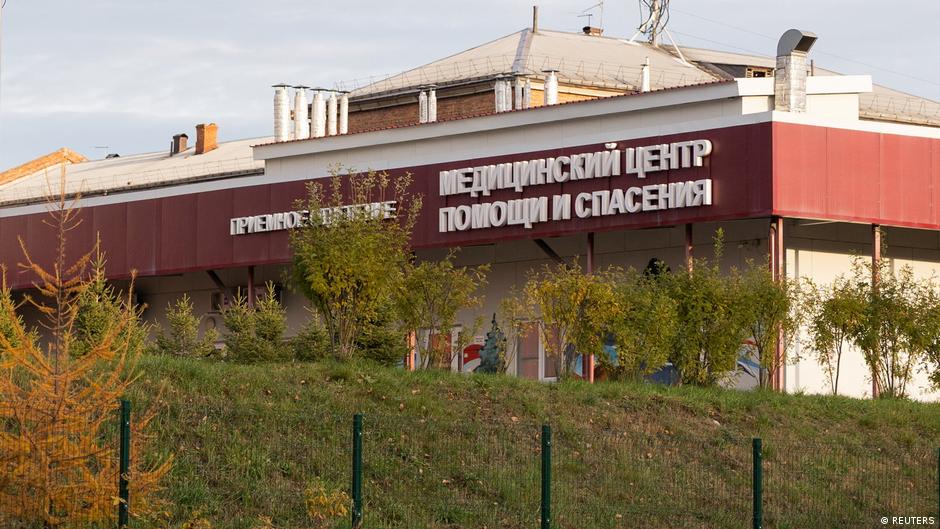
U.S. President Donald Trump said he plans to speak by phone with Russian President Vladimir Putin after reports emerged of a possible plague-related death at an anti-plague research institute in Irkutsk, a development that has drawn attention from the World Health Organization and raised broader questions about public-health risk management in Russia.
The immediate trigger was the death of 28-year-old Darya Shipilova, a laboratory assistant at the Irkutsk Anti-Plague Institute, who died in the Shelekhov district hospital in the Irkutsk region during the night of October 2. The head of neighboring Buryatia, Alexei Tsydenov, initially wrote on Max that plague was the cause of death, later editing the post to add the word “possibly.”
Russian consumer health watchdog Rospotrebnadzor said the deceased had been diagnosed with pneumonia, the cause of which had not been established. Irkutsk regional governor Igor Kobzev referred to suspicion of an “especially dangerous infection” but did not name the presumed diagnosis.
Trump, responding to a journalist’s question on Tuesday, October 6, said a conversation with Putin had been scheduled for the near future. Two days earlier, on October 5, he said the United States was “watching very closely” what was happening in Russia and suggested Washington could offer assistance.
“We just heard about it, and they are calling it pneumonia. Pneumonia used to be easier to treat, but germs and bacteria have become disproportionately stronger. But we will help them,” Trump said.
Public Health Risk Becomes a Geopolitical Variable
The WHO said it was in contact with Russian health authorities and had offered technical support. In a post on X late on October 6 and into October 7, WHO Director-General Tedros Adhanom Ghebreyesus said Russian authorities had informed the organization that no plague cases had recently been registered in the Irkutsk region.
According to Tedros, Russian authorities told the WHO that an epidemiological investigation had been carried out, preventive and control measures had been taken, and identified contacts had been placed under medical observation and tested. They also said no high-threat pathogens had been detected among contacts and that medical observation of all identified contacts had been completed.
At the same time, the WHO said it had requested additional information to clarify the cause of the severe pneumonia, identify the pathogen that prompted the public-health measures, and verify media reports about a second employee with pneumonia of unknown origin.
For economies, such episodes matter not only because of the pathogen itself but because uncertainty is costly. Ambiguity over diagnosis, containment measures and official communication can rapidly affect labor scheduling, transport behavior, hospital capacity, industrial operations and investor perceptions of institutional reliability. Even when an outbreak is later ruled out, the interim period can produce real economic friction.
The Irkutsk case is unfolding in a region where public-health infrastructure, industrial production and long-distance logistics intersect. The city is an administrative and transport hub in Siberia, while Shelekhov is home to major industrial activity, including the Irkutsk aluminum plant. The source article reports that a mask regime was being introduced at the plant, as announced a day earlier by its director, Artem Fominykh.
Quarantines and the Cost of Precaution
The regional outlet Lyudi Baikala reported on October 4 that Irkutsk city clinical hospitals Nos. 1, 3 and 10 had been closed for quarantine, along with a maternity hospital and the Ivano-Matreninskaya children’s clinical hospital. Such steps, if implemented across multiple facilities, suggest a precautionary approach with immediate economic consequences for the local health system and households dependent on access to routine care.
Quarantine measures in hospitals can impose indirect costs even before a disease is confirmed. Scheduled procedures may be delayed, medical staff may be reassigned or isolated, and patients may seek alternative care farther away. For a regional economy, that can translate into lost work hours, increased household expenses and pressure on neighboring medical institutions.
The reported mask regime at IrkAZ points to another channel: industrial continuity. Large plants operate through dense shift systems and supply chains where even limited health restrictions can affect productivity. A mask requirement is a modest measure compared with plant shutdowns, but it signals management concern over workforce protection and operational resilience.
The historical parallel is clear: modern economies have learned that public-health events are not external shocks to be handled only by medical authorities. They are governance tests. The Covid-19 pandemic showed how uncertainty, delayed disclosure and fragmented messaging could magnify the economic damage of a biological threat. Earlier outbreaks, including localized plague concerns in different parts of the world, also demonstrated the importance of rapid diagnostics and credible communication.
Russia has long maintained specialized anti-plague institutions, a legacy of Soviet-era disease surveillance and biological safety systems. That infrastructure can be an asset in identifying and containing dangerous pathogens. But its effectiveness also depends on transparency between regional authorities, federal agencies and international bodies when an incident becomes politically sensitive.
In this case, the factual picture remains unresolved in key respects. Russian authorities have told the WHO that no plague cases have recently been registered in the Irkutsk region, while regional and media reports have referred to a suspected especially dangerous infection, possible plague and pneumonia of unknown origin. The WHO’s request for additional information indicates that international health officials are not yet treating the matter as fully clarified.
For Econpress readers, the central issue is the economics of uncertainty. A single unexplained death linked in public reporting to a high-risk pathogen can ripple through hospitals, factories, households and diplomatic channels. The cost depends less on the initial rumor than on how fast authorities can establish a diagnosis, disclose credible information and calibrate restrictions.
Trump’s planned call with Putin therefore carries significance beyond bilateral symbolism. It reflects how health incidents, particularly those involving possible high-threat pathogens, can quickly enter the realm of international coordination. Whether the Irkutsk case proves to be plague, severe pneumonia of another origin, or something else, the episode underscores a structural lesson: in a tightly connected economy, public-health opacity is itself a source of economic risk.