Trump Proposes Hosting Future FIFA World Cup in US Without Canada and Mexico, Suggests China as Co-Host
Donald Trump advocates for a US-led World Cup, excluding North American neighbors, highlighting potential economic and geopolitical shifts in global football hosting.
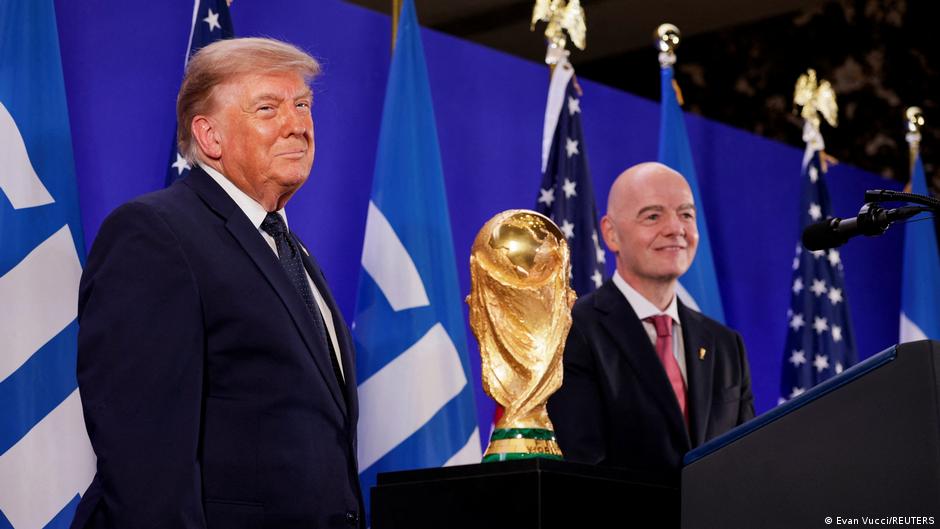
Former US President Donald Trump has publicly expressed his intention to bring the FIFA World Cup back to the United States, proposing to host the tournament without Canada and Mexico, who co-hosted the 2026 event alongside the US. Furthermore, he suggested China as a potential co-host for a future edition, signaling a new strategic direction in international football hosting and its broader economic implications.
Reassessing North American Cooperation in World Cup Hosting
During a press conference in New York on July 18, Trump stated, "Next time you should choose the US again. This time we are ready to host the World Cup without Canada and Mexico. I was very generous before and allowed them to join. Now let's do it differently: let's do it without them, choose ourselves, and next time invite someone else." This marks a significant departure from the collaborative approach seen in the 2026 World Cup, which was the first to be jointly hosted by three countries.
This stance reflects not only a political repositioning but also highlights the potential economic recalibration of international sports events by the US. Hosting a World Cup exclusively could allow the US to capture a larger share of the economic benefits, including tourism, infrastructure investments, and global branding, which were previously distributed among the three nations.
China as a Strategic Partner in Football Hosting
Trump also revealed that FIFA President Gianni Infantino had approved the idea of the US partnering with China for a future World Cup. "Players will have short flights between matches, I think they will like that," Trump noted. This proposal is particularly noteworthy given the broader geopolitical context, as the US and China navigate complex economic and political competition.
"Players will have short flights between matches, I think they will like that." – Donald Trump on US-China World Cup hosting
Including China as a co-host would signal a significant soft power initiative and a deepening of sports diplomacy between the two nations. It could open new markets for football in Asia and further globalize the sport's economic reach.
Evaluating the Economic and Geopolitical Impact
The 2026 FIFA World Cup, held across the US, Canada, and Mexico, has been hailed as "the greatest World Cup of all time" by Infantino, underscoring the success of the multi-nation hosting model. Trump praised the event as "the most successful sporting event, possibly in human history," challenging previous US assumptions about its football culture.
However, Trump's proposal to exclude Canada and Mexico suggests a shift toward unilateral hosting ambitions, which could reconfigure regional cooperation frameworks and economic impact sharing. The US aims to maximize economic gains from tourism, infrastructure development, and global marketing rights, potentially at the expense of its North American partners.
Moreover, introducing China into the hosting dynamic could recalibrate geopolitical balances within international sports, blending economic incentives with diplomatic considerations.
Looking Forward: Future World Cups and US Prospects
The next FIFA World Cup after 2026 is scheduled for 2030, with host countries including Morocco, Portugal, Spain, Uruguay, Paraguay, and Argentina. Saudi Arabia is slated to host in 2034, leaving the 2038 tournament as the next available opportunity for new bidders, including the US.
Trump's ambitions signal the US's intent to remain a pivotal player in global football, leveraging the sport as a platform for economic growth and international influence. The evolution of hosting strategies will be closely watched by economists and policymakers, given the substantial investments and returns involved in such mega-events.
Additionally, Trump praised FIFA's decision to overturn the suspension of US national team player Folarin Balogun, calling it an "excellent" decision, reflecting ongoing US interests in player representation and regulatory fairness on the global stage.
Trump is expected to attend the final match of the 2026 World Cup at the MetLife Stadium in East Rutherford, New Jersey, where Argentina and Spain will compete on July 19, underscoring his personal investment in these developments.