Trump Says U.S.-Iran Talks at U.N. Were Productive After Threats
The mediated New York meeting signals a tentative diplomatic opening even as sanctions, shipping through Hormuz and military threats remain central economic risks.
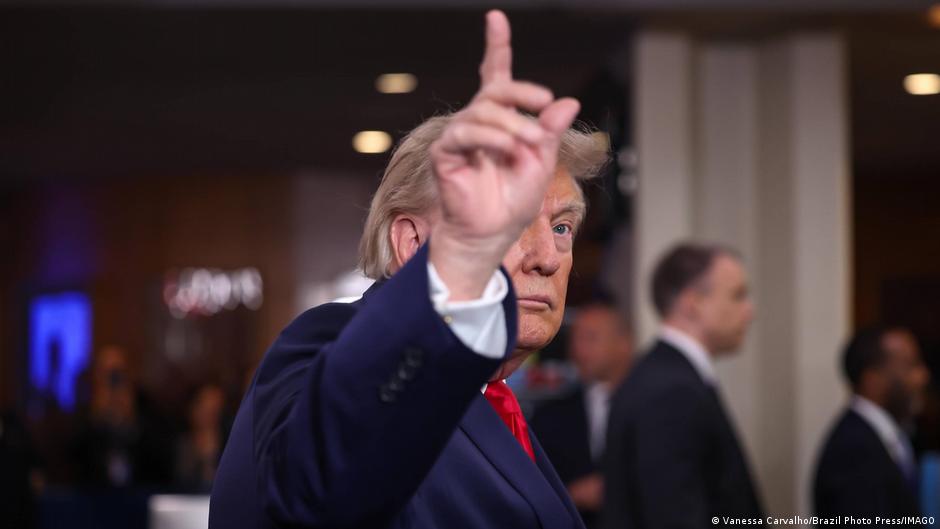
U.S. and Iranian officials held indirect talks in New York on the sidelines of the 81st session of the United Nations General Assembly on Tuesday, September 22, in what President Donald Trump described as a “very productive” meeting after months without such contact. The discussions lasted about three hours, according to Trump, and took place only hours after he threatened Iran with destruction in a speech before world leaders at the U.N.
The talks brought together Trump’s special envoys Steve Witkoff and Jared Kushner on the American side and Iranian Foreign Minister Abbas Araghchi on the Iranian side. The meeting was mediated by Qatar and Pakistan, according to The New York Times. The format, with intermediaries moving between the parties, underscored the continued absence of direct trust between Washington and Tehran, but also the persistence of diplomatic channels at moments of high military and economic tension.
For energy markets, insurers, shipping companies and sanctions-exposed financial institutions, the significance of the meeting lies less in the optimistic language than in the issues reportedly placed on the table. Iranian state media said Tehran informed Washington of its conditions for resuming navigation through the Strait of Hormuz. Those conditions included an immediate end to the U.S. naval blockade, the unfreezing of all Iranian assets frozen under sanctions, and an end to all military actions.
A Familiar Pattern of Threats and Bargaining
The choreography of Tuesday’s diplomacy carried echoes of earlier phases in U.S.-Iran relations: a cycle in which public escalation and private negotiation coexist. Trump’s comments before the talks were stark. Addressing heads of state and government at the United Nations, he said he faced a major choice over whether to reach an agreement with Iran that would allow it to recover and become a much more powerful state, or to destroy the Islamic Republic quickly so it would never again have the chance to kill people and destroy countries.
“Today on the sidelines of the U.N. General Assembly, we held lengthy talks with the Iranian delegation through mediators who moved between the parties throughout the day,” Witkoff wrote on X.
Witkoff said a round of discussions had been successfully completed and that the U.S. side hoped it would prove constructive and forward-looking. He added that the mediators would continue their work. The statement was careful: it did not announce a breakthrough, specify concessions or provide a timetable. But in the context of the preceding rhetoric, even the continuation of mediation amounts to a signal to markets and regional governments that the diplomatic track has not collapsed.
According to AFP, the Iranian delegation left the hall during Trump’s U.N. speech. That departure highlighted the political costs for Tehran of appearing to negotiate under threat. It also illustrated a broader structural problem in U.S.-Iran diplomacy: each side must manage domestic and regional audiences that often interpret compromise as weakness. The same exchange can therefore be read in multiple ways: as pressure diplomacy by Washington, as resistance diplomacy by Tehran, and as risk management by Gulf states and mediators.
Hormuz and the Economic Stakes
The reported Iranian focus on navigation through the Strait of Hormuz places the economic dimension at the center of the confrontation. The strait is not merely a geographic chokepoint; it is a recurring barometer of geopolitical risk in global energy trade. When access to Hormuz is in question, the effects can spread beyond the Gulf through freight costs, insurance premiums, inflation expectations and the pricing of crude oil and liquefied natural gas.
Tehran’s stated conditions, as reported by Iranian state media, also connect maritime security to the sanctions system. The demand to unblock frozen Iranian assets reflects a long-running economic dispute over whether pressure on Iran’s financial resources can compel political change or whether it entrenches confrontation. In practice, sanctions and asset freezes operate not only as diplomatic instruments but as structural constraints on trade finance, investment, currency flows and the capacity of the Iranian state to stabilize its economy.
For Washington, the reported demand to end the U.S. naval blockade and all military actions would carry strategic implications beyond a bilateral negotiation. U.S. posture in the Gulf is tied to the security expectations of partners in the region, including states whose leaders Trump met on the sidelines of the General Assembly. During that meeting with Gulf leaders, Trump said there was “great momentum” toward reaching an agreement with Iran, according to AFP.
That phrase is economically important because momentum in diplomacy can reduce risk premia even before a formal agreement is reached. Conversely, a breakdown following public optimism can sharpen volatility. Investors and policymakers have seen this pattern before in sanctions-driven disputes: announcements, denials, mediated contacts and military signaling can move expectations faster than concrete policy changes.
Sanctions, Assets and the Price of De-escalation
The conditions attributed to Tehran point to the likely price of any de-escalation. Unfreezing assets would raise legal, political and banking compliance questions. Ending military actions would require definitions acceptable to both sides. Restoring navigation through Hormuz would demand assurances that could be monitored and defended. None of these issues can be resolved through rhetoric alone, and each has secondary consequences for allies, private firms and regional security arrangements.
The structure of the meeting itself also matters. Qatar and Pakistan’s mediation suggests that both sides are relying on states capable of maintaining contact where direct channels are politically or diplomatically constrained. Mediation can create room for deniable exploration, but it can also slow the translation of broad political signals into enforceable commitments. That makes the next phase critical: whether the mediators can turn a three-hour exchange into a sequence of proposals precise enough to test.
Trump’s description of the talks as very productive therefore sits alongside a harsher reality. The same day produced threats of destruction, a walkout by the Iranian delegation during the U.S. president’s speech, claims of great momentum, and a mediated discussion over sanctions, frozen assets, naval actions and Hormuz navigation. For an economic audience, the key conclusion is not that a settlement is imminent. It is that the economic battlefield and the diplomatic channel are now visibly intertwined.
If the mediators continue their work, the immediate indicators to watch will be any clarification of Iran’s conditions, any U.S. statement on sanctions-linked assets, and any change in the operational environment around the Strait of Hormuz. Until then, the meeting in New York should be read as a limited but consequential opening: a sign that both escalation and bargaining remain active strategies in a dispute whose consequences extend well beyond the two governments in the room.