Russian Regions Restore Fuel Rationing as Refinery Strikes Strain Supply
Kaluga and Zabaikalsky have reintroduced gasoline restrictions, underscoring how refinery outages are turning wartime damage into a broader market shock.
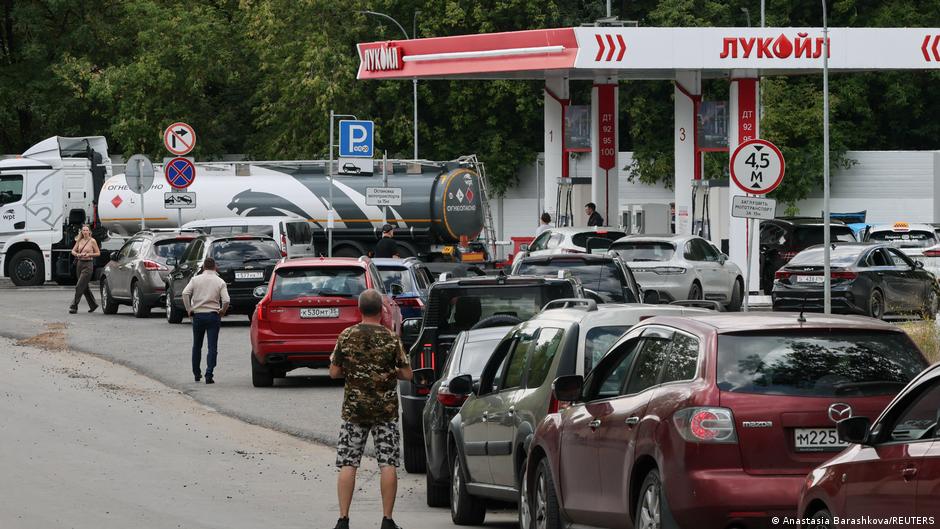
Authorities in Russia’s Kaluga region and in Zabaikalsky Krai have again introduced restrictions on gasoline sales, after intensified Ukrainian attacks on Russian oil refineries aggravated supply problems and revived queues at filling stations.
The measures point to a second wave of disruption in Russia’s domestic fuel market. What began as localized shortages linked to refinery outages has increasingly taken on the characteristics of a structural stress test: a large oil-producing economy is being forced to ration refined fuel in some regions because the logistics and processing system cannot absorb repeated shocks.
In Kaluga, a region bordering Moscow and the Moscow region, restrictions return from September 23, Governor Vladislav Shapsha said on Tuesday, September 22. Drivers will be allowed to refuel on even or odd calendar days depending on the first digit of a vehicle’s registration number. Gasoline may be dispensed only into the car’s fuel tank, a rule designed to prevent hoarding in canisters and secondary resale.
“We are now recording local logistical disruptions in fuel supplies to individual filling stations. Queues have returned. This causes justified dissatisfaction,” Shapsha wrote on Telegram.
Kaluga had already imposed an even-odd gasoline sales system on August 15. Those restrictions were lifted from September 1, making the latest decision a rapid reversal and a signal that the previous stabilization proved temporary.
Rationing Returns After a Short Reprieve
Zabaikalsky Krai, in Russia’s east, has also moved back toward rationing. The regional operational headquarters said that from September 23 the BRK and Kors filling-station networks would set limits of 15 liters of AI-92 and AI-95 gasoline per vehicle.
Buyanto Batomunkuyev, the first deputy chairman of the regional government, said the restrictions were necessary because total fuel stocks at filling stations and oil depots stood at 17,000 tons. At the current rate of sales, he said, that would last only 20 days.
The region had introduced similar restrictions in June, later lifting them on July 23. Their return suggests that Russia’s fuel supply problem is not merely a question of temporary panic-buying or isolated delivery delays. It reflects a vulnerability in the chain linking refinery capacity, storage, rail and road distribution, and retail sales.
For an economy built around hydrocarbons, gasoline shortages carry significance beyond the inconvenience of motorists. Russia remains a major producer of crude oil, but crude production does not automatically translate into stable domestic availability of gasoline. Fuel for cars, farms, freight, local transport and industry depends on refining capacity, product mix, regional logistics and administrative price management. When refineries are damaged or forced to halt production, the bottleneck shifts from resource extraction to processing and distribution.
A Wartime Shock to a Managed Fuel Market
The renewed restrictions follow a summer in which fuel sales limits, imposed either by regional authorities or by filling-station networks themselves, appeared across almost all Russian regions as well as in annexed Crimea. Supply problems became serious enough that Russian President Vladimir Putin on June 28 ordered systemic measures to stabilize the market.
The shortages emerged after Ukrainian drone attacks on Russian refineries. Ukraine has been defending itself for more than four years against Russia’s military invasion. Strikes and fires at refineries forced some plants to reduce output or stop production altogether. Later, some restrictions were lifted, but from early August Ukrainian attacks on refineries intensified again, and Russia entered what the source describes as a second wave of the fuel crisis.
By mid-September, the gasoline deficit in Russia had worsened: fuel was absent at almost every second filling station, Novaya Gazeta Europe reported, citing data from the gdebenzin service.
The economic consequences are potentially wider than the immediate scenes of queues. Fuel scarcity can raise distribution costs, complicate agricultural and construction schedules, and create regional price pressures even where formal retail prices are politically sensitive. In a vast country where distances are large and supply chains depend heavily on road and rail transport, interruptions in refined fuels can quickly become a drag on commerce.
Historically, energy shortages in producer states often reveal a divide between headline resource abundance and the condition of domestic infrastructure. Russia’s current difficulties underline that distinction. Export capability, crude reserves and fiscal dependence on energy do not eliminate the need for functioning refineries close enough, or connected enough, to supply dispersed regions. Damage at key nodes can force administrative rationing even when the country as a whole remains rich in oil.
The even-odd system in Kaluga and the 15-liter cap in Zabaikalsky Krai are therefore not only emergency consumer measures. They are policy signals. Authorities are trying to slow demand, prevent hoarding and stretch available stocks while supply chains adjust. But rationing also tells households and businesses that the market cannot currently clear through normal retail operations.
For policymakers, the challenge is complicated by competing objectives. Keeping retail fuel available supports social stability. Preserving refinery operations is essential for domestic transport and industry. Maintaining broader energy revenues remains central to the Russian state budget. Repeated Ukrainian strikes on refineries pressure all three aims at once.
The restrictions announced for September 23 do not by themselves determine the trajectory of Russia’s fuel market. But their reintroduction after earlier limits were lifted shows that the system remains fragile. If refinery attacks continue and logistical disruptions persist, regional rationing may become less an exceptional response and more a recurring feature of Russia’s wartime economy.