Drone Crash Near Bundeswehr Base Raises German Security and Economic Risks
Investigators are examining whether a suspicious substance found near the Wunstorf wreckage was explosive and linked to an earlier Leipzig incident.
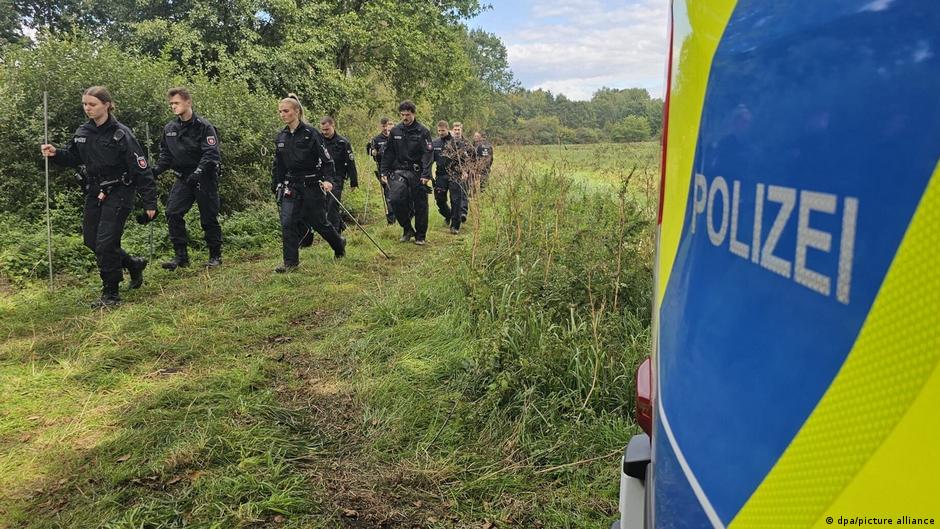
German investigators are examining whether a drone that crashed near the Bundeswehr's Wunstorf air base in Lower Saxony may have been connected to explosives, widening concerns over the security of military logistics infrastructure and the economic costs of protecting it. A suspicious substance was found several metres from the wreckage of the unmanned aerial vehicle discovered last week near the base, according to reports published on Tuesday, September 22, by Süddeutsche Zeitung together with NDR and WDR.
The forensic examination of the substance has not yet been completed. That detail is important: German authorities have not publicly confirmed that the material was explosive. But the fact that the Federal Prosecutor's Office and the Federal Criminal Police Office are leading the investigation indicates that the case is being treated as more than a routine security breach.
Wunstorf is not just another military installation. It hosts Bundeswehr transport aviation, including A400M aircraft, and is regarded as a central hub for supplying German forces around the world. In economic terms, that makes the site part of the infrastructure that allows Germany to convert fiscal resources, industrial capacity and alliance commitments into operational capability. A disruption at such a node would not be merely local. It could affect procurement planning, deployment schedules, maintenance flows and the broader credibility of Germany's defence logistics.
From Isolated Incidents to Infrastructure Risk
Law enforcement authorities are not ruling out a connection between the Wunstorf case and an attempted act of sabotage at Leipzig/Halle Airport on August 4. In that incident, a drone loaded with explosives was found near a Ukrainian An-124 cargo aircraft. The potential link matters because Leipzig/Halle is one of Europe's important cargo and logistics locations, while Wunstorf is a military transport base. Together, the two sites point toward a pattern of pressure on strategic transport infrastructure rather than symbolic targets alone.
According to NDR, the two drones are similar in design. One component of the device found in Wunstorf on September 14 was produced using a 3D printer and is not available on the open market. That combination of commercial drone technology, bespoke parts and possible explosive payloads illustrates a structural shift in the economics of sabotage: comparatively low-cost systems can create high-cost defensive burdens for states, airports, military operators and insurers.
Investigators found a suspicious substance several metres from the drone wreckage, but the forensic analysis has not yet been completed.
The economic asymmetry is central. A drone assembled from accessible or semi-custom components may cost a fraction of the expenditure required to secure airfields, cargo terminals, military depots and transport corridors against similar threats. Each suspected incident can trigger new spending on surveillance, counter-drone systems, perimeter security, forensic capacity and crisis planning. Even when damage is avoided, the defensive response imposes recurring costs.
Germany's position makes those costs especially consequential. Since Russia's full-scale war against Ukraine, Germany has had to rethink defence spending, energy security, supply-chain exposure and the resilience of critical infrastructure. Military logistics bases and major cargo airports sit at the intersection of those priorities. They serve the defence sector, humanitarian and military support flows, and wider trade networks. Any threat to their reliability has implications beyond the security budget.
Diplomatic Retaliation and Economic Spillovers
The Wunstorf investigation also comes after Berlin attributed responsibility for the Leipzig incident to Russia. Following that investigation, German authorities closed the Russian House in Berlin and Russia's consulate general in Bonn. Russian authorities responded by closing all three branches of the Goethe-Institut in Russia and Germany's consulate general in St. Petersburg.
Those reciprocal closures are not only diplomatic signals. They narrow institutional channels that historically supported cultural exchange, language training, civil-society contact and administrative services. In periods of geopolitical confrontation, such measures can accelerate a broader decoupling that has economic consequences: fewer contacts, thinner information networks, higher transaction costs and reduced space for non-commercial institutions that previously helped maintain bilateral links.
Historical parallels are imperfect but instructive. During earlier periods of confrontation in Europe, infrastructure protection and counter-sabotage became part of the hidden cost of geopolitical rivalry. Railways, ports, communications nodes and military depots all carried economic value because they enabled mobilisation and trade. The contemporary difference is that drones and 3D-printed components can lower the threshold for attempted disruption, while modern supply chains make interruptions more visible and potentially more expensive.
For Germany, the central issue is whether incidents such as Wunstorf and Leipzig remain isolated cases or become part of a sustained operating environment. If the latter, the costs will accumulate across multiple balance sheets. The federal government would face pressure to fund security upgrades. Military planners would need redundancy in logistics. Airports and cargo operators could face stricter protocols. Insurers may reassess risk. Industrial suppliers connected to defence and aviation could see new compliance and security requirements.
The forensic findings in the Wunstorf case will therefore carry weight beyond the legal file. Confirmation that the suspicious substance was explosive would strengthen the interpretation of the crash as part of a broader threat to critical military and transport infrastructure. If the substance proves benign, the case would still underscore the difficulty of distinguishing amateur drone activity from hostile reconnaissance or sabotage in real time.
For now, the official facts remain limited: a drone crashed near the Bundeswehr's Wunstorf air base; investigators found a suspicious substance nearby; forensic analysis is ongoing; federal authorities are investigating; and law enforcement has not excluded a connection to the August 4 Leipzig/Halle case involving an explosive-laden drone near a Ukrainian An-124. Those facts are enough to place the incident within a larger economic-security question facing Germany: how much resilience must be built into the physical infrastructure of a country whose strategic role in Europe has expanded sharply.