Trump Sets Firm Preconditions for Iran Deal Centered on Nuclear Non-Proliferation
The US president demands Iran adhere to strict 'red lines,' including a complete ban on nuclear weapons development, before any agreement.
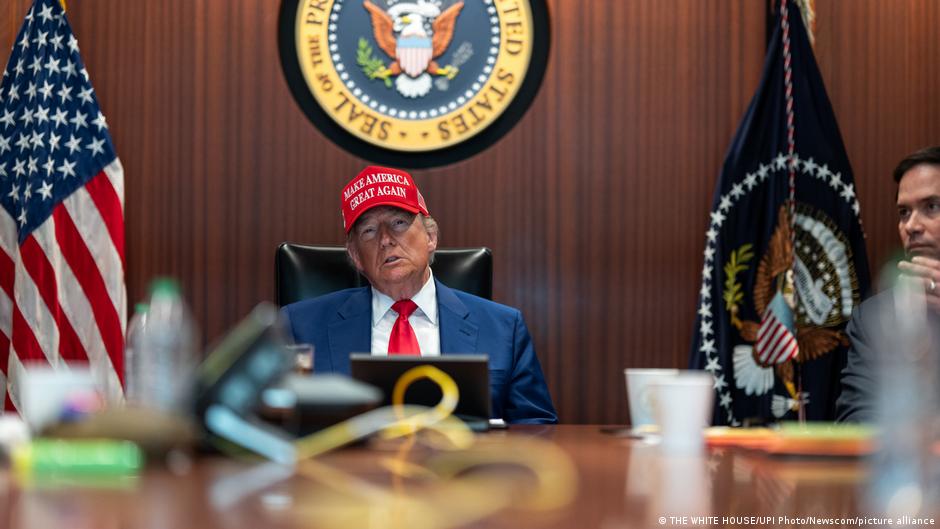
President Donald Trump has made it clear that any potential agreement with Iran must respect stringent conditions, with the foremost being that Iran must never acquire nuclear weapons. This stance was reiterated following high-level consultations with his advisors at the White House Situation Room on May 30.
Context and Stakes of the Negotiations
Over the past years, negotiations surrounding Iran's nuclear program have oscillated between temporary agreements and heightened tensions. The Trump administration's current position reflects a strategic insistence on inflexible terms, often described as 'red lines.' These include a complete cessation of nuclear weapons development by Iran, which the White House sees as non-negotiable.
Following a two-hour meeting with his advisory team, President Trump emphasized that any accord must unequivocally serve American interests and adhere to these predefined conditions. A White House representative stated, "President Trump will only conclude an agreement that benefits the United States and respects his 'red lines.'"
Meanwhile, Iranian officials have maintained a cautious stance. Esmail Baghai, spokesperson for Iran's Ministry of Foreign Affairs, confirmed ongoing exchanges but denied the existence of a finalized ceasefire agreement with the US. He noted, "Message exchanges continue, but a final agreement has not yet been reached." This highlights the complexity and fragility of the diplomatic process.
"President Trump will only conclude an agreement that benefits the United States and respects his 'red lines.'" – White House Representative
Preliminary Framework and Historical Parallels
Reports from US media outlets have suggested that negotiators from both sides may have tentatively agreed on a framework aimed at resolving the conflict. However, President Trump's approval remains pending. This phase echoes past diplomatic efforts such as the Joint Comprehensive Plan of Action (JCPOA) under the Obama administration, which was ultimately abandoned by Trump in 2018 due to concerns over compliance and enforcement.
The insistence on maintaining 'red lines' reflects a broader strategic calculus. It serves to establish clear boundaries intended to prevent Iran from advancing its nuclear capabilities while securing leverage in broader geopolitical negotiations. However, such rigidity also risks stalemating talks or provoking retaliatory measures from Tehran.
Structural Economic Consequences
The outcome of these negotiations carries significant implications beyond security concerns. Economic sanctions on Iran have deeply affected its economy, restricting oil exports and access to international finance. A new agreement that enforces strict nuclear compliance could pave the way for sanction relief, potentially revitalizing Iran's economy and altering regional economic dynamics.
Conversely, failure to reach a consensus risks prolonging economic isolation and exacerbating instability in global energy markets. The uncertainty surrounding these talks also influences investor confidence, not only in Iran but throughout the Middle East.
Ultimately, the Trump administration's hardline approach underscores a broader trend in US foreign economic policy, where security considerations increasingly dictate economic engagement strategies. The balance between enforcing non-proliferation and enabling economic normalization presents a complex challenge for policymakers.
As negotiations progress, the global community continues to observe closely, aware that the decisions made at this juncture will shape both regional security and economic realities for years to come.