Unprecedented Fontainebleau Forest Fire Raises Concerns Over Climate and Economic Impact
Authorities detain two suspects after a massive wildfire burns over 1,300 hectares near Paris, highlighting escalating climate risks and economic consequences.
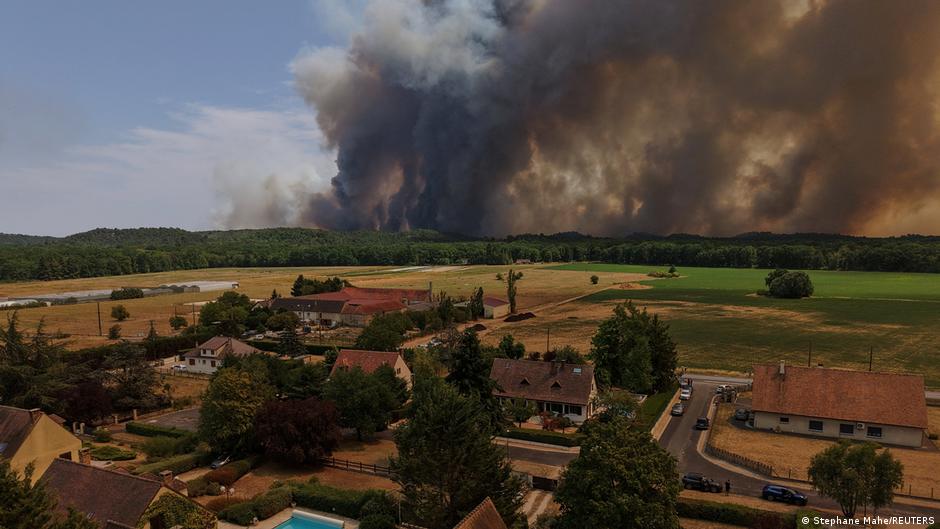
In one of the most severe forest fires near Paris in recent memory, more than 1,300 hectares of the Fontainebleau forest were consumed by flames, forcing the evacuation of approximately one thousand residents. French authorities have detained two individuals on suspicion of intentional or negligent arson, underscoring complex socio-economic and environmental challenges amidst a record-breaking heatwave.
Context and Scale of the Disaster
The fire erupted in a forest located roughly 60 kilometers southeast of the French capital, rapidly spreading due to prolonged dry conditions and extreme heat. According to the French Interior Minister Laurent Nunez, the two detainees—one of whom is an 18-year-old with no prior convictions—are suspected of causing the blaze either deliberately or through negligence. The younger suspect was reportedly found with soot-covered hands and in possession of a lighter at the time of arrest.
Firefighting efforts mobilized approximately 600 personnel, supported by a fleet of aerial firefighting aircraft including four Canadairs, two Dash planes, and three helicopters. Commanding officer Jean-Marc Sicard reported a total of 187 water drops executed to control the fire. Despite the onset of darkness, firefighting operations persisted overnight, illustrating the challenge of combating wildfires under increasingly adverse conditions.
Wider Climatic and Economic Implications
"This unprecedented wildfire highlights the urgent need to address the structural vulnerabilities of our ecosystems and economies to climate extremes," said an environmental analyst.
France is currently enduring its third heatwave of the year, with wildfires affecting approximately 32,000 hectares nationwide—double the area impacted during the comparable period last year. The rise in fire incidents has led to the detention of 59 individuals across the country, charged with arson or negligent behavior such as improperly discarding cigarette butts. The closure of major highways due to the Fontainebleau fire further disrupts regional economic activity and raises concerns about infrastructure resilience.
These events coincide with broader climatic anomalies across Western Europe. June 2026 was recorded as the hottest month ever observed in the region, with average temperatures soaring to 20.86 °C—about three degrees above the 1991-2020 June average, according to the European Copernicus Climate Change Service (C3S). In Germany, the Robert Koch Institute preliminarily attributes approximately 5,100 heat-related deaths to the June heatwave, with experts cautioning that the true toll may be substantially higher.
The Fontainebleau fire serves as a stark reminder of the escalating risks that climate change poses to natural resources, public health, and economic stability. Forest ecosystems—critical for biodiversity, carbon sequestration, and tourism—are increasingly vulnerable, affecting local economies and national climate goals.
Structural Economic Consequences and Policy Challenges
The damage from this wildfire reflects deeper structural economic issues arising from climate-induced disasters. Forest-dependent industries, ranging from timber production to recreation and tourism, face heightened uncertainty. Moreover, emergency response costs and infrastructure disruptions impose additional fiscal burdens on local and national governments.
Analysts emphasize the need for integrated approaches combining forest management, urban planning, and climate adaptation strategies. This includes investing in fire prevention technologies, enhancing community preparedness, and revising land-use policies to mitigate future risks. Failure to adapt could lead to escalating economic losses and exacerbate social inequalities, particularly in vulnerable rural areas.
As Europe confronts unprecedented climatic extremes, the Fontainebleau fire underscores the urgent imperative to reinforce resilience and sustainability frameworks at multiple governance levels.