Ukraine anti-corruption raids expose economic risks around scam call centers
NABU and SAP say a prosecutor’s office employee is suspected in a scheme tied to fraudulent call centers and asset laundering.
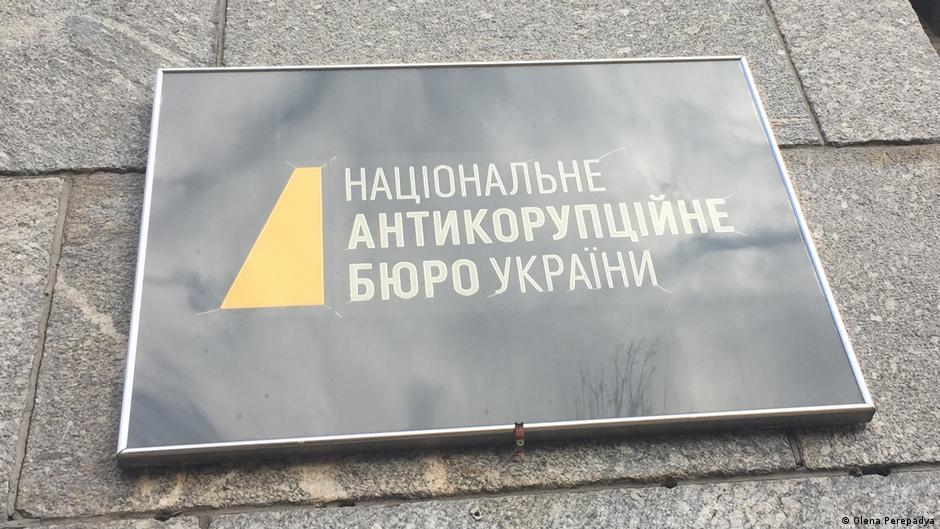
Ukraine’s anti-corruption agencies have announced an operation against public officials suspected of involvement with fraudulent call centers, placing an employee of the country’s Prosecutor General’s Office under scrutiny and highlighting a criminal economy that has grown into a broader governance problem during wartime.
The National Anti-Corruption Bureau of Ukraine, known as NABU, and the Specialized Anti-Corruption Prosecutor’s Office, or SAP, said they had launched an operation to expose a “criminal organization” allegedly involved in protecting a network of fraudulent call centers and legalizing assets. According to the agencies’ statement, published on their Telegram channels on Friday, September 4, investigators believe the organization is headed by an employee of the Office of the Prosecutor General of Ukraine.
The agencies said they would provide details of the operation later. On the same day, searches were carried out at the Prosecutor General’s Office. The office confirmed investigative measures were under way, while stressing that the suspicions raised by NABU and SAP did not directly concern Ukraine’s prosecutor general, Ruslan Kravchenko.
“The Office of the Prosecutor General will provide the anti-corruption bodies with full assistance and all necessary information within the law,” the office said, adding that the employee whose possible involvement is being checked would be suspended from official duties for the duration of the pre-trial investigation.
A wartime fraud market with institutional stakes
The case is economically significant not only because it concerns alleged corruption inside a core law-enforcement institution, but also because of the sector involved. Fraudulent call centers are a form of organized financial extraction: they rely on telecommunications infrastructure, rented premises, labor recruitment, payment channels and networks capable of moving or disguising proceeds. When officials are suspected of providing protection, the issue becomes a structural one, touching enforcement capacity, public trust and the state’s ability to regulate illicit flows.
According to Ukrainska Pravda, the person who came under suspicion from NABU and SAP is Serhiy Kropyva, deputy head of the international legal cooperation department at the Prosecutor General’s Office. The outlet reported, citing sources “in business circles,” that he had been detained. There has been no official confirmation of the identities of the people affected by the searches or of the suspects.
Journalists also reported searches involving Ukrainian official Oleh Kiper. Kiper previously held various positions in the Prosecutor General’s Office and in 2023 was appointed head of the Odesa regional military administration. Kropyva, before taking his latest post in Ukraine’s prosecutor general’s office, had served as Kiper’s deputy in the Odesa regional military administration. Earlier, he had also worked in the prosecutor general’s office, in the cybersecurity department.
The reported overlap between prosecutorial, regional administrative and cybersecurity roles gives the case added institutional weight. In economic terms, illicit call-center networks are not merely small-scale fraud operations; they can become durable enterprises when protected from enforcement, especially if they gain access to legal, administrative or security-sector intermediaries. Such protection can distort local labor markets, commercial property use and financial compliance systems, while weakening confidence among households and legitimate firms.
Legislative pressure and enforcement escalation
The raids came one day after another NABU and SAP operation, and on September 3 President Volodymyr Zelensky submitted a bill to the Verkhovna Rada that would toughen punishment for organizing fraudulent call centers or being connected to their activity.
Under the proposal, organizers of such call centers could face up to 12 years in prison with confiscation of property. Working in such a place could carry a prison sentence of up to 10 years. Recruitment into call centers could be punishable by up to five years in prison, while repeated recruitment could carry up to 10 years. Even landlords who lease premises to call centers could face prison terms of up to 10 years.
The proposed penalties suggest that Kyiv is treating the phenomenon as more than consumer fraud. By extending liability from organizers to workers, recruiters and landlords, the bill targets the supply chain that allows such operations to scale. Historically, states facing entrenched illicit markets often move from punishing end offenders to attacking the enabling infrastructure: financing, recruitment, premises, logistics and laundering. Ukraine’s proposal follows that logic, though it also raises questions about enforcement consistency and the risk of sweeping in lower-level participants alongside organizers.
Shortly before these developments, Ukraine’s National Police conducted a large nationwide operation aimed at exposing fraudulent call centers. As a result, the activities of 94 such organizations were halted. During searches, law-enforcement officers seized, among other items, about $2 million, 64,000 euros, gold bullion and jewelry.
The scale of those seizures points to the cash-rich nature of the sector. Even without a full public accounting of turnover, the assets reported by police indicate that call-center fraud has become a meaningful illicit financial channel. The presence of hard currency, precious metals and jewelry also suggests a classic pattern of value storage and laundering in environments where criminals seek portable assets and protection from financial tracing.
Cross-border consequences
The victims of such call centers are not only Ukrainians but also Russians. The problem became especially visible after Russia’s full-scale invasion of Ukraine, as fraudsters began persuading people they had deceived to carry out various acts of sabotage. Kyiv and Moscow have each accused the other of organizing such “sabotage” call centers.
That cross-border dimension makes the issue unusually complex. Scam networks are already difficult to police because they exploit jurisdictional gaps, anonymity and remote communication. When allegations of sabotage are added to financial fraud, the economic and security consequences begin to merge. What starts as consumer deception can become a tool for coercion, disruption and psychological operations, particularly in a war economy where social trust is already under pressure.
For Ukraine, the immediate challenge is investigative: establishing whether officials protected or led a network, who benefited, and how assets were moved. The broader challenge is institutional. A state fighting a war and seeking international financial support must demonstrate that enforcement bodies can police corruption within the justice system itself. The searches at the Prosecutor General’s Office therefore carry significance beyond the individuals involved. They test whether anti-corruption institutions can pursue politically and bureaucratically sensitive cases while preserving due process and public credibility.
The official record remains limited. NABU and SAP have promised further details, the Prosecutor General’s Office says it will cooperate, and no official confirmation has been issued regarding all persons searched or suspected. But the sequence of events already shows a tightening state response: police raids against dozens of call centers, a presidential bill proposing severe penalties, and anti-corruption searches reaching into one of Ukraine’s most important law-enforcement offices.