Ukraine to Discuss New War-Ending Plan With Trump Envoys in Washington
Talks with Jared Kushner and Steve Witkoff come as Kyiv links diplomacy to sanctions, military leverage and the economic costs of Russia’s war effort.
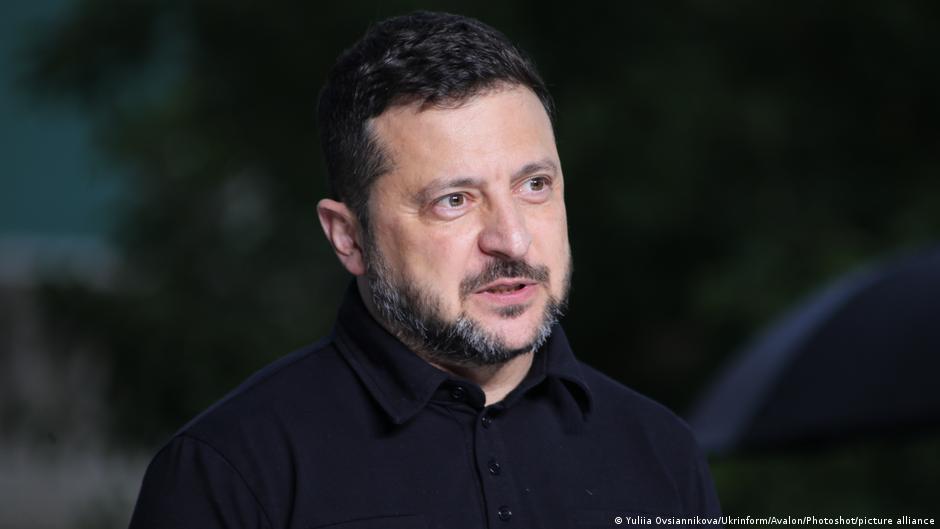
A Ukrainian delegation is due to hold talks in the United States on October 9 and 10 with special representatives of U.S. President Donald Trump over a new plan to end Russia’s war against Ukraine, according to Ukrainian President Volodymyr Zelensky.
Zelensky told journalists on Thursday, October 8, that the Ukrainian side would travel to the United States for meetings with Jared Kushner and Steve Witkoff. The talks, he said, may also include participation from the European side, underscoring that any diplomatic framework for ending the war would carry consequences not only for Kyiv and Moscow, but also for the broader transatlantic economic and security architecture.
The Ukrainian delegation will include Kyrylo Budanov, head of the Office of the President; Serhiy Kyslytsia, deputy head of the Office of the President of Ukraine; Davyd Arakhamia, head of the Servant of the People faction in parliament; and Rustem Umerov, head of Ukraine’s Foreign Intelligence Service, according to Zelensky’s remarks.
Ukraine’s service of Voice of America, citing a senior U.S. official, reported that the meeting will focus on a new proposal that “covers all aspects of the conflict” and is aimed at ending the war. The phrasing suggests a package broader than a narrow ceasefire, potentially touching on security guarantees, military constraints, sanctions, territorial issues, economic reconstruction and the future shape of Western pressure on Russia.
Diplomacy and Economic Leverage
For Ukraine, the negotiations arrive at a moment when the economics of the war are inseparable from battlefield strategy. Zelensky’s public response to U.S. Secretary of State Marco Rubio made that point explicitly. Rubio, in an interview with the Greek newspaper Kathimerini, said the war in Ukraine had reached a deadlock and that, in his view, there were no prospects for resolving the conflict through negotiations.
Zelensky rejected that assessment, arguing that the problem was not a diplomatic impasse but insufficient economic pressure on Russia. His remarks framed the war less as a frozen military confrontation than as a contest over whether Moscow can continue financing, supplying and technologically sustaining its campaign.
“We are not in a diplomatic deadlock,” Zelensky said, calling instead for Russia’s economy to be closed off and for sanctions to be imposed on its weapons.
The Ukrainian president also criticized the idea of discussing future economic projects with Russia while describing the diplomatic track as stalled. His argument reflects a long-running Ukrainian position: that negotiations are unlikely to produce durable results unless Russia’s economic incentives are altered first. In this reading, sanctions are not a symbolic tool but a core part of the negotiation mechanism itself.
That view has historical parallels. Wars of attrition often end not simply when armies stop advancing, but when the fiscal, industrial and political systems behind them can no longer sustain the costs. In the twentieth century, blockades, export controls and financial restrictions frequently became extensions of the battlefield. Ukraine is now pressing a similar logic: if Russia’s access to revenues, components and technology remains open, Moscow has less reason to compromise.
Technology as a Strategic Variable
Zelensky also urged the United States to allow Ukraine to use Starlink over Russian territory. He said that access would help Ukraine “dominate” in the sky and ultimately force Russian President Vladimir Putin to sit down at the negotiating table.
The request highlights how communications infrastructure has become an economic and military asset in the war. Satellite connectivity affects drone operations, targeting, command systems and resilience against attacks on terrestrial networks. For Ukraine, the ability to extend such capabilities over Russian territory would not merely be a tactical adjustment; it would change the cost structure of Russia’s military operations by increasing vulnerability deep inside Russia’s own logistical and technological networks.
That is also why the issue carries broader implications for private technology firms, governments and wartime governance. Systems built for civilian connectivity now sit at the center of questions about escalation, sovereignty and the limits of commercial infrastructure in conflict. Decisions over where such networks can operate may shape the military balance as materially as conventional weapons deliveries.
Infrastructure Strikes and the Digital Economy
Zelensky said Ukraine is responding in kind to Russian strikes, including attacks on data centers. “Data centers, you all know, they hit and continue to hit our data centers. We responded to them. I cannot say all the details,” he said, according to RBC-Ukraine.
Ukrainian forces struck a Yandex data center with drones in the city of Sasovo in Russia’s Ryazan region during the night of October 8. A fire broke out, and the data center completely stopped operating. No one was injured.
The attack illustrates another structural feature of the war: the expansion of targets from traditional military infrastructure to the digital systems that support modern economies. Data centers are not only commercial facilities. They can be linked to cloud services, logistics, communications, financial activity and state-linked digital capacity. Their disruption can impose costs that ripple beyond the immediate physical damage.
Russia has repeatedly attacked Ukrainian infrastructure, including energy and digital assets, making resilience a central economic challenge for Kyiv. Ukraine’s response against a Russian data center signals that the economic geography of the conflict is widening. The war is increasingly fought across power grids, communications networks, industrial supply chains and information systems, not only along the front line.
For investors, governments and reconstruction planners, that matters. Any eventual peace framework would have to address not only territorial and military questions, but also the security of infrastructure that underpins economic recovery. Ukraine’s reconstruction depends on confidence that energy systems, data networks, transport corridors and industrial facilities can operate under credible protection. Russia’s own exposure to reciprocal strikes may also become part of the pressure calculus.
The Washington talks with Kushner and Witkoff therefore come at a consequential point. A plan that “covers all aspects of the conflict” would need to reconcile diplomacy with sanctions enforcement, military technology, infrastructure security and the incentives facing Moscow. Zelensky’s message ahead of the meetings is that negotiations cannot be separated from leverage. In Kyiv’s view, the route to a settlement runs through Russia’s economy as much as through the negotiating table.