US Agrees to Allow Saudi Arabia Uranium Enrichment Amid Nuclear Energy Cooperation Talks
The Trump administration preliminarily consents to Saudi uranium enrichment without stringent IAEA safeguards, raising proliferation concerns.
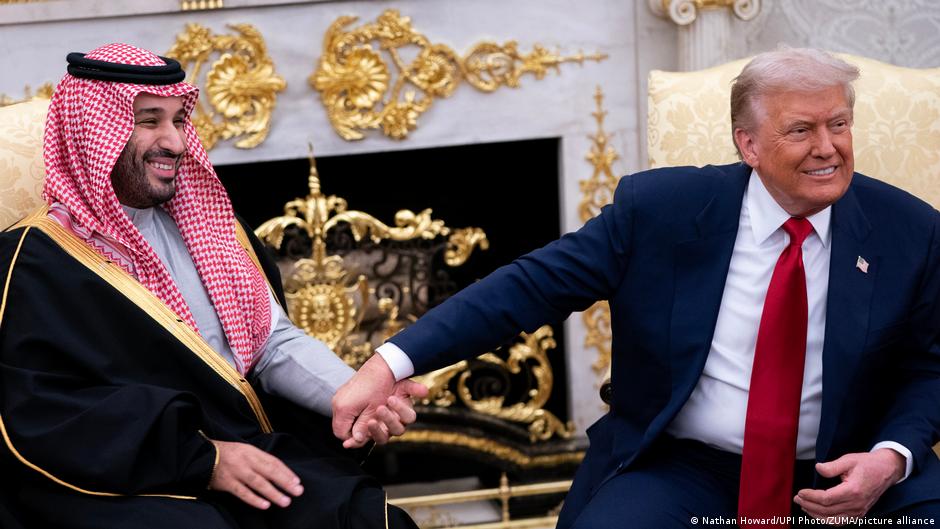
The Trump administration has provisionally agreed to permit Saudi Arabia to enrich uranium without the customary safeguards that restrict nuclear weapons development, according to sources familiar with the negotiations. This development, reported by multiple informed insiders, signifies a significant shift in US-Saudi nuclear cooperation and raises complex questions regarding nuclear non-proliferation and regional security dynamics.
US-Saudi Nuclear Cooperation Framework
The proposed bilateral agreement between Washington and Riyadh aims to support Saudi Arabia's ambitions in civilian nuclear energy. While the partnership promises to advance Saudi Arabia's nuclear power capabilities, it notably lacks a commitment by Riyadh to adopt the International Atomic Energy Agency's (IAEA) Additional Protocol. This protocol grants inspectors enhanced access to verify the peaceful nature of nuclear programs and detect undeclared nuclear activities.
Experts consulted highlight that without adherence to these expanded inspections, Saudi Arabia could theoretically develop nuclear weapons under the guise of civilian enrichment, given that uranium enrichment technology is dual-use. The absence of such safeguards may thus open a pathway for Saudi Arabia to attain nuclear weapons capability.
"Allowing uranium enrichment without the Additional Protocol removes critical verification mechanisms, potentially enabling clandestine weapons development," an expert noted.
Geopolitical and Economic Implications
Saudi Crown Prince Mohammed bin Salman has explicitly articulated that if Iran obtains nuclear weapons, Saudi Arabia would pursue similar capabilities. This stance underscores the regional strategic rivalry that underpins the nuclear discourse.
Negotiations on the nuclear cooperation deal have been advancing since 2018, with an anticipated conclusion by late 2025. However, the final agreement remains unsigned by President Donald Trump, partly due to escalating tensions and ongoing conflicts involving the US, Israel, and Iran. These geopolitical frictions complicate the prospects for transparent nuclear cooperation in the Gulf.
From an economic perspective, Saudi Arabia's push for nuclear energy diversification is part of its broader Vision 2030 strategy to reduce oil dependency. The introduction of nuclear power could transform the kingdom's energy infrastructure, enabling significant electricity generation capacity with lower carbon emissions. Nonetheless, the ambiguity surrounding proliferation risks introduces uncertainty for international investment and regional stability.
Historical Parallels and Structural Consequences
The situation recalls past US negotiations with other Middle Eastern states regarding nuclear technology transfer, where the balance between non-proliferation objectives and geopolitical alliances often created complex policy dilemmas. The US decision to forego strict safeguards in this case may be seen as a strategic trade-off, prioritizing alliance cohesion over non-proliferation rigor.
Structurally, this approach could set a precedent that complicates global non-proliferation regimes. It risks incentivizing other states to seek similar leniency, potentially weakening the normative framework established by the Non-Proliferation Treaty (NPT) and the IAEA's monitoring mechanisms. The long-term economic impacts may also include shifts in regional arms dynamics, potentially diverting resources from economic development toward military expenditures.
Overall, while the US-Saudi nuclear cooperation signals a deepening strategic partnership with potential economic benefits, it simultaneously introduces heightened proliferation risks and regional instability, underscoring the intricate interplay between energy policy, security, and international governance.