US Envoys Discuss Ukraine War Plan With Putin as Kyiv Talks Loom
Washington says Steve Witkoff and Jared Kushner reviewed concrete next steps in Moscow before planned negotiations with Volodymyr Zelensky in Kyiv.
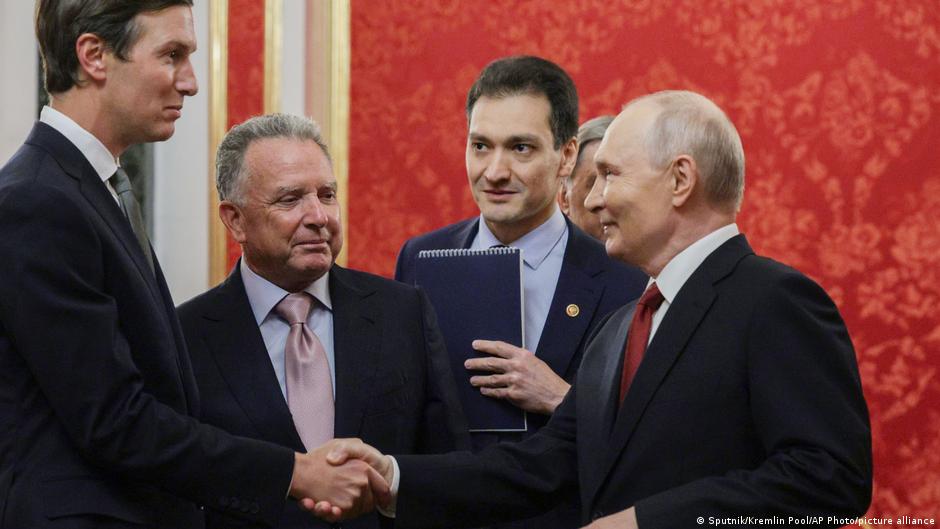
The White House says US representatives held discussions with Russian President Vladimir Putin on “concrete plans” for further steps aimed at ending the war in Ukraine, setting up a closely watched diplomatic sequence that now moves from Moscow to Kyiv. According to a White House official cited by AFP overnight on Sunday, September 6, US presidential special envoy Steve Witkoff and Jared Kushner, Donald Trump’s son-in-law, discussed proposals that are expected to be made public “in the coming weeks.”
The same official said the US envoys “look forward to no less productive meetings” in Ukraine. That formulation matters economically as much as diplomatically. Any ceasefire framework, territorial arrangement, or political settlement would carry direct implications for reconstruction financing, sanctions architecture, energy flows, grain exports, defense spending, and the future risk premium attached to Eastern Europe. Yet the White House has not disclosed the plan’s core trade-offs.
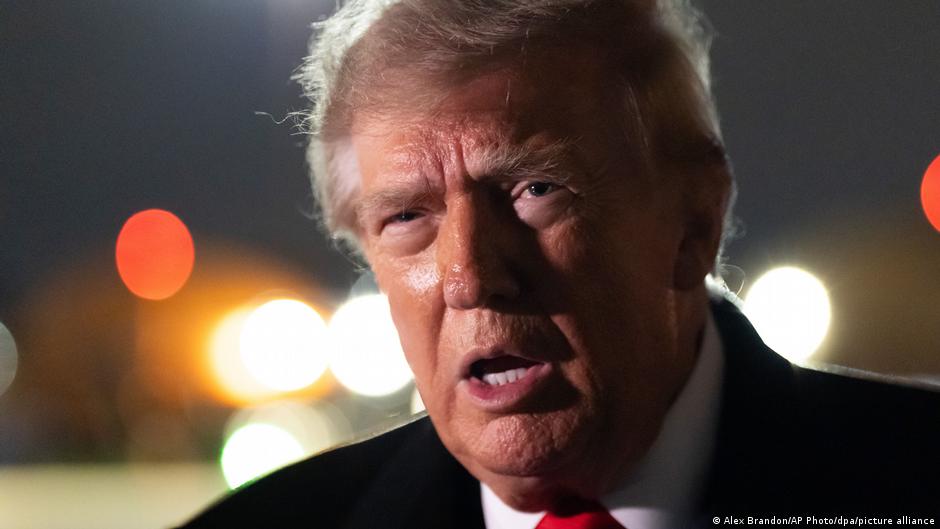
Trump also announced a new diplomatic initiative to end the war and said Witkoff and Kushner had brought with them a plan “to end the war,” AFP reported. He did not specify whether the plan would involve Ukraine transferring territory to Russia, saying only: “We have an idea for peace.”
A Diplomatic Route With Economic Stakes
After the Moscow visit, Kushner and Witkoff are due to arrive in Kyiv for their first talks with Ukrainian President Volodymyr Zelensky. Flight-tracking data from Flightradar24 showed that the Boeing C-32A carrying the US envoys landed at 01:30 local time at the airport in Rzeszow, Poland, a logistical gateway frequently associated with Ukraine-related travel. Their aircraft departed Moscow’s Vnukovo airport and headed west while avoiding Belarus, crossing the airspace of Latvia, Lithuania and Poland. From Poland, they are expected to travel to the Ukrainian capital by train.
The itinerary itself reflects the fragmented geography of the war economy. Ukraine’s skies remain constrained by conflict, Poland has become a critical corridor for military, humanitarian and diplomatic flows, and Belarus remains a politically sensitive airspace. These details are operational, but they also point to the infrastructure of a prolonged war: rerouted aviation, rail-dependent diplomacy, hardened supply chains and a regional economy reorganized around security risk.
In Moscow, Russian officials described the meeting with Putin as unusually direct. Kremlin aide Yuri Ushakov told Russian journalists that the talks were “extremely frank” and that the US delegation had presented “several ideas” on possible ways to end the war in Ukraine.
“American representatives prepared carefully for this trip. They not only expressed interest in ending hostilities as soon as possible, but also presented several ideas on possible paths to a solution,” Ushakov said.
Ushakov, quoted by Interfax, said the talks were “timely and very useful for both sides” and added that Putin had confirmed his willingness to continue joint work with the Americans in search of “political and diplomatic solutions.” Moscow’s language suggests it sees the process not simply as a ceasefire discussion, but as a negotiation over the political framework that would define the postwar balance.
The Cost of Ambiguity
The most consequential unknown remains whether the US proposal includes territorial concessions. Trump’s refusal to clarify that point keeps a central economic variable unresolved. Territory is not only a question of sovereignty and security; it also determines control over industrial assets, ports, agricultural land, energy infrastructure, tax bases and future reconstruction obligations. For Ukraine, any settlement that freezes front lines or formalizes losses would shape its fiscal capacity and investment prospects for years. For Russia, territorial control is tied to both political objectives and the ability to claim strategic gains from a costly war.
Russian business outlet RBC reported that the Russian side gave the US representatives its assessment of the course of military operations in Ukraine, noting the successes of the Russian army and expressing “confidence in achieving the stated goals.” According to RBC, Trump’s envoys “promised to use this information during negotiations in Kyiv.” That reported sequence could become politically sensitive in Ukraine if Moscow’s battlefield narrative is carried into Kyiv talks as part of the diplomatic package.
Zelensky, for his part, held a phone call the previous day with the US presidential envoys after they had arrived in Russia. He announced readiness to halt strikes on Moscow for the next three days. In a social media post, Zelensky said: “The plan of diplomatic measures for tomorrow in Kyiv with the participation of the American team has been approved. We are waiting for Steve Witkoff and Jared Kushner and are ready for a substantive conversation.”
The three-day pause, if observed, is narrow but symbolically important. Temporary restraints on strikes have often served as tests of diplomatic intent in earlier conflicts, though they rarely settle the deeper economic and political contradictions that sustain war. In Ukraine’s case, any durable reduction in hostilities would quickly raise questions over Western budget support, private capital re-entry, insurance for exporters, labor market normalization and the timetable for rebuilding damaged infrastructure.
Historical parallels are imperfect but instructive. Wars that end through negotiated ambiguity often shift costs rather than eliminate them. Frozen conflicts can reduce immediate destruction while preserving sanctions, military mobilization and investor caution. Comprehensive settlements can unlock reconstruction, trade and energy normalization, but only when security guarantees are credible enough to lower the probability of renewed conflict. The White House statement that plans will be disclosed “in the coming weeks” leaves markets, governments and Ukrainian society waiting for the details that would determine which path is being pursued.
For now, the initiative has produced movement rather than clarity. Washington says its envoys discussed concrete plans in Moscow and expect productive talks in Kyiv. Moscow says the Americans arrived prepared and presented several ideas. Kyiv says it is ready for a substantive conversation and a short pause in strikes on Moscow. Between those statements lies the economic question that has shadowed the war from the beginning: whether diplomacy can create a settlement stable enough to change the region’s balance sheet, or merely reprice the conflict for another phase.