US Extends License for Serbia’s NIS Amid Gazprom Stake Sale and Sanctions Impact
Washington prolongs operational license for Serbian oil company NIS under US sanctions, reflecting broader geopolitical and economic complexities.
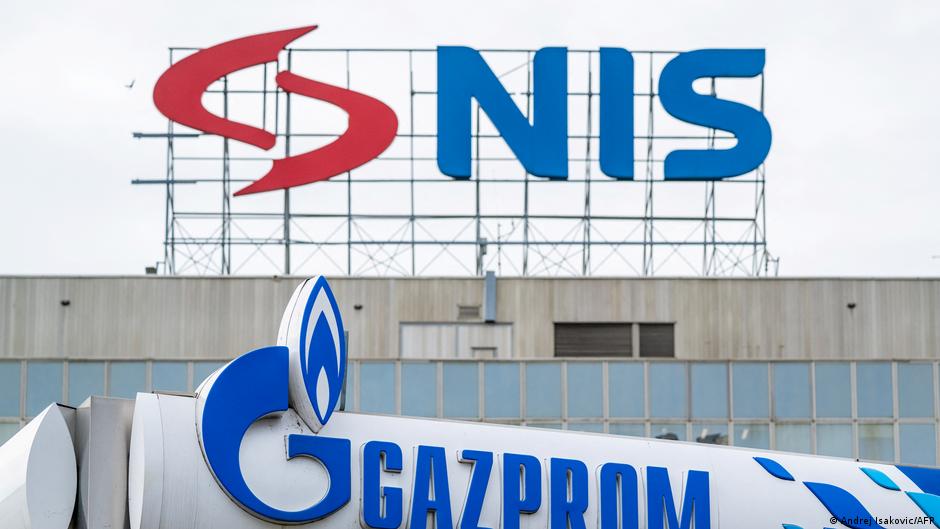
Since January 2026, the United States has repeatedly extended the deadline for completing the sale of Gazprom’s stake in Serbia’s oil company, Naftna Industrija Srbije (NIS). Most recently, the US Department of the Treasury’s Office of Foreign Assets Control (OFAC) granted a new 30-day temporary license allowing NIS to continue operations despite ongoing sanctions.
The extension, announced on June 30, 2026, by Serbia’s Minister of Energy Dubravka Djedovic-Handanovic, underscores the delicate balance between enforcing sanctions on Russian entities and maintaining critical energy supplies in Serbia and the broader region. The Pančevo refinery, a key asset of NIS, remains operational, processing crude oil despite geopolitical tensions and sanctions pressure.
Sanctions, Ownership Structure, and Regional Energy Security
NIS was added to the US sanctions list in January 2025 due to Gazprom’s significant ownership stake. Gazprom and its affiliated company Intelligence currently hold a combined 56.2% of shares in NIS—44.9% by Gazprom Neft and 11.3% by its investment unit. The Serbian government owns nearly 30%, making NIS a hybrid enterprise with strategic importance for Serbia’s energy independence.
US sanctions require Gazprom Neft and associated entities to divest their stakes in NIS, pressuring a sale to non-Russian buyers. In January 2026, Hungarian oil and gas giant MOL signed an agreement to purchase Gazprom’s assets in NIS. OFAC initially set a deadline of May 22, 2026, for the transaction’s closure but has since extended this period multiple times, reflecting the complexities involved.
“The Pančevo refinery continues processing crude oil, ensuring Serbia’s domestic fuel needs are met despite ongoing sanctions challenges,” Minister Djedovic-Handanovic stated.
NIS supplies about 80% of Serbia’s gasoline and diesel fuel and fulfills over 90% of the country’s demand for jet fuel and heavy fuel oil. The company’s operational continuity is thus crucial not only for Serbia’s domestic market but also for regional energy stability in the Western Balkans.
Economic and Geopolitical Implications
The drawn-out process of divesting Gazprom’s assets in Serbia highlights broader structural challenges faced by Western sanctions regimes targeting Russian energy interests. While sanctions seek to isolate Russian influence, the practical realities of energy supply chains and regional dependencies complicate enforcement.
The temporary licenses granted by the US suggest a pragmatic approach, balancing sanctions objectives with the risk of destabilizing regional energy markets. The case of NIS reveals how intertwined ownership structures and strategic energy infrastructure in small but geopolitically significant countries like Serbia can slow the impact of sanctions.
Furthermore, the involvement of MOL, a regional player, in acquiring Gazprom’s stake points to a gradual realignment of energy ownership in Central and Southeast Europe. This shift could have long-term implications for regional energy security, integration, and economic sovereignty.
Yet, the repeated deadline extensions expose uncertainties about the transaction’s finalization and the political will on all sides to facilitate a smooth transition. The persistence of Russian minority ownership during the interim may continue to complicate Serbia’s energy diplomacy and economic alignment with the West.
Historical Parallels and Structural Consequences
The NIS situation echoes earlier instances where sanctions on strategic energy assets led to protracted ownership disputes and license renewals. Similar patterns were seen during sanctions on Iranian and Venezuelan oil industries, where operational licenses were extended to avoid supply shocks while encouraging divestments.
On a structural level, these dynamics expose vulnerabilities in global energy markets where geopolitical conflicts intersect with critical infrastructure ownership. For Serbia and the Western Balkans, the NIS case highlights the need to diversify energy sources and suppliers to reduce dependence on geopolitically sensitive assets.
In conclusion, the US extension of NIS’s operational license underscores the nuanced interplay between sanctions enforcement and regional energy imperatives. The eventual outcome of Gazprom’s divestment and NIS’s ownership restructuring will have lasting economic and geopolitical implications for Serbia and its neighbors.