Poland Expels 11 Foreign Nationals for Russian-Funded Protests Among Ukrainian Refugees
Polish security services deported Ukrainian and Belarusian citizens accused of recruiting protesters with Russian financial backing.
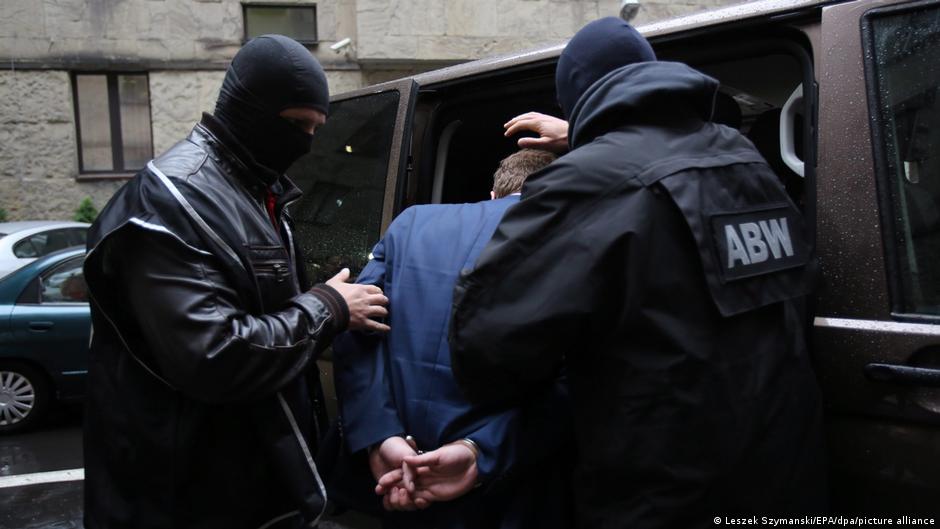
Poland has expelled nine Ukrainian and two Belarusian nationals suspected of orchestrating protests among Ukrainian refugees with funding sourced from Russia. According to the country's Internal Security Agency (ABW), these individuals were involved in recruiting participants for demonstrations financed by Moscow.
The expulsions followed coordinated detentions carried out by border authorities across several Polish cities, including Warsaw, Wroclaw, Krakow, Zakopane, and Bydgoszcz. The ABW reports that since autumn 2023, these operatives have been mobilizing and remunerating people to take part in protests within Poland's Ukrainian refugee communities.
Strategic Use of Protest Movements for Political Influence
ABW officials emphasize that the organizers aimed to exert a gradual influence over the Ukrainian refugee population in Poland, leveraging this group to propagate political narratives aligned with Russian interests. The protests often centered on emotionally charged topics such as corruption scandals in Ukraine and other domestic Ukrainian political events.
"The goal of the organizers was to gradually influence the Ukrainian refugee community in Poland and use this group to promote political slogans," stated ABW.
This development forms part of a broader pattern of Russian interference in European domestic affairs observed in recent years. In February 2024, Poland's Ministry of Foreign Affairs warned of potential Russian agent infiltration into farmer protest movements. The ministry indicated that anti-Ukrainian slogans emerging during recent farmer blockades might reflect attempts by groups influenced by Russian intelligence to seize control over protest dynamics.
Further illustrating this trend, in May 2023, the investigative group "Dossier," linked to oligarch and opposition figure Mikhail Khodorkovsky, revealed that Russian authorities conducted disinformation campaigns aimed at sowing discord within NATO allies and EU countries, notably France and Turkey. These campaigns also sought to foment hostility toward Ukrainians residing in those nations.
Broader Economic and Political Implications
The Polish government's decisive actions reflect concerns about the structural ramifications of foreign interference on social cohesion and political stability, especially amid ongoing geopolitical tensions following Russia's invasion of Ukraine. The manipulation of refugee communities undermines trust and complicates integration efforts, potentially affecting labor markets and social services in host countries.
Historically, external meddling in protest movements has been a tactic used to destabilize governments and influence public opinion, often exacerbating existing social cleavages. The current case in Poland underscores the challenges European states face in balancing open asylum policies with safeguarding their political autonomy.
Moreover, the use of financial incentives to mobilize protest participants reflects a sophisticated approach to hybrid warfare, blending information operations with on-the-ground activism. This strategy tests the resilience of democratic institutions and highlights the need for comprehensive countermeasures encompassing law enforcement, intelligence, and public diplomacy.