US Issues Commemorative Passports Featuring President Trump for 250th Independence Anniversary
Washington plans a limited series of passports with President Trump’s portrait, reflecting broader symbolic shifts in US commemorations ahead of the country's 250th anniversary.
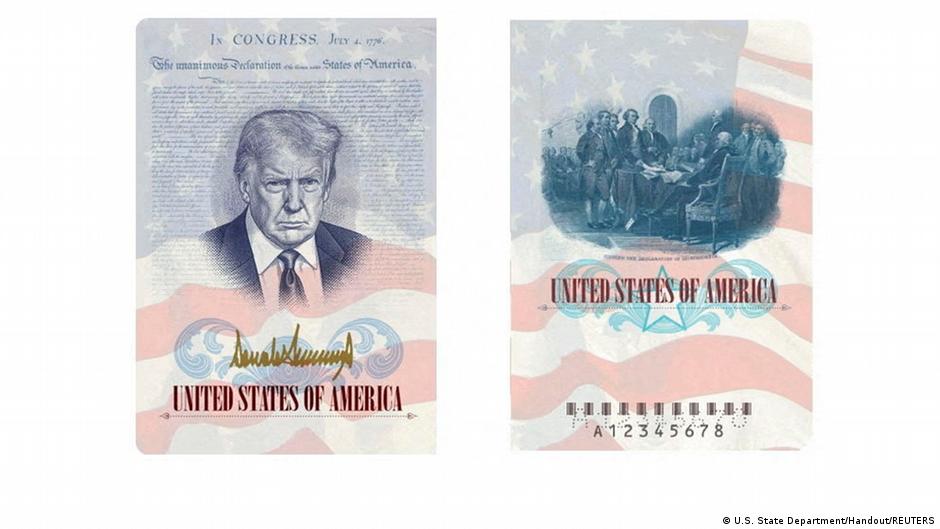
As the United States approaches its 250th anniversary of independence, the government has introduced a unique commemorative passport featuring the portrait of the sitting president, Donald Trump. This move, announced by the State Department, marks a distinctive departure from traditional passport designs and signals a broader pattern of integrating contemporary political figures into national symbols.
Symbolism in National Identity and Currency
The passports bearing Trump’s likeness will be issued by default only at the passport agency in Washington, D.C., with standard design passports continuing to be available elsewhere or through online applications. The front inside cover of these special passports showcases a gold-embossed portrait of President Trump along with his signature. On the back cover, a segment of John Trumbull’s iconic painting “Declaration of Independence” is featured, linking the modern presidency with the country’s foundational history.
Traditionally, US passports feature artwork by Edward Percy Moran, depicting Francis Scott Key during the bombardment of Fort McHenry, an event that inspired the national anthem. The divergence to include a sitting president's image is unprecedented and reflects a growing trend of blending immediate political figures with enduring national symbols.
“The issuance of passports featuring the current president’s portrait marks an unusual intertwining of political leadership with national heritage visuals, underscoring evolving narratives in American identity.”
This initiative parallels recent changes to US currency, where March 26 saw the announcement that President Trump’s signature will replace that of the Treasurer of the United States on the new $100 bills issued for the anniversary. This marks the first replacement of the Treasurer’s signature in 165 years, signaling a shift in traditional monetary symbolism.
Broader Cultural and Institutional Rebranding
Beyond passports and currency, the 250th anniversary celebrations extend into other symbolic arenas. The US Commission of Fine Arts has approved a 24-karat gold coin for the jubilee depicting President Trump standing with clenched fists alongside the inscription “Liberty.” This approval followed a controversial administrative shakeup in October 2025 when the Trump administration replaced all commission members with loyalists, suggesting a politicization of cultural institutions.
Additionally, government entities have undergone rebranding that prominently features President Trump’s name. The US Institute of Peace now bears his name, and the John F. Kennedy Center for the Performing Arts has been renamed the Donald J. Trump and John F. Kennedy Memorial Center for the Performing Arts. Militarily, plans have been announced to construct two new naval vessels named after Trump, equipped with advanced weaponry, further entrenching his legacy in various facets of state symbolism.
Economic Implications and Historical Parallels
These symbolic changes carry potential structural economic effects. The issuance of commemorative passports and currency can stimulate niche markets in collectibles and national memorabilia, creating short-term economic activity. However, the politicization of national symbols may influence international perceptions of US stability and governance, with possible downstream effects on tourism, foreign investment, and diplomatic relations.
Historically, the incorporation of sitting leaders onto currency and national emblems has been more common in autocratic regimes, often signaling personality cults or shifts toward centralized authority. The US’s adoption of such measures presents an unusual historical parallel and raises questions about the long-term impacts on democratic traditions and institutional integrity.
As the US commemorates its semiquincentennial, these developments suggest a redefinition of national identity that intertwines historical legacy with contemporary political narratives, reshaping the economic and symbolic landscape for years to come.