US Diplomatic Leadership in Ukraine Faces Uncertainty Amid Shifts in Washington Policy
Julie Davis to depart Kyiv post amid discord with Trump administration's reduced support for Ukraine
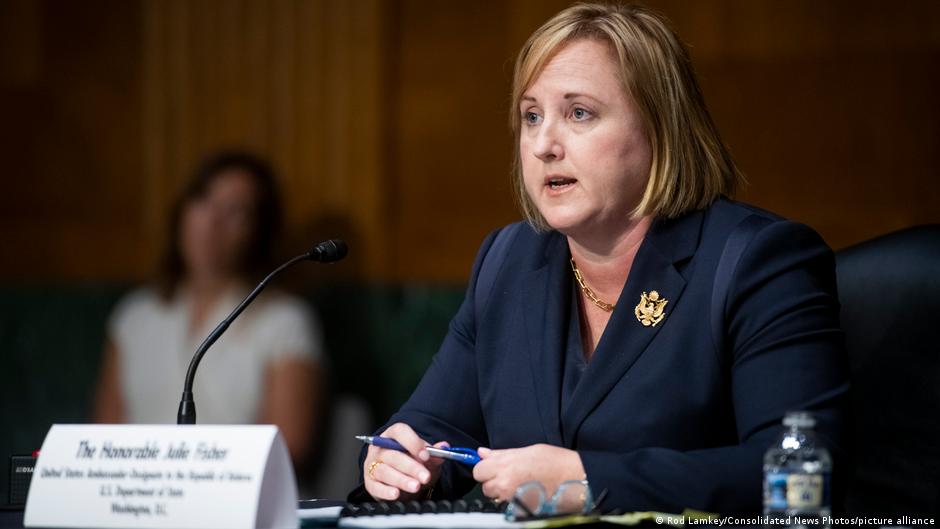
The position of the top US diplomat in Ukraine is set to become vacant in the coming weeks, as Julie Davis, the Chargé d’Affaires, announced her planned departure from Kyiv. According to reports, her exit underscores growing tensions between Washington’s foreign policy approach under President Donald Trump and the realities on the ground in Ukraine.
Diplomatic Turnover Reflects Broader US-Ukraine Relations
Davis, who assumed her temporary post in Kyiv in May 2025, is concluding a distinguished 30-year career in the diplomatic service. Her decision to leave follows notable discord with President Trump, who after regaining the White House curtailed US support to Ukraine, marking a significant policy shift from previous administrations.
While a State Department spokesperson dismissed claims that Davis’s departure resulted from disagreements with Trump, emphasizing her continued commitment to his administration’s peace efforts, the timing and context suggest deeper institutional unease.
This leadership gap emerges at a critical juncture. Russia is reportedly preparing for intensified military operations, and peace negotiations have stalled. The absence of an experienced senior diplomat in Kyiv risks undermining Washington’s influence and coordination with Ukrainian counterparts during these pivotal moments.
“The vacancy of this key diplomatic post in Ukraine coincides with escalating regional tensions and stalled peace efforts.”
Davis’s diplomatic trajectory has been notably impacted by geopolitical conflicts in the region. In 2021, she was appointed US ambassador to Belarus but was refused accreditation by Minsk, partly due to her engagement with Belarusian opposition figures. Subsequently, she served as US Special Envoy to Belarus based in Lithuania, and later as ambassador to Cyprus before taking on the Kyiv role.
Her predecessor, Ambassador Bridget Brink, appointed under President Joe Biden and a steadfast advocate for sustained aid to Ukraine, resigned in April 2025. Brink cited the Trump administration’s early pressure on Ukraine, rather than Russia, as a key factor in her departure. Brink’s exit followed tensions within the White House involving Vice President James David Vance, President Zelenskyy, and Trump, which led to a temporary suspension of US military assistance and intelligence sharing with Kyiv in early 2025.
The pattern of diplomatic departures is reminiscent of earlier episodes during Trump’s first term. In 2019, Marie Yovanovitch was recalled from her ambassadorship in Ukraine amid allegations that Trump personally sought her removal. Yovanovitch later testified in the impeachment inquiry, which centered on a phone call where Trump urged Ukraine’s president to investigate the Biden family.
This series of high-profile diplomatic exits amid policy reversals signals a structural recalibration in US engagement with Ukraine. The shift from a supportive stance toward Ukraine’s sovereignty to one marked by strategic retrenchment underlines the complex interplay between domestic US politics and international security commitments.
Economic and Geopolitical Implications
The reduction in US diplomatic and military support impacts not only the immediate security environment but also the broader economic stability of Ukraine and the Eastern European region. US assistance has been instrumental in sustaining Ukraine’s defense capabilities and fostering economic resilience amid conflict. A diminished American role risks emboldening Russian aggression, destabilizing energy markets, and reversing progress toward integration with Western economic institutions.
Furthermore, Washington’s internal discord and policy uncertainty complicate coordination with European allies, potentially leading to fragmented responses to Russian expansionism. The erosion of consistent US leadership could encourage Moscow to exploit divisions within Western coalitions.
Looking ahead, the challenge for US foreign policy will be managing these structural shifts while balancing domestic political pressures with international strategic imperatives. The diplomatic turnover in Ukraine serves as a microcosm of these broader tensions, highlighting the intricate links between leadership stability, foreign policy coherence, and regional security outcomes.