Yemen Offensive Against Houthis Raises Stakes for Trade and Energy Markets
Yemen’s internationally recognized authorities say they are advancing near Mocha as Houthi forces claim gains and strikes inside Saudi Arabia.
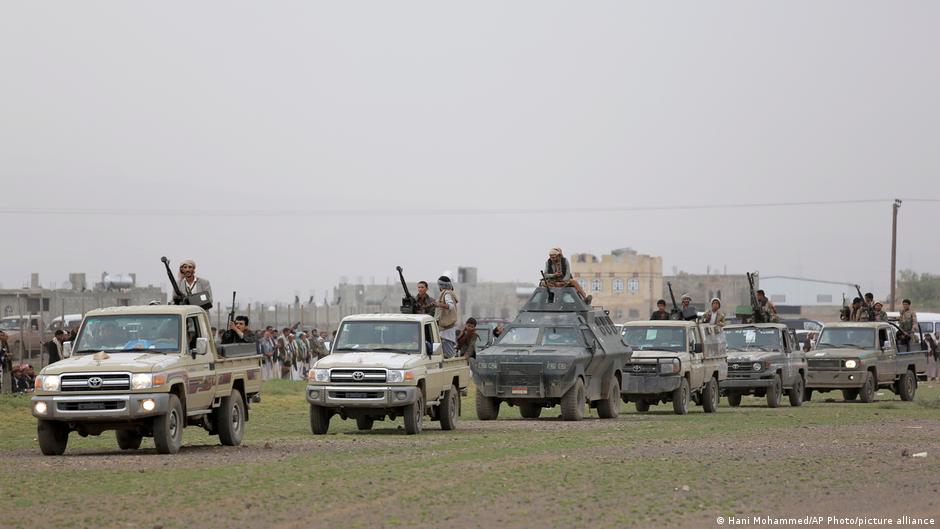
Yemen’s internationally recognized authorities have opened a new military phase against the Houthi movement, seeking to restore control over territory held by the radical Islamist group. The campaign follows a mobilization announced earlier in Yemen and comes as both sides claim battlefield successes that could carry consequences well beyond the country’s fragmented political map.
Forces loyal to Yemen’s recognized government have approached the outskirts of the port city of Mocha, aiming to drive out Houthi fighters who took the city a month earlier. Reuters reported on Monday, October 5, that Yemeni authorities had announced an advance deeper into positions held by the Ansar Allah movement, the formal name used by the Houthis.
The fighting around Mocha is among the first reported strikes by Yemeni government troops against Houthi positions since October 4, when Rashad al-Alimi, chairman of Yemen’s Presidential Leadership Council, announced the start of a large-scale military operation against the group. Al-Alimi said the goal was to return all of Yemen’s territory to the control of the internationally recognized authorities.
That objective would require extraordinary military and political effort. The Houthis hold significant parts of the country, including some of its most densely populated areas and the capital, Sanaa. At the end of September, Yemen’s authorities announced the start of a general mobilization to fight the Houthis and promised amnesty to all members of Ansar Allah who defect to government forces.
A War Over Territory and Economic Corridors
The battle for Mocha is not only a local military contest. The port sits near the Bab el-Mandeb Strait, one of the world’s most important maritime chokepoints, linking the Red Sea to the Gulf of Aden and onward to the Indian Ocean. Control over Yemen’s Red Sea coastline has therefore become inseparable from the economics of shipping, insurance, energy flows and regional deterrence.
The Houthis have intensified attacks inside Yemen in an effort to seize the country’s entire Red Sea coast. Their military gains, including the capture of Mocha on the shore of the Bab el-Mandeb Strait, have, according to the source report, enabled Iran and its allies to entrench control over key waterways in the region. Rebel attacks have begun to threaten global trade routes and contribute to rising energy prices, while the Houthi leadership separately declared that the Bab el-Mandeb Strait was closed to vessels from Saudi Arabia.
For economic policymakers, the risk is not limited to direct disruption of cargo. Even the perception that shipping lanes are vulnerable can raise transport costs, lengthen routes, increase insurance premiums and complicate energy pricing. In that sense, the Yemeni conflict resembles earlier crises in strategic waterways: the battlefield may be local, but the price signal travels globally.
“The goal of the operation is the return of all Yemeni territory under the control of the internationally recognized authorities,” al-Alimi said, according to the source report.
Ansar Allah, however, is also claiming success. Yemen Press Agency, citing a representative of the group, reported that Houthi forces had captured a district in Taiz province as well as the former residence of Rashad al-Alimi in the region. The Houthi-controlled Al Masirah television channel also showed footage of the seizure of al-Alimi’s multistory house, with Houthi fighters raising the group’s flag over the building.
Houthi military spokesman Yahya Saree also claimed that the group had conducted a series of operations on Saudi territory. According to Saree, the Houthis attacked King Khalid International Airport in Riyadh, an Aramco refinery in Rabigh and a number of military facilities in the kingdom. Saudi Arabia has not confirmed those claims.
Regional Defense Commitments Enter the Equation
The conflict’s regional dimension is becoming more explicit. Reuters reported that Riyadh, Ankara and Islamabad have agreed on the rapid deployment of troops in the region under the Mecca Defense Pact concluded in August. The pact provides for a collective response by Turkey, Saudi Arabia and Pakistan to an attack on any one of the three countries. According to Reuters, Riyadh is prepared to take part in the offensive by Yemeni government forces against the Houthis by providing air support.
Such an arrangement could alter the balance of the war. Saudi air power has long been a decisive factor in Yemen’s conflict, but the reported defense framework adds a broader collective-security element involving Turkey and Pakistan. For investors and governments watching the region, that raises the possibility that attacks on Saudi infrastructure or shipping routes could trigger a wider response.
In early September, the Houthis announced an expansion of military operations in the Middle East and struck four cities in southern Saudi Arabia. More than 70 people were injured in the heavy shelling, and fires broke out at oil facilities. Saudi Arabia, in turn, carried out more than 60 airstrikes on several provinces controlled by the Houthis.
On September 19, the Saudi-led Coalition to Restore Legitimacy in Yemen said that Yemeni rebels had, for the first time, attempted to strike the Saudi capital, Riyadh, with a ballistic missile the previous night. The missile was “intercepted and destroyed,” coalition spokesman Brigadier General Turki al-Maliki said at the time on X.
The current offensive therefore sits at the intersection of several pressures: Yemen’s internal struggle for sovereignty, Saudi Arabia’s security concerns, Iran-linked regional influence, and the vulnerability of energy and trade flows through the Red Sea. The immediate question is whether government forces can retake Mocha and reverse Houthi gains along the coast. The larger economic question is whether the conflict will further normalize the use of strategic waterways as leverage in regional war.
If the fighting expands, the costs could spread through freight markets and energy prices before any clear military outcome emerges. If the offensive stalls, the Houthis’ hold over populated areas and coastal corridors may become harder to dislodge. Either scenario underscores a structural fact of Yemen’s war: territorial control in a poor and divided country can still influence some of the world’s most valuable commercial routes.