German BSW Lawmaker Plans Belarus and Russia Trips to Reopen Municipal Links
Sven Hornauf’s initiative points to the economic and political weight of city partnerships suspended after Russia’s war in Ukraine.
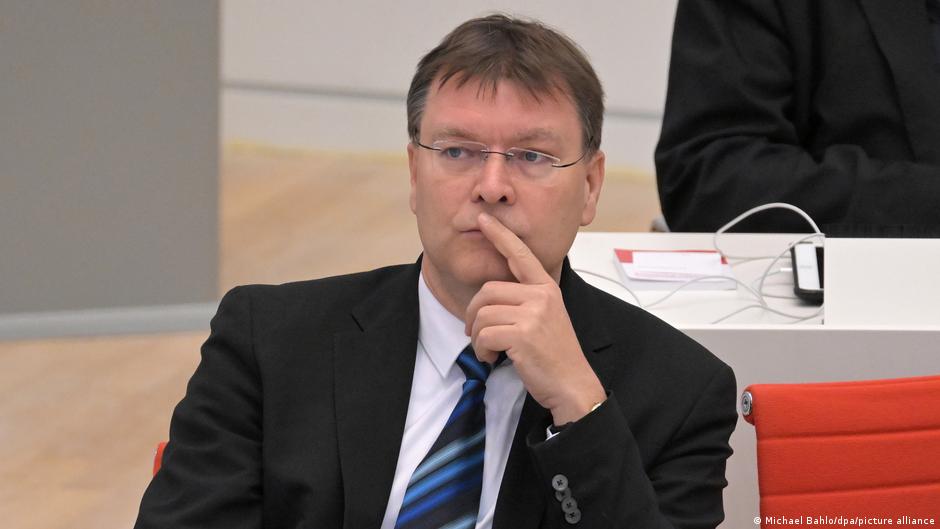
Sven Hornauf, a lawmaker from Germany’s left-populist BSW party, says he is assembling a delegation of German politicians and civil society representatives for visits to Belarus and Russia aimed at restoring contacts between twin towns. The initiative, modest in scale but politically charged, highlights a broader question facing German municipalities: whether local channels of exchange with Belarusian and Russian cities can be revived while the wider geopolitical and economic rupture caused by Russia’s full-scale invasion of Ukraine remains unresolved.
Hornauf, a member of the Brandenburg state parliament from the “Alliance for Social Justice and Reasonable Economy” — BSW, previously known as the Sahra Wagenknecht Alliance — told the regional newspaper Märkische Oderzeitung on Saturday, October 3, that he plans to travel by bus to Vitebsk in November with a delegation of like-minded people from various German parties. The following day, larger German media outlets, including the dpa news agency, Tagesspiegel and Die Welt, also reported on the plans.
According to Hornauf, the purpose is to restart cooperation between German cities and their twin towns in Belarus and Russia, in order to “send a signal in favor of mutual understanding between peoples.” He also plans a visit to Russia in April 2027. In his view, it is important to re-establish normal and regular contacts “directly at the level of people” and to ensure that the general political climate, “no matter from which side,” does not prevent them.
Hornauf says the aim is to restore “normal regular contacts” at the level of people, despite the broader political climate.
Municipal diplomacy in an economy of rupture
For an economics-focused readership, the significance of Hornauf’s proposal lies not in the size of the delegation, but in what it reveals about Germany’s fractured approach to eastern ties. City partnerships were never purely symbolic. Over decades, they helped create channels for cultural exchange, education, local administration, business contacts and civic diplomacy. After 2022, many of these relationships became politically toxic, as Russia’s war in Ukraine forced German towns, companies and public institutions to reconsider links that had once been framed as pragmatic engagement.
Hornauf says between 30 and 40 people are expected to take part in the Belarus trip, most of whom are not members of any political party. At the same time, he named several BSW members among the participants, as well as representatives of the Greens and the far-right Alternative for Germany, or AfD. The final composition of the delegation, he said, will be determined during preparatory meetings.
The planned itinerary also reflects the municipal roots of the initiative. From November 6 to 11, a delegation from Hornauf’s home city of Frankfurt an der Oder is to visit Vitebsk. Other participants intend to travel to Minsk and several other Belarusian twin towns. In each case, the stated reason is the desire to restore twin-town ties.
Many of the “fraternal” relationships between German, Belarusian and Russian cities were suspended after Russia’s full-scale invasion of Ukraine. Yet suspension has not always meant termination. According to a 2026 survey conducted by the Redaktionsnetzwerk Deutschland media group among around 100 German cities and communities, only one had fully ended its partnership with a Russian twin city.
That finding points to a durable institutional memory at the local level. Partnerships may be frozen, but the administrative records, personal contacts and civic expectations often remain. RND reported that roughly 40% of surveyed municipalities continued informal contacts with Russia after 2022, including invitations to representatives of Russian cities to visit Germany. In 42% of responding German municipalities, officials supported resuming partnership with Russia in the event of a peace settlement in Ukraine.
The structural costs of broken local networks
The economic consequences of such municipal relationships are hard to quantify, but they sit within a wider architecture of exchange that Germany spent decades building with eastern Europe and Russia. Before the rupture caused by the war, local partnerships could complement trade links, educational exchanges, energy relationships and regional development initiatives. Their suspension has therefore become part of a larger structural adjustment: German regions are being forced to redefine external ties, risk assumptions and political boundaries that previously underpinned business and civic cooperation.
Hornauf’s initiative arrives at a sensitive moment for Germany’s internal debate. BSW has positioned itself as a critic of the country’s existing course toward Russia and of policies it sees as militarizing German security. Hornauf himself drew headlines in spring 2026 when he became one of the initiators of a visit by BSW members and supporters to the Russian embassy in Berlin. He has also previously faced criticism for supporting several AfD initiatives.
The planned delegation therefore carries a dual meaning. On one level, it is presented as people-to-people diplomacy involving towns and civic actors. On another, it intersects with contested domestic politics, where questions of Russia policy, defense spending and the limits of dialogue have become markers of ideological alignment. The involvement, as described by Hornauf, of people associated with BSW, the Greens and the AfD gives the initiative an unusual cross-party profile, but also exposes it to criticism from those who view renewed contacts as premature or politically exploitable.
Hornauf has also criticized Germany’s efforts to strengthen defense measures against the backdrop of Russia’s aggressive policy. In particular, he opposed the deployment of the American-Israeli Arrow 3 missile defense system at the Bundeswehr base in Holzdorf. The missile defense system was placed on combat duty in Germany at the end of 2025.
That defense-policy context matters. Germany’s post-2022 shift has not been limited to sanctions and diplomatic distancing. It has included a broader reassessment of strategic vulnerability, including air and missile defense. Local initiatives aimed at restoring contacts with Belarus and Russia therefore take place alongside an expanding security infrastructure designed in response to the same geopolitical rupture.
Historically, German municipal diplomacy with the east drew strength from the idea that social and economic interdependence could moderate political conflict. Hornauf’s proposal implicitly revives that logic. But the conditions are now different. The war in Ukraine has turned many previously low-risk channels into contested instruments of political messaging. For municipalities, the question is not only whether contacts can be resumed, but under what conditions they remain compatible with Germany’s national policy, European commitments and economic security concerns.
The coming trips, if they proceed as described, will not by themselves alter Germany’s relations with Belarus or Russia. Their importance lies in the signal they send about unresolved pressures below the national level. Even after years of rupture, many local partnerships have not disappeared. They are suspended, informal or awaiting a political settlement. Hornauf’s initiative brings that latent network back into public view — and with it the unresolved tension between economic memory, civic engagement and the strategic costs of normalizing ties before the war’s consequences have been settled.