Abu Dhabi Talks Put Ukraine’s Security and Reconstruction in Focus
US-mediated working groups will address de-escalation, postwar security and the economic foundations of Ukraine’s recovery.
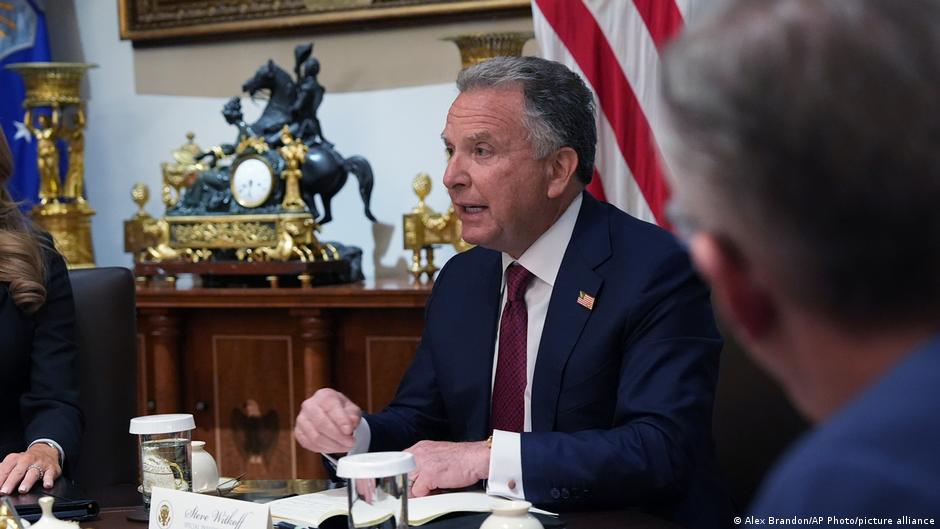
Russia and Ukraine will hold a new round of US-mediated negotiations in Abu Dhabi on November 10-11, placing postwar security and economic reconstruction alongside immediate efforts to reduce tensions and advance humanitarian initiatives.
Steve Witkoff, US President Donald Trump’s special envoy, announced the meeting on Tuesday, November 3. He said the discussions in the capital of the United Arab Emirates would take place at the working-group level as part of Trump’s effort to end Russia’s war against Ukraine.
“The discussions will focus on postwar security, de-escalation, humanitarian initiatives and next steps toward peace,” Witkoff wrote on X.
The agenda signals that the negotiations are moving across several time horizons at once. De-escalation and humanitarian measures concern the immediate management of the conflict, while postwar security and reconstruction require governments to consider the institutions, commitments and financial resources that would be needed after any settlement.
For Ukraine, those longer-term questions have direct economic significance. The durability of a peace agreement would shape the environment in which reconstruction support could be deployed. The Brussels discussions planned for this week will explicitly link security guarantees and Europe’s postwar security architecture with options for economic assistance to Ukraine’s recovery.
Security and reconstruction treated as linked issues
US negotiators are due to meet representatives of France, Germany, the United Kingdom, the European Union and NATO in Brussels this week. According to Witkoff, the talks will cover “security guarantees for Ukraine, Europe’s postwar security architecture and opportunities for economic support for Ukraine’s reconstruction.”
The parallel tracks in Abu Dhabi and Brussels illustrate the breadth of the diplomatic process. The first brings Russian and Ukrainian working groups together under US mediation. The second involves Ukraine’s principal European partners and NATO in discussions about the commitments and resources that could support a postwar arrangement.
From an economic perspective, the sequence matters because reconstruction cannot be separated cleanly from security. Economic support concerns how recovery might be financed, but the security framework concerns the conditions under which that support would operate. The agenda outlined by Witkoff therefore treats a settlement not simply as an end to fighting, but as the possible foundation for a wider European security and recovery framework.
No financial figures, funding mechanisms or reconstruction timetable were disclosed in the announcement. Nor did Witkoff provide details of the security guarantees under consideration. The talks remain at the working-group stage, and the stated goal is to consolidate progress toward a comprehensive agreement rather than to announce that an accord has already been reached.
A diplomatic process spanning several capitals
Witkoff said Washington hoped to build on progress achieved in Kyiv, Oslo and St. Petersburg. In October, Trump’s special envoy met Ukrainian President Volodymyr Zelenskyy in Oslo before travelling to St. Petersburg for negotiations with Russian President Vladimir Putin.
“We hope to consolidate the progress achieved in Kyiv, Oslo and St. Petersburg on the path toward a comprehensive and lasting peace agreement that will ensure long-term security for future generations,” Witkoff said.
The latest schedule extends that geography to Abu Dhabi and Brussels. Each venue corresponds to a different part of the process: direct working-level mediation between Russia and Ukraine in the UAE, and coordination with European governments, the EU and NATO in Belgium.
Abu Dhabi will host the first US-mediated round between Russia and Ukraine since February 2026. That previous round took place shortly before the beginning of the US and Israeli war against Iran. The interval underscores how wider international developments can interrupt or complicate diplomatic sequencing, even when negotiations concern a separate conflict.
The November meetings will test whether the contacts conducted in Kyiv, Oslo and St. Petersburg can be converted into more structured discussions. The stated subjects cover both conflict management and the architecture of a possible settlement, but the announcement does not indicate that the parties have resolved their differences on those issues.
The structural stakes of a lasting agreement
The inclusion of humanitarian initiatives may offer a more immediate area for working-level discussion, while de-escalation concerns the reduction of near-term risks. Postwar security, by contrast, requires agreement about a longer-lasting framework. Economic reconstruction adds another layer because support for Ukraine would need to fit within that broader political and security arrangement.
The talks also place Europe’s role at the centre of the next phase. France, Germany, the United Kingdom, the EU and NATO are expected to discuss both security and economic support with US negotiators, reflecting the overlap between Ukraine’s recovery and the future European security system.
For policymakers, the central structural question is whether diplomatic progress can connect these separate components into a durable settlement: de-escalation that can be sustained, humanitarian measures that can be implemented, security commitments that can endure and reconstruction support that can operate within a stable framework. Witkoff’s announcement establishes those objectives for the coming meetings, while leaving their practical design and the positions of the negotiating parties to the talks themselves.