Kyiv Bridge Strikes Deepen Risks to Ukraine’s Urban Economy
Damage to crossings and infrastructure threatens mobility, logistics and business continuity across the Ukrainian capital.
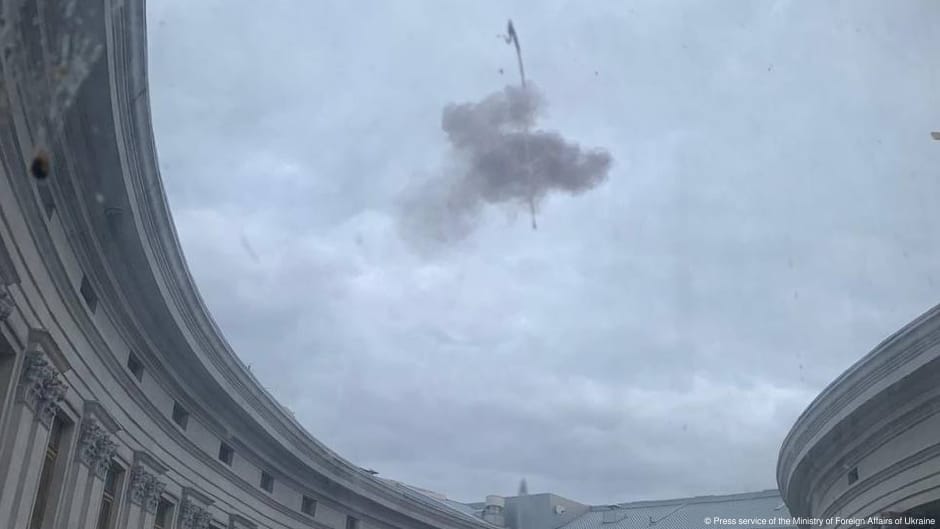
Russian forces launched another overnight ballistic-missile attack on Kyiv on Friday, November 20, triggering explosions and fires in several districts of the Ukrainian capital and damaging key crossings over the Dnipro River. The immediate human toll from the latest strikes remained unclear at the time of publication, but the reported damage points to a broader economic vulnerability: the dependence of a large metropolitan economy on a limited network of bridges, energy assets and public infrastructure.
Kyiv Mayor Vitali Klitschko and the Kyiv City Military Administration reported fires in buildings in the Obolonskyi, Holosiivskyi and Podilskyi districts. One strike hit an open area near a bridge, while another affected the grounds of an infrastructure facility in Holosiivskyi district.
“In the Obolonskyi district, a missile fragment caused a fire in a three-storey building,” Klitschko said, also reporting fires at an office building and in a non-residential development.
Klitschko later reported damage to the Podilsko-Voskresenskyi and Darnytskyi bridges, as well as a repeat strike on the Pivdennyi Bridge. Movement between the two banks of the Dnipro was disrupted. The military administration confirmed fires in buildings in the Obolonskyi and Podilskyi districts. No deaths or injuries from the overnight attack had been reported when the initial accounts were published.
Transport chokepoints carry outsized economic costs
For Kyiv, disruption to river crossings is more than a transport problem. Bridges connect residential districts with employment centres, industrial areas, railway links and public services. Even when damage does not close a crossing completely, congestion and uncertainty can lengthen commuting times, interrupt deliveries and raise operating costs for businesses. Repeated attacks also force authorities and companies to devote more resources to emergency planning, repairs, backup routes and security.
The economic effects are therefore likely to extend beyond the physical cost of replacing windows, repairing buildings or restoring road surfaces. Delays can reduce productive working time, complicate shift scheduling and make the movement of goods less predictable. Service companies face interruptions when employees cannot reach workplaces, while retailers and manufacturers must account for slower or less reliable supply routes. These pressures accumulate when attacks recur before earlier damage has been fully repaired.
Ukrainian monitoring channels reported that Russian forces fired 12 ballistic missiles at Kyiv between 2:00 a.m. and 3:30 a.m. According to open-source intelligence reports, the attacks appeared to focus primarily on bridges and energy facilities, although neither visual evidence nor confirmation from the authorities was available for that assessment.
The same monitoring channels said several Russian strategic bombers capable of carrying cruise missiles had taken off. Ukraine’s Air Force also reported continuing launches of jet-powered unmanned aerial vehicles toward the Zaporizhzhia, Kirovohrad, Vinnytsia, Zhytomyr and Lviv regions.
Cumulative damage raises the reconstruction burden
The latest attack followed another day of casualties and damage in Kyiv. Over the preceding 24 hours, Russian strikes killed a 26-year-old man and injured four other people, according to Ukraine’s State Emergency Service. Residential and non-residential buildings and a fire-and-rescue unit were damaged. Emergency workers rescued two people from a burning six-storey building, while debris broke windows at St Volodymyr’s Cathedral in central Kyiv.
The pattern illustrates how repeated attacks can increase reconstruction costs even when individual incidents cause limited structural damage. Repair crews, emergency services and municipal budgets must respond to multiple locations, while private property owners and businesses face recurring losses. Damage to rescue facilities can further weaken the institutions responsible for limiting the economic and human consequences of subsequent strikes.
Elsewhere, Russian forces struck a hospital in Kharkiv’s Shevchenkivskyi district, injuring four people and destroying about 50 windows, Mayor Ihor Terekhov said at around 5:00 a.m. local time. Attacks on medical facilities impose costs through damaged property, interrupted treatment and the diversion of personnel and public funding toward emergency restoration.
The strikes also generated diplomatic repercussions. During a Russian attack on Kyiv on November 19, the Dutch and Austrian embassies were damaged, although both governments said nobody was injured. Austrian Foreign Minister Beate Meinl-Reisinger ordered additional security measures in response to the intensifying attacks on the capital. Dutch Foreign Minister Tom Berendsen said a projectile struck the building behind the embassy, causing minor damage. The Netherlands summoned the Russian ambassador for an explanation, Bloomberg reported.
Ukrainian Foreign Minister Andrii Sybiha said debris from a Russian drone also fell on the grounds of the Brazilian Embassy during the daytime attacks, without causing casualties or destruction. EU foreign policy chief Kaja Kallas said the European Union would summon a Russian representative over the strikes that damaged several embassies.
Resilience increasingly shapes urban investment
Historically, sustained attacks on transport and energy networks have sought to magnify the economic impact of military action by disrupting systems on which civilian production depends. In Kyiv, the structural consequence is a growing premium on redundancy: alternative crossings, distributed energy supply, protected communications and flexible logistics become essential economic assets rather than optional safeguards.
That shift changes investment priorities. Funds that might otherwise support expansion, housing or modernization must be directed toward repairs, protective measures and reserve capacity. For businesses, the same dynamic favours inventories, backup power and dispersed operations, all of which improve resilience but increase costs. The latest bridge damage thus represents not only an immediate emergency but another addition to the long-term economic burden of maintaining a functioning capital under repeated attack.