Pentagon Strategist Leaves NATO Talks After Rebuking Ukraine
Elbridge Colby’s criticism of strikes inside Russia exposed a widening transatlantic dispute over the economic and military logic of the war.
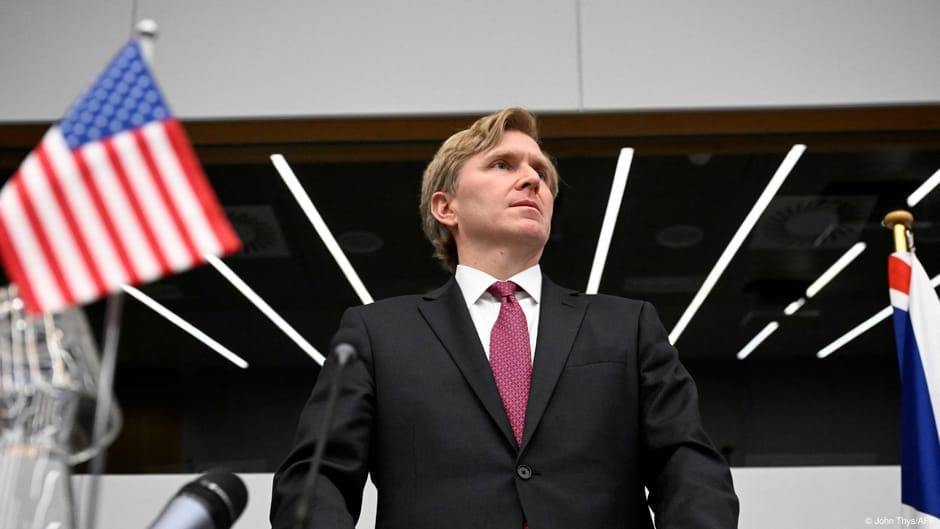
A senior Pentagon strategist left a NATO meeting in Brussels early after criticizing Ukraine for conducting strikes deep inside Russian territory, an episode that highlighted a widening divide between Washington and European governments over the military value and broader economic consequences of Kyiv’s campaign.
Elbridge Colby, the Pentagon’s undersecretary for policy, departed the 37th meeting of the Ukraine Defense Contact Group at NATO headquarters on Nov. 17, according to The Telegraph. The gathering, commonly known as the Ramstein format, coordinates military assistance to Ukraine among its international partners.
Colby reportedly argued that Ukrainian attacks deep inside Russia had no significant military value. He left before a classified briefing by Ukrainian Defense Minister Yevhen Khmara, a sequence that unsettled officials from Germany, Britain and other European countries attending the meeting.
The disagreement is not merely about targeting. It concerns how each side measures military effectiveness, political pressure and the long-term cost of sustaining the conflict.
German sources cited in the report expressed concern that President Donald Trump’s administration had effectively aligned itself with Russia against Ukraine and its European supporters. European officials at the meeting were reportedly puzzled by Colby’s remarks because they regard the strikes as militarily effective and capable of destabilizing Russian President Vladimir Putin’s government.
Competing theories of economic pressure
The dispute reflects two different assessments of how wars of attrition are shaped. Colby’s reported position emphasizes the direct military return from each operation: whether a strike destroys assets, disrupts combat operations or changes conditions on the battlefield sufficiently to justify scarce weapons and political risk.
The European view described in the report appears broader. Strikes inside Russia can impose costs beyond immediate battlefield damage by forcing Moscow to disperse air defenses, protect infrastructure and reconsider the security of industrial and logistical facilities far from the front. They may also affect public expectations and expose vulnerabilities in a state that has sought to shield much of its domestic economy from the war’s visible consequences.
Historically, attacks on an adversary’s rear areas have often carried ambiguous economic results. They can disrupt transport, energy supplies and industrial production, but they can also encourage governments to centralize control, increase military spending and mobilize public support. The strategic question is therefore not simply whether the strikes create costs, but whether those costs weaken Russia’s capacity to continue the war faster than they increase escalation risks and allied expenditure.
That calculation has direct implications for Europe. If Washington becomes more reluctant to support operations inside Russia, European governments may face pressure to supply more long-range weapons, intelligence and financing themselves. Such a shift would deepen the burden on national budgets already balancing defense commitments with social spending, investment needs and slow economic growth.
Alliance management and reconstruction
Colby’s departure also carried symbolic weight because the Ramstein format depends on coordination among countries with different strategic priorities and fiscal constraints. Even when allies agree on supporting Ukraine, disagreement over which operations deserve resources can influence procurement, production contracts and the pace at which defense industries expand capacity.
Washington remained represented until the end of the session by Matthew Whitaker, the US permanent representative to NATO. It was claimed that Colby had to leave to catch a flight from a nearby airport. After departing the meeting, however, he held a press conference in the atrium of NATO headquarters at about 5 p.m. local time, or 7 p.m. Moscow time, before heading to the airport.
The scheduling explanation may limit the significance of the early exit, but it does not resolve the underlying policy dispute. For European capitals, the concern is that a narrower US definition of militarily useful support could transfer more of the war’s financial and strategic burden to Europe. For Washington, restricting operations judged to offer limited returns may be presented as an effort to conserve resources and control escalation.
The disagreement comes ahead of a meeting in Berlin of the so-called coalition of the willing on Thursday, Nov. 19. British Prime Minister Andy Burnham, together with the French president and the German chancellor, is due to co-chair the gathering. Around 20 heads of state and government, primarily from European countries, are expected to discuss further support for Kyiv.
The Berlin meeting is also intended to address plans for Ukraine’s postwar reconstruction. That agenda connects battlefield strategy with a much larger economic question: who will finance the rebuilding of infrastructure, housing and productive capacity once the war ends. Decisions taken now about weapons, sanctions and burden-sharing will shape not only the conflict’s trajectory but also the distribution of reconstruction costs across Europe and its partners.
The Brussels episode therefore points to a structural tension within the alliance. The United States and Europe may continue to share the objective of supporting Ukraine while diverging over the acceptable price, preferred instruments and time horizon. As the conflict continues, those differences are likely to become increasingly visible in defense budgets, industrial policy and negotiations over reconstruction finance.