Bulgaria Heads to Presidential Runoff After Low-Turnout First Round
The November 1 contest will test Bulgaria’s foreign-policy direction while exposing deeper institutional and economic uncertainty.
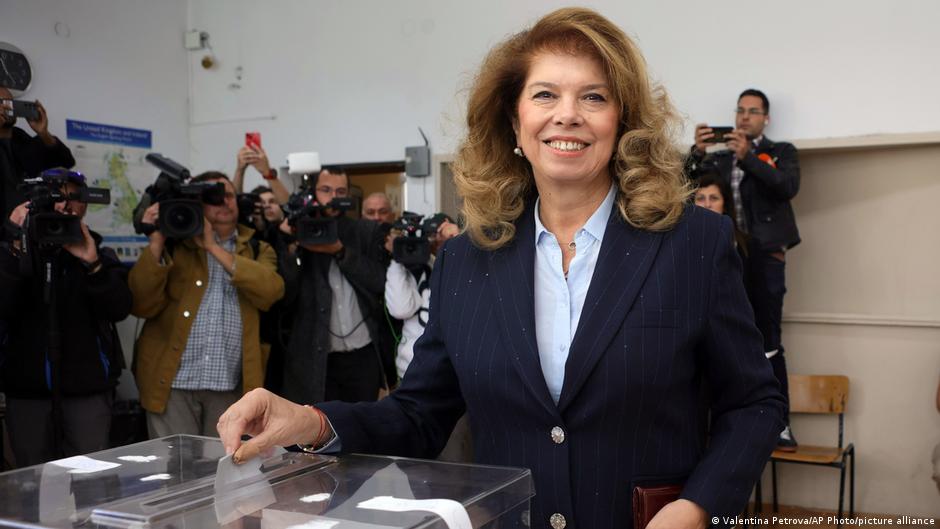
Bulgaria’s presidential election is heading to a second round after no candidate secured the required absolute majority in the first ballot. With 95.3% of votes processed, Central Election Commission data showed incumbent President Iliyana Yotova leading with 34.6%, followed by pro-Western former prime minister Andrey Gyurov on 32%.
The runoff is expected to take place on November 1. Yet the most consequential number from the first round may be turnout: only 22.2% of eligible voters participated, far below the threshold of more than 50%. The result therefore reflects not only a divided electorate but also a strikingly narrow base of active political participation.
For Bulgaria’s economy, weak turnout matters because electoral legitimacy can influence the state’s ability to sustain difficult reforms, reassure investors and navigate external shocks. The president’s formal powers are limited, but the office can still shape institutional continuity and the tone of foreign policy. In a country exposed to geopolitical risks through its Black Sea position, those functions have acquired unusual economic significance.
Security risks enter the economic calculation
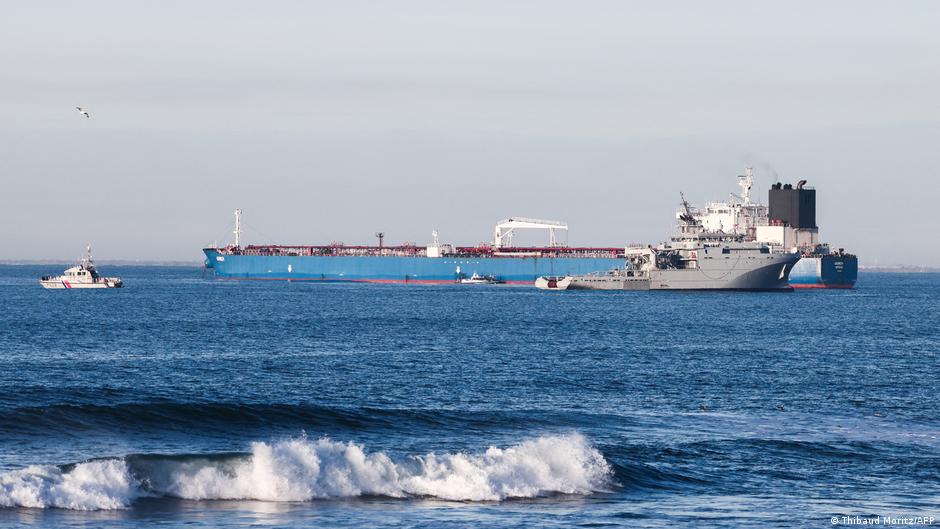
The second round carries added foreign-policy weight because of Bulgaria’s proximity to the war in Ukraine. In October alone, four merchant vessels off Bulgaria’s Black Sea coast were reportedly struck by drones. A Starlink station near Sofia was also damaged in an arson attack.
Yotova and the Bulgarian government led by Rumen Radev responded cautiously to the incidents, offering no definitive assessment and naming no perpetrators. That restraint became part of the election campaign, sharpening scrutiny of how the country should balance security commitments, diplomatic caution and its exposure to regional instability.
The economic implications extend beyond defence policy. Any deterioration in Black Sea security can affect perceptions of shipping risk, trade reliability and the resilience of communications infrastructure. Even without immediate disruption, uncertainty can raise the premium businesses attach to transport, insurance and investment decisions. Bulgaria’s geographic position makes the credibility of its institutions an important economic asset when regional tensions intensify.
Low participation leaves the next president facing a dual challenge: managing external risk while demonstrating sufficient domestic legitimacy to support institutional stability.
The campaign initially offered voters little substantive guidance. Its early phase was marked by infrequent rallies, an absence of televised debates and numerous personal attacks against the two leading candidates. In the final weeks, however, their differences over support for Ukraine moved to the centre of the contest.
Yotova has advocated a diplomatic end to the war and sought to assure voters that Bulgarian troops would not be sent to Ukraine, even though the possibility had not been the subject of broad public debate. Gyurov has previously expressed support for Ukraine and, while serving as head of government, signed a security cooperation agreement with Kyiv.
A limited office with significant economic leverage
Bulgaria’s presidency does not directly control fiscal or economic policy, but describing the office as merely ceremonial would understate its structural importance. The president represents the country internationally, with certain exceptions, and serves as commander-in-chief. The officeholder also signs decrees appointing the prosecutor general and the heads of the highest courts.
The president may appoint an acting prime minister from a closed list of officials defined by the constitution and can veto legislation adopted by parliament. These powers become especially important during periods of political fragmentation, when delays in government formation or disputes over legislation can weaken policy predictability.
From an economic perspective, the runoff therefore concerns more than competing diplomatic messages. Presidential decisions can affect the continuity of government, the pace at which laws take effect and confidence in the judicial framework. Those channels matter to households and companies because prolonged institutional uncertainty can discourage long-term planning even when the presidency does not set tax rates or public spending.
The pattern has historical parallels across parliamentary systems in which formally constrained heads of state gain influence during political deadlock. Their authority often expands in practice when parties struggle to produce durable governments. Bulgaria’s constitutional provisions for appointing an interim premier and vetoing laws give the presidency particular relevance under such conditions.
The contrast between Yotova and Gyurov also places Bulgaria’s external alignment before voters in unusually direct terms. A more cautious approach to the Ukraine war may appeal to citizens concerned about escalation, while a more explicitly pro-Western position may emphasize security cooperation and international commitments. The runoff will determine which of those approaches receives the stronger mandate, although the first round’s low participation complicates any broad claim of public consensus.
Whatever the result on November 1, the incoming mandate will be shaped by two structural constraints: limited formal presidential competence and widespread electoral disengagement. Bulgaria’s next president will nevertheless hold tools capable of influencing institutional appointments, temporary governments, legislation and the country’s international posture. In a period of regional insecurity, those powers can carry economic consequences well beyond the office’s constitutional description.