Canada Seeks Role in EU’s €90 Billion Ukraine Loan as Ottawa Looks Beyond U.S.
Ottawa is negotiating a contribution ahead of an EU-Canada summit as Prime Minister Mark Carney pursues deeper economic and strategic ties with Europe.
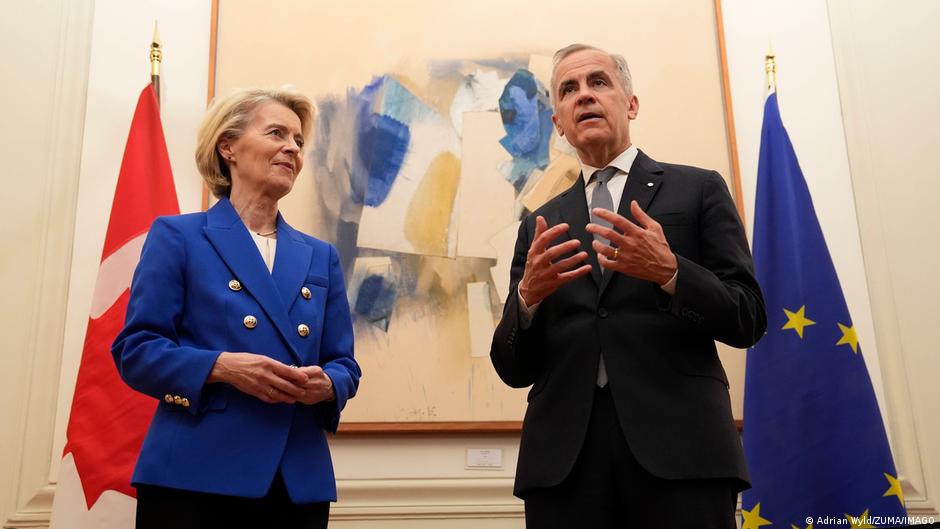
Canada is seeking to join the European Union’s €90 billion loan program for Ukraine, a move that would widen the financing base for Kyiv while signaling Ottawa’s broader attempt to rebalance its economic and diplomatic position away from dependence on the United States.
According to the Financial Times, which cited people familiar with the matter, Canada is in talks with the EU over participation in the loan facility, with both sides aiming to agree on the size of Ottawa’s contribution before an EU-Canada summit scheduled for late October in Montreal. The discussions place Ukraine financing at the center of a wider transatlantic agenda that now extends from defense and digital trade to artificial intelligence infrastructure.
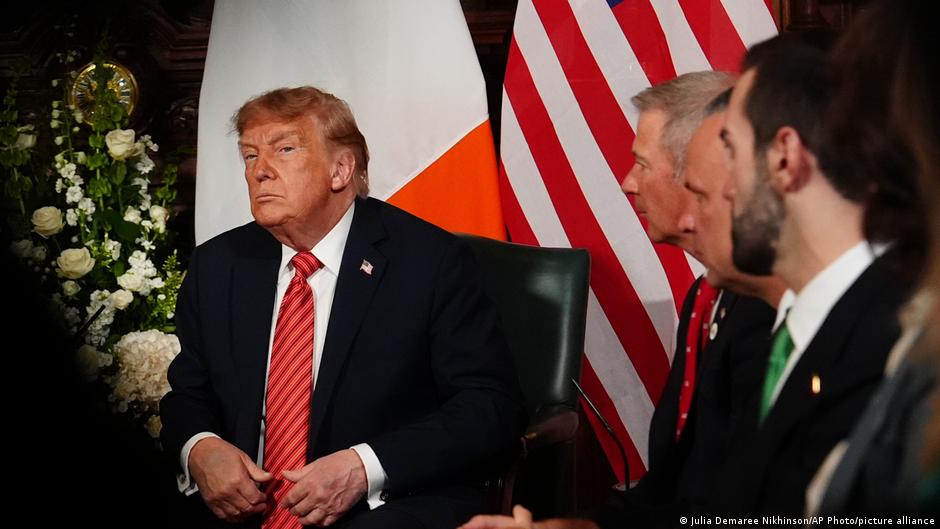
For Canada, the prospective contribution is not only a fiscal or foreign-policy decision. It is also part of Prime Minister Mark Carney’s effort to demonstrate to Europe that Ottawa is committed to strengthening transatlantic links. That effort, as described by the FT, is intended to reduce Canada’s reliance on the U.S. and to advance Carney’s idea of an alliance of liberal powers committed to a multilateral order that he believes was damaged by U.S. President Donald Trump.
Canada’s potential role in the EU loan would make Ottawa only the second non-EU participant after the United Kingdom.
A Loan With Strategic Weight
The €90 billion EU loan for Ukraine sits at the intersection of wartime financing and long-term geopolitical alignment. For Ukraine, external support remains central to sustaining state functions, defense needs and reconstruction planning. For Europe, the program is a test of whether it can institutionalize assistance to Kyiv at a scale large enough to shape the war’s economic balance and signal durability to Moscow.
Canada’s involvement would give the program additional political legitimacy beyond the EU’s institutional perimeter. Until now, the United Kingdom has been the only country outside the bloc to join the loan. If Ottawa follows, the facility would start to look less like a strictly European instrument and more like a platform for coordinated financing by advanced liberal economies.
That distinction matters. Since Russia’s full-scale invasion of Ukraine, Western support has moved through several channels: bilateral military aid, EU budget instruments, G7 coordination and national sanctions regimes. A loan program with participation from Canada would add another layer to this architecture. It would also underscore how Ukraine’s fiscal survival has become a structural feature of Western public finance, rather than a temporary emergency item.
Ottawa has already committed substantial military assistance to Ukraine. The FT noted that Canada has provided 6.5 billion Canadian dollars in military aid, equivalent to about 4.7 billion U.S. dollars. On September 10, Carney and Ukrainian President Volodymyr Zelensky signed a declaration on a 100-year partnership that includes cooperation in defense innovation. The prospective EU-linked loan contribution would therefore extend an existing Canadian policy line from defense support into broader macro-financial backing.
Canada’s European Turn
The timing is important. Canada is looking for support in a trade confrontation with the United States, and the talks with Brussels are not limited to Ukraine. According to the FT, Ottawa hopes to conclude additional agreements with the EU, including joining the bloc’s supercomputer network for joint work on artificial intelligence and signing a digital trade agreement with Brussels.
Those ambitions reveal a larger economic strategy. Canada’s vulnerability has long been its heavy exposure to the U.S. market. Geographic proximity, integrated supply chains and decades of trade liberalization have made that relationship profitable, but also constraining. When U.S. policy turns protectionist or politically unpredictable, Canadian firms and policymakers have limited room to maneuver.
Carney’s outreach to Europe can therefore be read as a diversification agenda. A closer relationship with the EU could help Ottawa reduce concentration risk in trade, technology and security policy. Digital trade and artificial intelligence cooperation are especially significant because they point beyond tariffs and goods markets toward the next generation of economic power: data governance, compute capacity, standards-setting and industrial innovation.
Joining the EU supercomputer network, if achieved, would connect Canada to a strategic technology infrastructure increasingly viewed as essential for artificial intelligence development. For Brussels, Canadian participation would bring a like-minded partner into a field where scale, regulatory alignment and trusted cross-border collaboration are becoming as important as raw computing power. For Ottawa, it would offer a path to technological depth that is not mediated solely through U.S. platforms and policy choices.
The same logic applies to digital trade. An agreement with Brussels would potentially help Canada anchor rules for data flows, digital services and regulatory cooperation with a major economic bloc. In historical terms, this resembles earlier moments when medium-sized advanced economies sought to hedge against great-power volatility by embedding themselves in rules-based institutions. The difference today is that the institutions themselves are under strain, and the rules being written concern algorithms, cloud systems and security-sensitive infrastructure as much as manufactured goods.
Costs, Risks and Economic Consequences
The size of Canada’s possible contribution has not yet been agreed. That makes it difficult to assess the immediate fiscal implications. But even without a final figure, the political economy is clear: participation in the EU loan would convert Canada’s support for Ukraine into a more formal stake in Europe’s long-term security financing.
Such a move could carry domestic trade-offs. Public money directed toward Ukraine may invite scrutiny at a time when many advanced economies face pressures over housing, infrastructure, health care and debt servicing. Yet governments supporting Kyiv have generally framed such spending as a defense of the international economic order itself: sovereignty, border integrity and the predictability on which trade and investment depend.
For the EU, Canada’s entry would help distribute the burden, modestly or substantially depending on the agreed amount, and strengthen the message that Ukraine financing is not a narrow regional obligation. For Canada, it would purchase influence in European strategic debates while reinforcing Ottawa’s claim to be a serious partner in defending a multilateral order.
The late-October summit in Montreal is therefore more than a diplomatic calendar point. It is a deadline for defining how far Canada is prepared to go in turning a European partnership into concrete financial commitments. If an agreement is reached, it would mark another step in the gradual restructuring of transatlantic economics: less centered on a single U.S.-led axis, more dependent on overlapping coalitions of states trying to preserve openness, security and technological competitiveness in a fractured global economy.