China Signals Renewed Demand for U.S. Oil and Soybeans Amid Shifting Trade Dynamics
Following talks between Trump and Xi, China shows interest in purchasing American oil and soybeans, highlighting evolving economic and geopolitical relations.
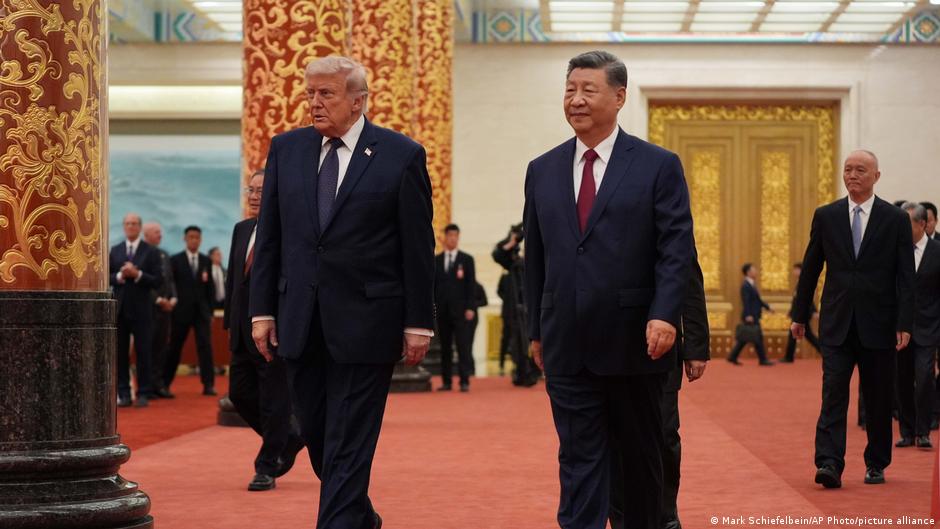
In a notable development underscoring the shifting patterns in global trade relationships, former U.S. President Donald Trump revealed that China has expressed interest in buying American crude oil and soybeans. This announcement came shortly after his two-hour meeting with Chinese President Xi Jinping in Beijing.
Historical Trade Context and Shifts
Historically, China has been a significant importer of Iranian oil, which has effectively limited its reliance on American energy exports. Prior to the escalation of the U.S.-China trade war, which began prominently in 2018 under Trump's administration, China purchased limited quantities of U.S. crude oil. However, since the trade tensions intensified, Beijing strategically reduced its imports of U.S. soybeans, opting instead for Brazilian supplies, thereby reshaping agricultural trade flows.
This proposed renewed interest in U.S. oil and soybean imports, as stated by Trump, indicates a potential recalibration of trade policies and economic dependencies between the world’s two largest economies. The shift may reflect broader strategic considerations amid ongoing geopolitical uncertainties and supply chain realignments.
Geopolitical Dimensions: Influence on Iran and Regional Stability
Trump also emphasized China's potential role in influencing Iran, a longstanding point of contention in U.S. foreign policy. He noted that President Xi Jinping conveyed to him a willingness on China's part to assist in negotiations aimed at ending hostilities involving the U.S., Israel, and Iran, and to facilitate the resumption of shipping through the strategically crucial Strait of Hormuz.
“China wants to help negotiate an end to the war involving the U.S. and Israel with Iran and reopen shipping in the Strait of Hormuz,” Trump explained in his interview.
China’s engagement in this context is significant given its current status as Iran’s primary crude oil buyer and its broader strategic interests in the Middle East. Moreover, Trump quoted Xi as assuring that China would refrain from supplying arms to Iran, which signals a potential shift in the geopolitical calculus and aligns with U.S. objectives of containing Iran’s military capabilities.
Economic and Strategic Implications
The dialogue between the U.S. and China surrounding energy and agricultural commodities must be understood against the backdrop of a global economy still recovering from pandemic disruptions and adjusting to new trade alliances. The potential increase in U.S. exports to China could have multifaceted implications:
- Energy Markets: Increased U.S. oil exports to China would alter global supply chains, potentially affecting prices and market shares among oil-producing nations.
- Agricultural Sector: Resumption of soybean exports to China could uplift American farmers weakened by tariffs and lost markets, while impacting Brazilian agricultural exporters.
- Geopolitical Leverage: China's willingness to engage in Iran negotiations and limit arms supplies could recalibrate power balances in the Middle East, influencing global energy security.
Trump’s rhetoric about not tolerating current Iranian policies and pushing for a deal with Tehran reflects the intersection of economic considerations and hardline foreign policy stances. His comments about enriched uranium deposits in Iran—describing them as "something that could be buried but preferably obtained"—underscore the ongoing nuclear concerns tied to economic sanctions and diplomatic engagement.
Overall, the statements by Trump illuminate the complex interplay between trade, diplomacy, and security in the evolving U.S.-China relationship. As these dynamics unfold, stakeholders across industries and governments will watch closely to gauge the long-term effects on global economic structures and geopolitical stability.