Florida's Palm Beach Airport Renamed After President Trump Amid Political and Economic Symbolism
Palm Beach International Airport will officially bear President Donald Trump’s name from July 9, reflecting broader trends in political branding and economic impact.
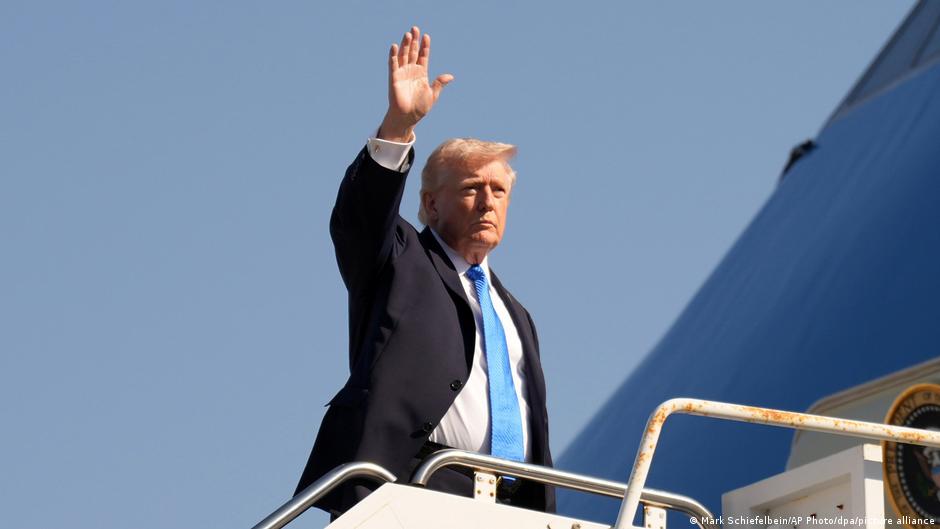
Starting July 9, Florida's Palm Beach International Airport will be renamed after the sitting U.S. President, Donald Trump. Along with the new name, the airport’s International Air Transport Association (IATA) three-letter code will change from PBI to DJT, using the president’s initials. This change was announced recently and marks a rare instance where an active political figure's name is attached to a major transportation hub.
Political Branding and Economic Implications
The renaming of the airport signals a strategic intertwining of political symbolism and regional economic identity. Palm Beach County holds significance for Trump, as it is home to his Mar-a-Lago estate, a private club and residence frequently used for hosting international dignitaries and political meetings. Naming a major airport after a sitting president connected so closely to the locale strengthens the branding of the area as a political and economic hub tied to Trump’s influence.
From an economic perspective, airport naming rights often serve as powerful tools for place marketing, potentially driving tourism and investment. However, attaching a politically polarizing figure’s name may also carry risks of alienation among certain travelers or businesses. The adjustment of the IATA code to DJT further embeds the personal brand into global transportation networks, exemplifying how political identities can shape infrastructure nomenclature and perception internationally.
"The new code DJT and renaming reflect how transportation infrastructure can become a canvas for political messaging and economic positioning,"said an expert on political economy and branding.
This development follows a pattern of institutional naming in the United States that increasingly honors current political leaders. Beyond the airport, the U.S. State Department recently renamed the U.S. Institute of Peace after Trump. Additionally, the John F. Kennedy Center for the Performing Arts in Washington has been co-branded with Trump’s name, underscoring a trend of leveraging political capital through landmark institutions.
Further symbolic gestures include plans to produce special edition U.S. passports featuring Trump's portrait and signature in gold lettering in celebration of the nation’s 250th anniversary of independence. His signature will also appear on the redesigned $100 bill, and the U.S. Commission of Fine Arts has approved a 24-karat gold commemorative coin featuring Trump with the inscription "Liberty."
Historical Parallels and Structural Consequences
The practice of naming key public assets and institutions after sitting leaders is historically unusual, often reserved for posthumous honors. This shift reflects a broader politicization of national symbols and public memory, which carries potential structural consequences for the impartiality and unity traditionally associated with such assets. The embedding of a political figure’s brand into critical infrastructure might influence public perceptions, investment flows, and international relations associated with these sites.
Moreover, renaming airports and other civic landmarks can incur substantial costs and logistical challenges, from updating signage and digital systems to diplomatic adjustments with international aviation bodies like the IATA. The move to adopt the DJT code will require coordination and acceptance by global aviation authorities, demonstrating the intersection of political decisions with technical and economic frameworks in international transport.
In conclusion, the renaming of Palm Beach International Airport to honor President Donald Trump is not merely a symbolic gesture but a reflection of evolving patterns in political branding, economic strategy, and the politicization of public infrastructure. The long-term effects on local economies, national identity, and international perceptions remain to be seen, but this example underscores how political figures increasingly leverage infrastructure for both symbolic and material influence.