Latvia’s Governing Coalition Collapses Amid Defense Ministry Crisis and Political Instability
Resignation of Latvia’s defense minister triggers collapse of coalition government, raising concerns over national security and political stability before elections.
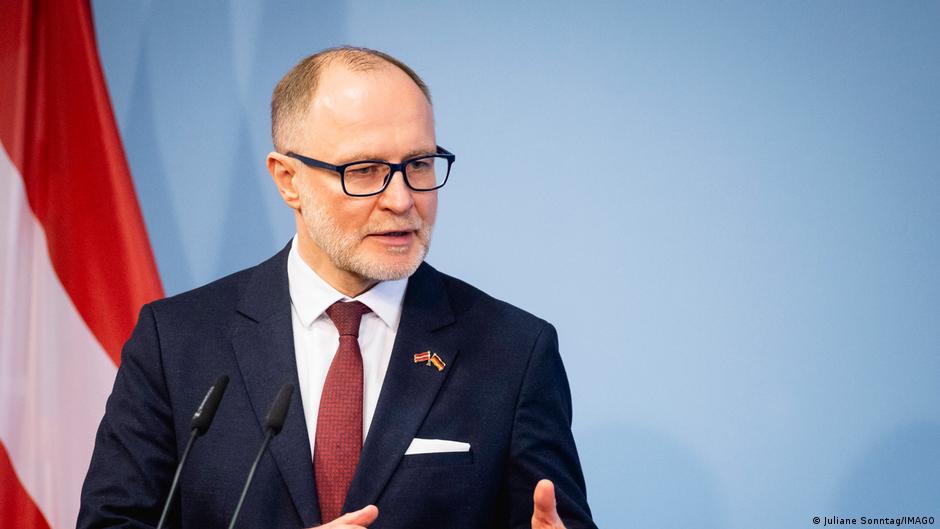
Latvia’s ruling coalition comprising New Unity, the Progressives, and the Union of Greens and Farmers has disintegrated following the resignation of Defense Minister Andris Sprūds. The minister stepped down after an incident involving unauthorized drone incursions into Latvian airspace, a development that has exposed significant vulnerabilities in the country’s defense apparatus and precipitated a political crisis just months ahead of parliamentary elections.
Political Fallout from Defense Lapses
On May 10, it was revealed that two drones had entered Latvian airspace, allegedly en route from Ukraine to Russia. This breach raised alarm over the effectiveness of Latvia’s military surveillance and air defense capabilities. Defense Minister Sprūds, representing the Progressives, resigned amid mounting criticism, with Prime Minister Evika Siliņa asserting that he had lost her confidence. She cited failures within the military leadership to uphold promises of ensuring safe skies over Latvia.
Following Sprūds’ resignation, Prime Minister Siliņa proposed appointing Colonel Raivis Melnis, a professional military officer, as the new head of the Defense Ministry. However, this proposal did not resolve tensions within the coalition. The Progressives expressed dissatisfaction with the government’s handling of the defense issues and broader policy questions, culminating in a declaration that the current cabinet had become dysfunctional. Andris Šuvajev, leader of the Progressives faction in the Saeima (Latvian parliament), emphasized the absence of satisfactory responses from Siliņa during a critical meeting.
“At this stage, there are only two options: either Prime Minister Siliņa resigns due to lost public trust, or the Saeima ends this government through a vote,” Šuvajev stated, urging President Edgars Rinkēvičs to initiate consultations for forming a new government.
Coalition Breakdown and Parliamentary Arithmetic
The Union of Greens and Farmers concurred with the Progressives’ assessment that the government was no longer viable. While the Progressives have not yet withdrawn their remaining ministers from the cabinet, opposition parties have announced plans to table a vote of no confidence against the current government.
Parliamentary dynamics now tilt precariously: without the nine Progressive votes, the government holds only 41 seats out of 100, while opposition forces control 47. This shift threatens the government’s ability to function effectively, especially given the delicate security environment in Europe and Latvia’s strategic position as a NATO member bordering Russia.
Broader Implications for Latvian Security and Governance
President Rinkēvičs underscored the gravity of the situation, warning against political instability in a context where enhancing Latvia’s defense capabilities is paramount. In a message posted on May 13, he highlighted the country’s need for a decisive government with parliamentary support to address security challenges, especially given the ongoing conflict in neighboring Ukraine.
The president convened a meeting with parliamentary faction leaders scheduled for May 15, urging them to present constructive proposals to resolve the political crisis. The unfolding events reveal structural weaknesses in Latvia’s political system and raise concerns about its ability to maintain cohesive governance amid external pressures.
This episode draws historical parallels with previous periods of political fragmentation in Baltic states, where coalition instability has often compromised effective crisis management. The timing—mere months before scheduled elections—further complicates prospects for swift resolution and may limit Latvia’s strategic maneuverability on the international stage.
Conclusion
The collapse of Latvia’s ruling coalition following the defense minister’s resignation exposes the intertwined nature of national security and political stability in a geopolitically sensitive region. As Latvia navigates this turbulent period, the imperative to restore a functional government capable of bolstering defense readiness remains critical. The upcoming parliamentary deliberations and potential reconfigurations of power will be decisive for Latvia’s ability to meet ongoing security challenges and maintain public confidence ahead of elections.