China Warns US Against Preparing for War in Space After Weapons Disclosure
Beijing’s response to a US confirmation of orbital military systems highlights the economic stakes of a widening contest over space infrastructure.
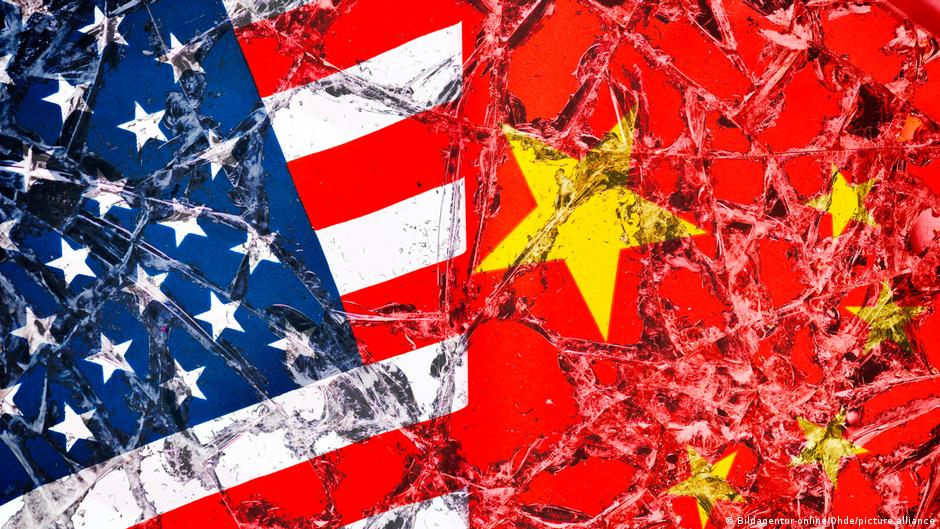
China has urged the United States to stop preparing for conflict in space after Washington for the first time officially confirmed that it has weapons systems deployed in orbit. The exchange marks a significant escalation in the strategic language surrounding space, a domain that has moved from scientific exploration and prestige competition to a core layer of military, communications and economic infrastructure.
The Chinese Foreign Ministry on Tuesday, September 15, warned against the “militarization of space, turning it into a battlefield, and an arms race in outer space.” Ministry spokesperson Guo Jiakun said at a briefing that Beijing was calling on Washington to halt the expansion of military capabilities and preparations for war in space.
“We urge the US side to stop building up military capabilities and preparing for war in space,” Guo Jiakun said.
The statement came a day after the United States publicly acknowledged the presence of weapons in space. On September 14, US Air Force Secretary Troy Meink said the United States has “space control” assets located in orbit. Those assets, operated by the US Space Force, are capable of protecting the joint force from hostile actions, he said, without providing details about the weapons themselves.
The Space Force statement also described space control as covering capabilities necessary to ensure control and protection of space, and said they could be used for both offensive and defensive purposes. It referred to the use of both kinetic and non-kinetic means, a formulation that points to a broad range of possible systems without specifying whether they involve physical strikes, electronic interference, cyber operations or other technologies.
From Deterrence to Infrastructure Risk
For economic policymakers and markets, the significance of the announcement lies not only in the military balance among the United States, China and Russia, but also in the growing dependence of the global economy on orbital systems. Satellites underpin navigation, timing, telecommunications, weather monitoring, remote sensing, financial transaction synchronization and military command networks. A conflict in space, or even the normalization of preparations for one, would therefore carry consequences far beyond defense budgets.
The US Space Force statement specifically named China and Russia. It said China is developing and operating space action assets and counterspace defense systems as part of its military modernization strategy. Russia, according to the statement, views space as a theater of war and assumes that dominance in space will become a decisive factor in future conflicts.
That assessment reflects a structural shift in the economics of security. During the Cold War, space competition centered on nuclear deterrence, missile warning and national prestige. Today, the same orbital environment is intertwined with commercial broadband, logistics, agriculture, insurance, energy exploration and global supply-chain management. As a result, the boundary between military escalation and economic disruption has become less distinct.
Donald Trump established the United States Space Force in 2019 during his first presidential term, creating it as a separate branch of the armed forces in response to perceived threats from Russia and China. The institutional change made explicit what had already been developing for years: space was no longer treated solely as an auxiliary environment for terrestrial operations, but as a domain requiring dedicated doctrine, funding and command structures.
The Treaty Gap
The legal framework governing space remains rooted in an earlier era. The 1967 Outer Space Treaty banned the placement of nuclear weapons in space. The United States, Russia and China are among its parties. The treaty requires the exploration of space to be conducted for peaceful purposes, but it does not apply to conventional weapons placed on satellites or spacecraft.
That gap has become increasingly important. In the past, the greatest concern was the possible stationing of nuclear weapons in orbit. Today, attention has shifted toward satellite hacking, signal jamming and other interference with orbital systems. Such actions may fall outside the central prohibitions of the treaty while still threatening the functioning of civilian and military networks.
Russia has in particular been suspected of developing weapons against Starlink satellites used by the Ukrainian military. Russia, along with the United States, China and India, is studying ways to act beyond the limits of the treaty, including by striking opponents’ satellites that play an important role in military communications, surveillance and navigation, AFP has noted.
The economic implications are cumulative. As more states test or prepare counterspace capabilities, insurers, satellite operators, launch providers and governments face higher uncertainty. The prospect of satellite disruption raises questions about redundancy, hardening, supply-chain resilience and the cost of maintaining alternative communications and navigation systems. For countries that rely on imported satellite services or foreign launch capacity, strategic dependence may become a more visible economic vulnerability.
There is also a budgetary dimension. A space arms race would likely redirect public spending toward military space programs, defensive satellite architectures, cyber protection and rapid replacement capacity. Such spending can stimulate high-technology industries, but it can also crowd out civilian investment and intensify export controls, sanctions and technology fragmentation. The contest over space is therefore not only a military issue; it is another front in the broader restructuring of the global economy around security blocs and strategic technologies.
China’s warning is unlikely to end that trend. The United States is presenting orbital military assets as necessary protection against hostile activity. China frames the same development as a step toward militarization and an arms race. Russia is described by Washington as treating space as a battlefield. Between those positions lies a widening policy vacuum: an increasingly commercialized and strategically essential domain governed by rules written before today’s technologies existed.