Communists Retain Dominance in Graz City Council with Focus on Housing Policies
The Austrian Communist Party secures a second consecutive municipal election victory in Graz, emphasizing pragmatic housing strategies and moderate discourse.
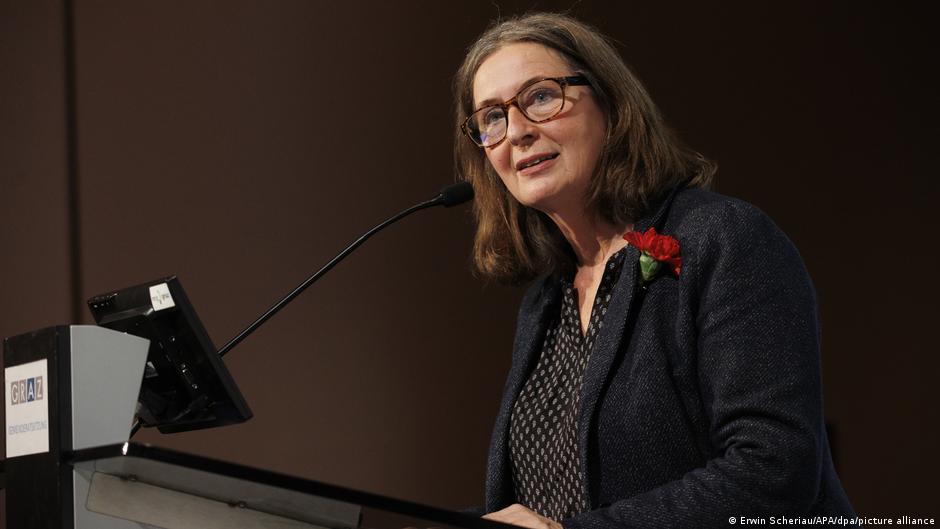
In a remarkable political development, the Communist Party of Austria (KPÖ) has once again asserted its dominance in Graz, the country's second-largest city, by winning 35.63 percent of the vote in the recent municipal elections held on June 28. This victory grants the party 18 out of 48 seats in the city council, reinforcing their position as the leading political force in the city.
Historical Context and Local Political Dynamics
The KPÖ’s sustained success in Graz is notable given the party’s limited influence nationally, where it has failed to surpass the threshold necessary to secure seats in the Austrian parliament for over six decades. The phrase "Graz votes differently" aptly encapsulates the city’s distinctive political landscape, which diverges sharply from national trends.
"The KPÖ’s rise in Graz is emblematic of a localized political strategy that prioritizes tangible social policies over ideological confrontation."
In the 2021 municipal elections, the KPÖ achieved a breakthrough by capturing 28.84 percent of the vote, marking a significant increase compared to previous years. The 2024 election results demonstrate not only retention but an expansion of their support base, signaling growing voter confidence in their approach.
Elke Kahr, the KPÖ member who has served as mayor since 2021 with backing from the Social Democrats and Greens, has been instrumental in shaping the party’s local success. Before her mayoral tenure, Kahr was deeply involved in housing policy and urban development in Graz. Under her leadership, the KPÖ has maintained a pragmatic focus on addressing concrete social needs, particularly affordable housing, while avoiding divisive populist rhetoric.
Policy Focus and Moderation
The KPÖ’s emphasis on housing policy resonates strongly in a city grappling with affordability challenges. This focus reflects a broader historical pattern in which European communist parties achieve electoral gains by addressing pressing social issues through practical governance rather than ideological dogmatism.
While party documents continue to stress traditional communist values such as social struggle and critique of capitalism, local leadership under Kahr has tempered these messages to appeal to a wider electorate. Notably, Kahr has publicly criticized the European Union’s sanctions against Russia amid the conflict in Ukraine, arguing that such measures disproportionately burden ordinary citizens and have limited effectiveness. However, she has simultaneously condemned Russia’s military aggression, illustrating a nuanced stance that prioritizes economic impacts alongside geopolitical considerations.
Broader Political Landscape in Graz and Austria
The Austrian People’s Party (ÖVP), representing conservatives, secured the second position with 25.35 percent of the vote, obtaining 13 council seats. The Greens followed with 14.84 percent and seven seats. The far-right Freedom Party of Austria (FPÖ), despite its national prominence — having topped the 2024 parliamentary elections — lagged behind in Graz, placing fourth with 12.2 percent and six seats.
This divergence underscores the unique political climate in Graz, where left-wing policies have strong urban appeal, contrasting with the national ascendancy of right-wing populism. After the federal elections, the inability of right-wing populists to form government led to a coalition among Social Democrats, liberals, and conservatives, with Christian Stocker of the ÖVP appointed as chancellor.
Structural Economic Implications
The KPÖ’s electoral success in Graz highlights important structural economic consequences for urban governance in Austria. By prioritizing social housing and pragmatic policy solutions, the party challenges conventional neoliberal urban development models that often marginalize lower-income residents. This approach may serve as a model for other European cities facing similar affordability crises.
Moreover, Graz’s political landscape illustrates how localized political strategies, rooted in addressing immediate social concerns and maintaining moderate rhetoric, can sustain leftist movements in urban contexts even when national support wanes. The KPÖ’s experience suggests that economic disenfranchisement and housing shortages can drive significant shifts in voter behavior, especially when parties offer credible, practical alternatives.