US Military Strikes Iranian Targets Amid Escalating Tensions in Strait of Hormuz
US airstrikes targeted Iranian military infrastructure in response to drone attacks against commercial tankers in the strategic Strait of Hormuz.
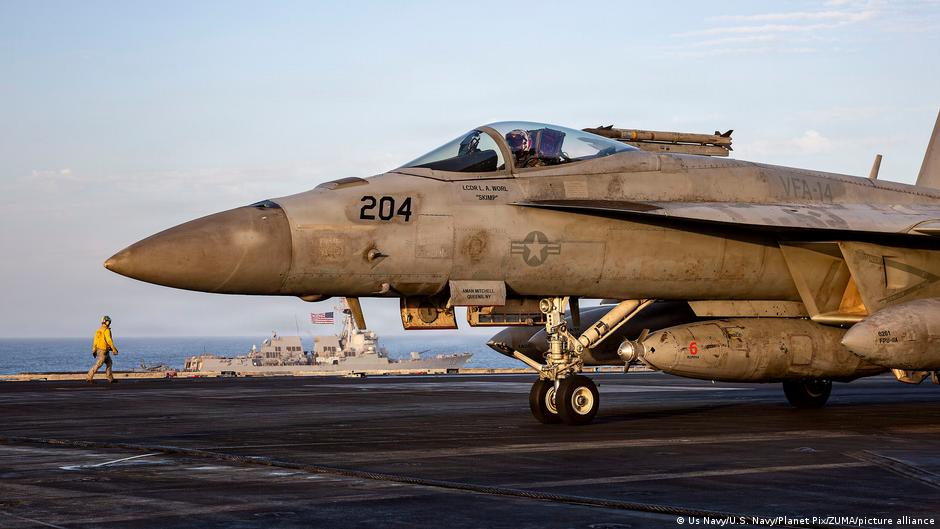
On June 27, US military forces conducted airstrikes on multiple Iranian military facilities, including surveillance installations, communication systems, air defense sites, drone storage, and mine-laying equipment. These actions represent a direct response to Iran’s ongoing aggressive actions against commercial shipping in the Strait of Hormuz, a critical chokepoint for global oil transportation.
Context and Escalation in the Strait of Hormuz
The Central Command of the US Armed Forces (CENTCOM) stated that the strikes were a decisive response following attacks on peaceful commercial vessels. The incident triggering the strikes involved two separate drone attacks on tankers navigating the Strait of Hormuz, a narrow passage connecting the Persian Gulf to the Gulf of Oman.
"After the previous day's US strikes responded to Iran's attack on the Ever Lovely tanker, Iran launched a kamikaze drone at 4:30 AM Eastern Time that struck the tanker Kiku, which was carrying over two million barrels of crude oil," CENTCOM announced via social media.
The Strait of Hormuz remains a vital artery for global energy markets, with approximately 20% of the world’s petroleum passing through. Any disruption in this passage has significant repercussions on oil supply chains and market stability. The US military has underscored its commitment to maintaining uninterrupted maritime transit and has maintained heightened alertness and readiness to use force if necessary.
Regional Reactions and Reciprocal Strikes
The escalation drew immediate regional responses. Kuwait’s air defense forces reportedly intercepted missile and drone attacks as confirmed by the Kuwaiti military. Simultaneously, Bahrain experienced explosive incidents, leading to civil defense alerts and instructions for civilians to seek shelter.
Iran’s Islamic Revolutionary Guard Corps (IRGC) claimed responsibility for the strikes on Kuwaiti and Bahraini territories, identifying US military installations as their targets and framing these operations as retaliation for the US airstrikes.
Earlier on June 26, CENTCOM had announced airstrikes against Iranian targets, including sites near the southern city of Sirik and the island of Qeshm. Iran’s IRGC responded by firing upon US military positions in the Middle East and warned of a "larger-scale response" should hostilities continue.
Breaking the Ceasefire and Broader Implications
The recent attack on the tanker Ever Lovely marked the first hostile act in the Strait of Hormuz following the June 17 framework agreement between the US and Iran, which aimed to cease hostilities and reopen the strategically vital waterway. The attack occurred mere hours after the IRGC declared that safe passage would only be guaranteed along routes controlled by Iran.
US President Donald Trump publicly confirmed the strikes on June 27, emphasizing that Iran had violated the ceasefire terms. In a statement on Truth Social, he warned that continued Iranian aggression might compel the US to escalate militarily, even declaring, "If that happens, the Islamic Republic of Iran will cease to exist." This rhetoric underscores the fragile nature of the current détente and signals potential for further destabilization.
Economic and Strategic Consequences
The repeated attacks and counterstrikes highlight the persistent volatility in one of the world’s most important maritime corridors for energy exports. Disruptions in the Strait of Hormuz not only threaten global oil supply but also exacerbate geopolitical tensions that can ripple through international markets and energy prices.
Historically, conflicts affecting this passage have led to oil price spikes and increased insurance costs for shipping, impacting global economies. The current flare-up risks undermining recent diplomatic efforts to stabilize the region and may prompt shifts in energy sourcing strategies as countries seek to mitigate supply vulnerabilities.
Moreover, the reciprocal nature of the strikes reflects a broader structural challenge in US-Iran relations. Despite ceasefire agreements, mutual distrust and competing strategic interests continue to fuel cycles of escalation, complicating prospects for long-term regional security and economic stability.
The situation demands close monitoring, as any further deterioration could have significant implications for global energy markets and international diplomatic alignments.